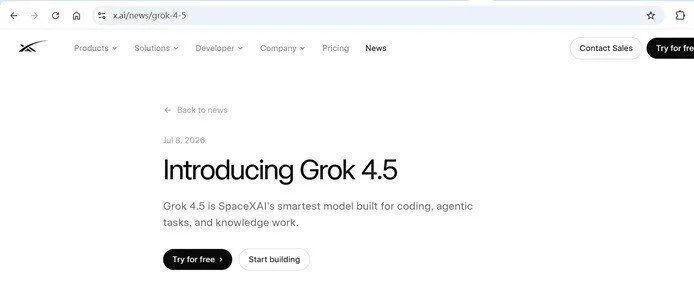
SpaceXAI, together with AI startup Cursor, released Grok 4.5, their latest joint AI model, to the public on July 9, 2026 [1, 2, 3, 4].
Grok 4.5 is designed to handle complex, long-running tasks including software engineering, legal analysis, and financial services [5, 6, 7, 8, 9]. The model features enhanced cybersecurity capabilities to detect and block malicious activities [5, 6, 7, 8, 9].
The AI runs on xAI's foundational V9 model, which has 1.5 trillion parameters. SpaceXAI plans to release a successor with 2 trillion parameters later this month [2, 4, 9].
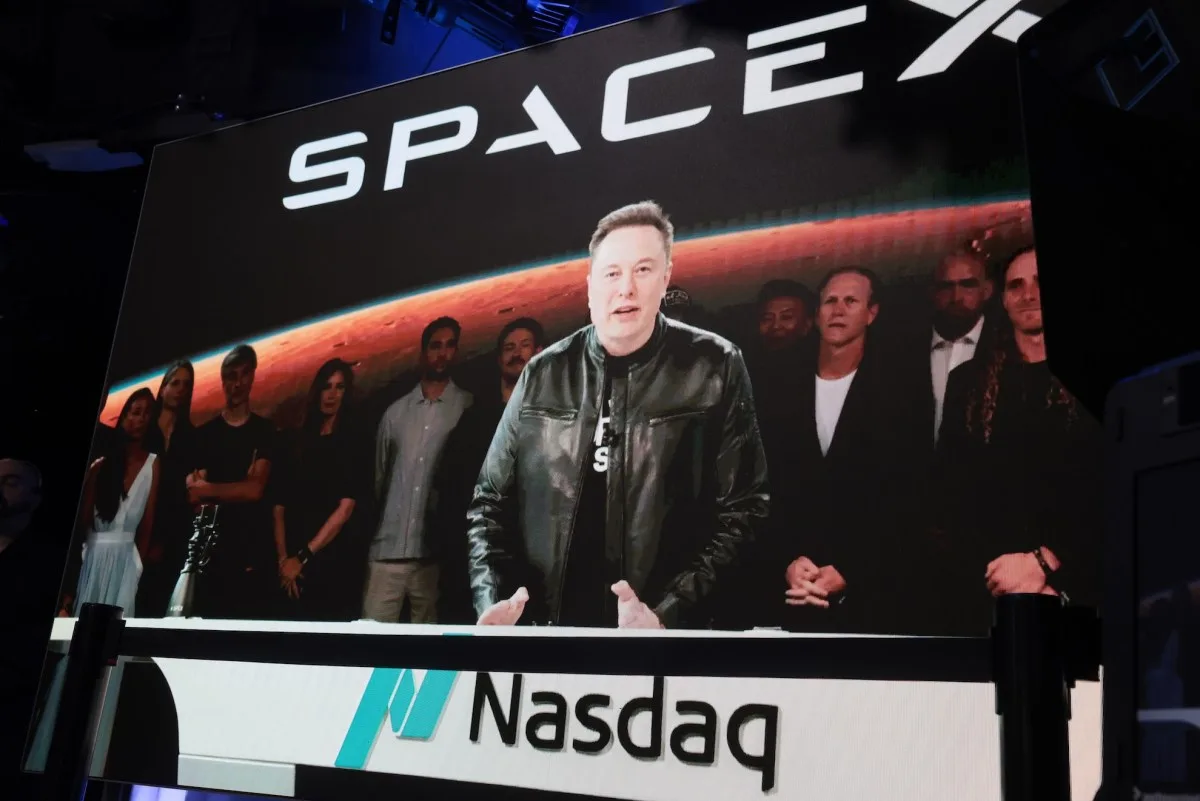
SpaceXAI CEO Elon Musk described Grok 4.5 as an "Opus-class model" comparable to Anthropic's Opus 4.7/4.8 but faster and more efficient. Musk said, "The combination of capability, faster speed and lower cost is what makes it competitive" [1, 6, 2, 3, 4]. He noted the model is "token usage efficient" and runs significantly cheaper than comparable offerings [1, 4].
The model was trained using tens of thousands of NVIDIA GB300 GPUs with strict data filtering and quality scoring [6, 10, 8, 9]. It is optimized for agentic task execution and complex workflows involving Excel, PowerPoint, and coding [1, 3, 10, 4].
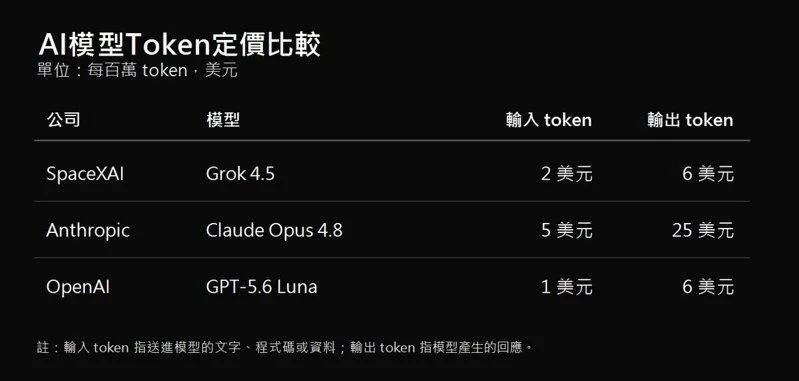
Grok 4.5 serves as the default AI engine for SpaceXAI’s Grok Build coding tool and is available via Cursor’s subscription plans and the SpaceXAI console [6, 10, 4]. Its pricing is $2 per million input tokens and $6 per million output tokens, substantially undercutting Anthropic’s Opus 4.8 model, which charges $5 and $25 respectively [1, 6, 10, 4].
SpaceXAI acquired Cursor earlier this year in a $60 billion deal, marking Grok 4.5 as their first collaborative release since the acquisition [6, 10, 4, 7, 9]. The companies had initially partnered in April 2026 to co-develop AI models before finalizing the acquisition in June [6, 10, 4, 7, 8, 9].
Grok 4.5 publicly launched after internal testing began earlier in July. On the same day, OpenAI planned to release its GPT 5.6 model, continuing competition among leading AI developers [1, 2].
SpaceXAI will release its larger 2 trillion-parameter V-series model in August 2026, signaling rapid expansion of their AI capabilities [2, 4].