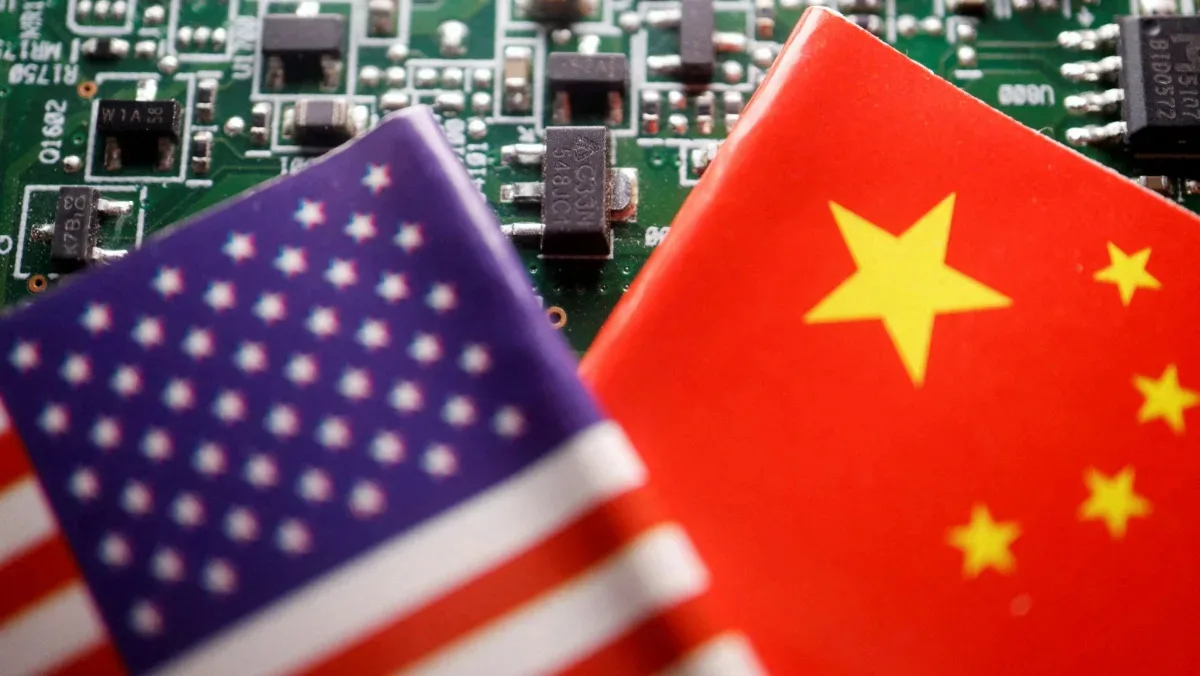
The United States is preparing to send letters to 35 countries that signed the AI Opportunity Statement in June 2026, demanding they choose sides in the AI race between the US and China [1, 2, 3, 4, 5, 6, 7]. The letter warns that countries cannot belong to both the US-led Pax Silica coalition and China’s World Artificial Intelligence Cooperation Organization (WAICO) simultaneously [1, 2, 3, 4, 5, 6, 7].
The US launched the Pax Silica initiative in 2025 to secure AI model, semiconductor, and critical mineral supply chains among trusted allies [1, 2, 8, 3, 4, 5, 6, 7]. Around 20 to 24 countries have joined Pax Silica so far, including close allies Japan, Australia, and South Korea [1, 2, 8, 3, 4, 5, 6, 7]. By contrast, China established WAICO in July 2026 to promote its AI technologies and challenge US influence [1, 2, 4, 5, 6, 7]. Kazakhstan is currently the only country known to have joined both coalitions, a development causing concern within the US government [1, 2, 8, 3, 4, 5, 6, 7].
The draft letter from the US Department of State underscores that signing the Pax Silica declaration is a serious commitment. "Joining everything means joining nothing. Signing the Pax Silica declaration is more than membership; it is a pledge. We cannot join initiatives that conflict or overlap with our goals," it states [1]. An anonymous US official told reporters that countries "cannot have it both ways," adding, "If a country positions itself as a trusted partner in one tech ecosystem but also joins a separate AI vision shaped and driven by China, its stance becomes hard to credibly defend" [2].
Although the letter does not explicitly mention China, it urges countries to make careful choices in AI collaboration to avoid conflicting allegiances [1, 2, 3, 4, 5, 6, 7]. The US aims to restrict China’s access to critical resources needed for advanced AI development that might be used for military or economic dominance [1, 2, 3, 4, 5, 6, 7].
It remains unclear when exactly the US will send the official letter or if the draft will be altered before release [1, 2, 3, 4, 5, 6, 7].