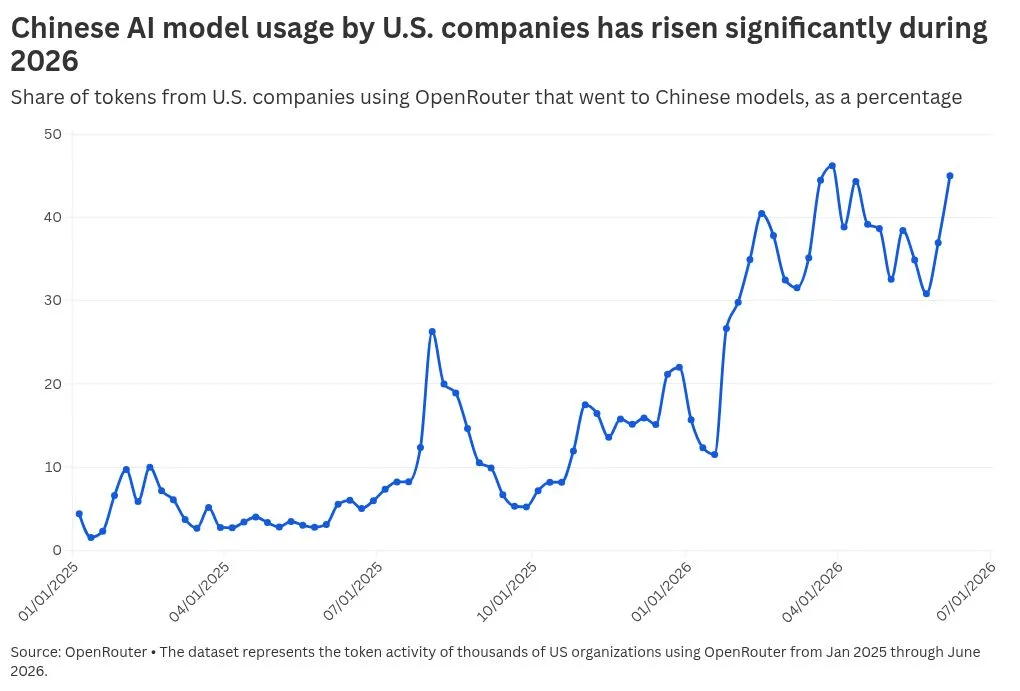
Chinese AI models from companies such as DeepSeek and Z.ai are gaining traction among U.S. businesses due to competitive quality and much lower costs compared to top U.S. models like those from OpenAI and Anthropic [1, 2]. Since February 8, 2026, the weekly share of AI usage tokens routed to Chinese AI models via OpenRouter has risen above 30%, up from an 11% average over the past year and just 4.5% in early 2025 [1]. Kyle Chan, a Brookings fellow, noted, "Chinese AI models are particularly attractive to American companies now as AI costs skyrocket. Where previously U.S. companies were prioritizing AI adoption regardless of model, now they're getting more cost-conscious" [1].
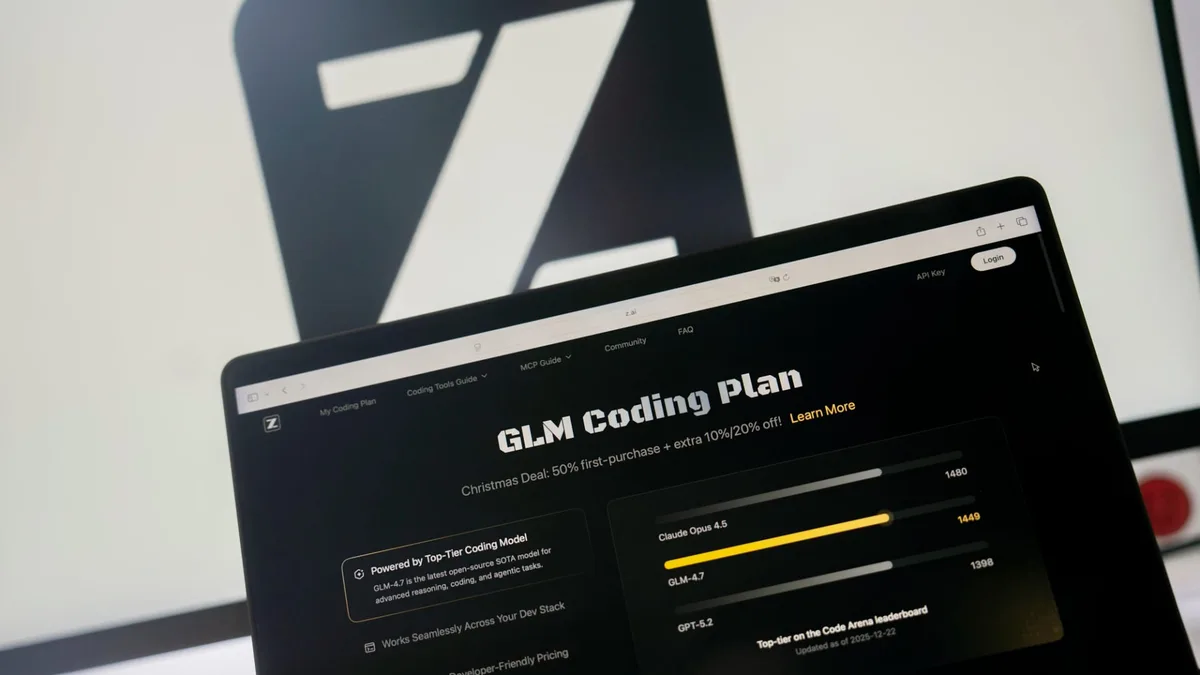
Startups like Lindy have fully switched from Anthropic’s Claude AI to Chinese models such as DeepSeek to reduce expenses [1, 2]. In April 2026, DeepSeek launched a new model that helped drive some of these shifts among U.S. startups [1]. Coinbase CEO Brian Armstrong confirmed the company uses Chinese AI models GLM 5.2 from Z.Ai and Kimi 2.7 from Moonshot [2].
The U.S. government is raising alarms over increased use of Chinese AI. The State Department expressed concerns that "Chinese AI is designed to advance Beijing's narratives, censor dissent and reflect CCP ideology and values," and is preparing investigations and possible restrictions on American companies using these models [2]. However, some officials acknowledge sweeping bans may face legal and operational challenges due to First Amendment protections [2]. Chinese authorities have accused Anthropic’s Claude Code of having a backdoor posing a "serious threat," reflecting tensions over respective AI technologies [2].
Chinese AI development often follows China's broader strategy of providing affordable, widely adopted technology, similar to its manufacturing playbook [3]. The increased adoption of cheaper Chinese AI contrasts with U.S. companies' prior dominance in the AI model market.
OpenAI rolled out a new set of AI models in June 2026 at the request of the U.S. government, coinciding with lifted export controls on Anthropic’s models [1]. The government’s probes over Chinese AI use emerged in early August 2026 amid ongoing concerns about influence and security [2].
As of today, U.S. companies continue reallocating AI usage towards Chinese models while facing potential regulatory scrutiny and evolving geopolitical risks.