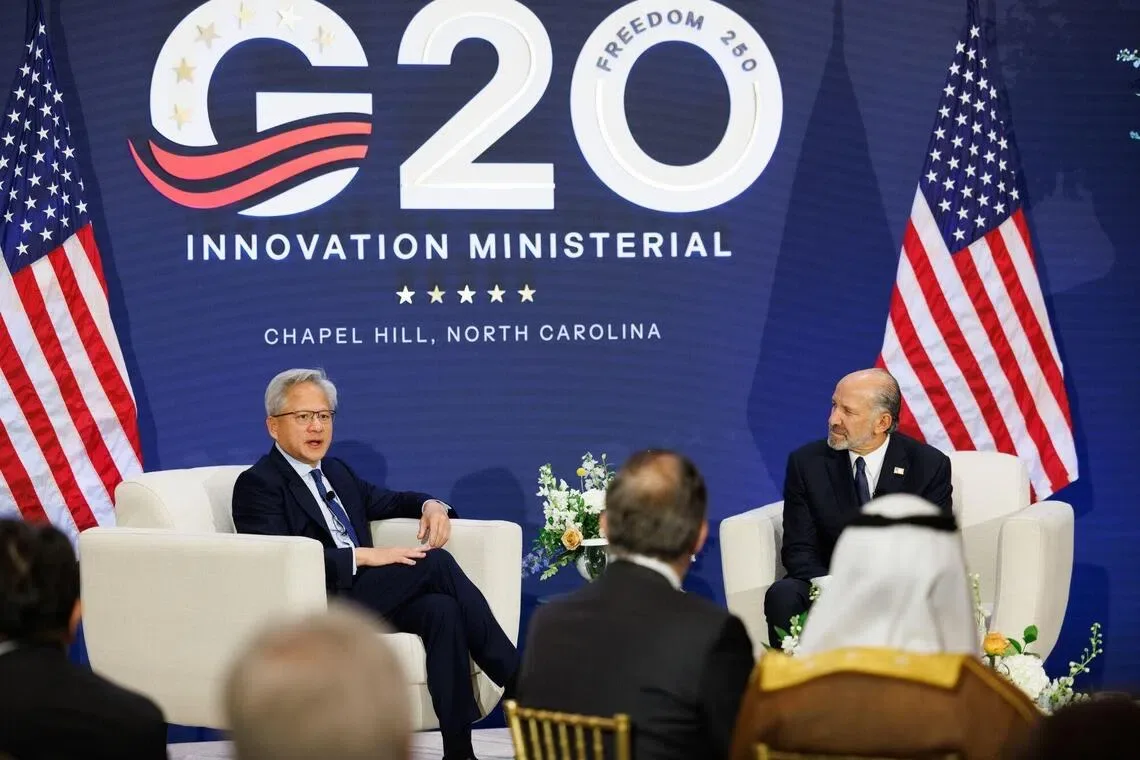
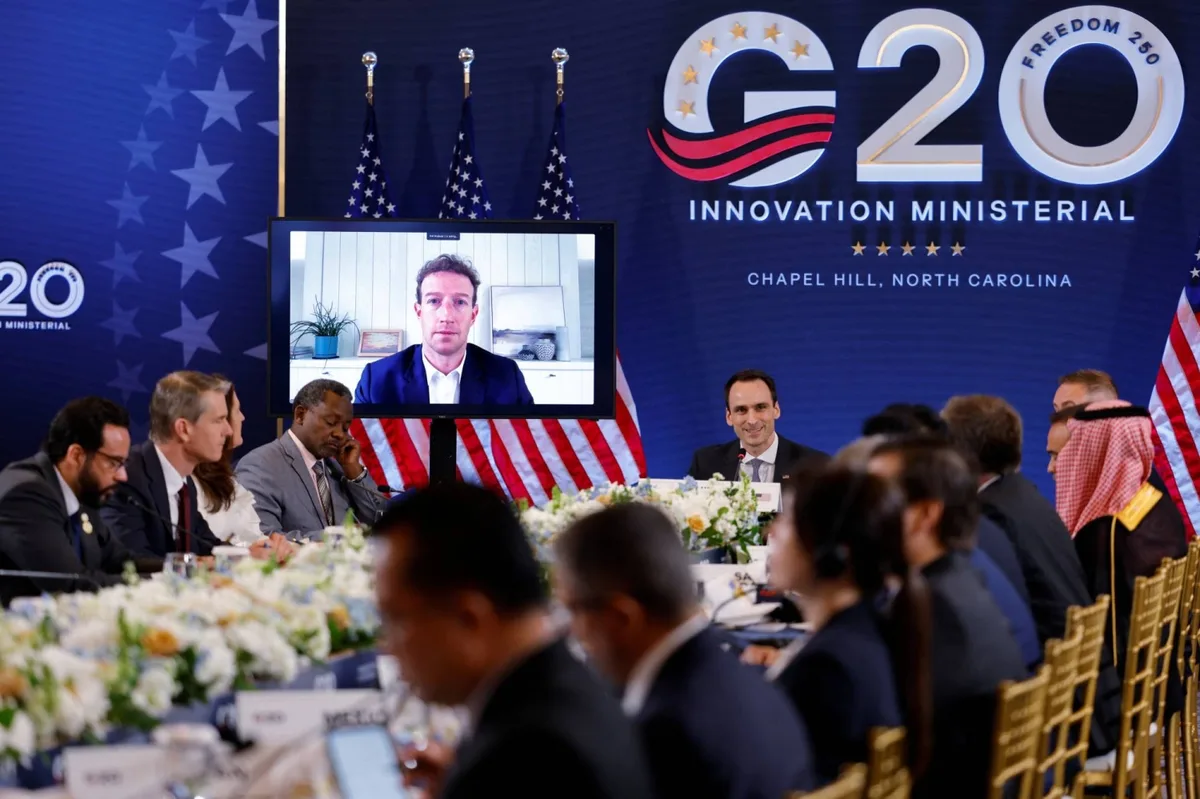
The United States pushed G20 countries on September 1-2, 2026, to take a hands-off approach toward regulating artificial intelligence at a tech meeting held in Chapel Hill, North Carolina, urging avoidance of broad AI-specific rules and focusing only on novel cases that require new policies [1, 2, 3]. US tech adviser Michael Kratsios, who co-hosted the two-day summit with Commerce Secretary Howard Lutnick, advocated adoption of the "Carolina Principles," which call for limiting new AI regulations except where genuinely new considerations arise [1, 2, 4]. Kratsios told attendees, "Policymakers do not need to approach each innovation in isolation and should not treat every emerging technology as a first-of-its-kind policy problem" [1].
China, represented by Technology and Science Minister Yin Hejun, also signed onto the Carolina Principles at the meeting [1, 2, 5]. The summit featured several leading US AI industry executives, including Demis Hassabis of Google DeepMind, Meta's Mark Zuckerberg, Elon Musk of SpaceX, Nvidia CEO Jensen Huang, OpenAI CEO Sam Altman, and Anthropic co-founder Tom Brown, joining via video or in person [1, 4, 6].
Hassabis called for safety testing of AI systems and proposed a regulatory body similar to the financial sector's FINRA [1, 2]. Zuckerberg urged G20 members not to restrict open-weight AI models, saying, "Countries should not restrict open-weight AI models" [1]. Meanwhile, Musk criticized European Union AI policies as slowing innovation, stating, "European Union's policy inhibits progress. Things are generally default illegal. It slows it down quite considerably" [7]. He also urged nations outside China to develop new energy sources to power AI data centers [1, 7].
Jensen Huang emphasized AI as critical infrastructure requiring significant data center buildout and warned against overregulation driven by theoretical harms, saying, "The worst outcome is that you don’t take advantage of [AI], that you are left behind. Countries would suffer if leaders talk about the technology with fear, with uncertainty" [4, 6]. The US Justice Department filed a brief supporting OpenAI's use of copyrighted material to train AI models under fair use, and the US urged G20 countries to create training rules that protect creators while enabling AI development [4].
Despite the overall US-led push for minimal, flexible regulations and industry self-regulation [3, 8, 9], tensions reportedly existed within the US government between the Commerce Department and the White House Office of Science and Technology Policy over AI regulatory messaging, although officials denied a public rift [10]. Meanwhile, about 100 to 200 protesters gathered at the University of North Carolina campus during the meeting, voicing concerns about AI's rapid development [6].
The meeting ran September 1-3, 2026, with business leaders addressing attendees via video on the first day and in person on the second and third [1, 4]. The final day featured calls from tech executives for increased AI infrastructure investment amid ongoing ministerial disputes over AI risks [6].