Malaysia had 32,800 completed residential units worth RM16.37 billion unsold across the country as of the end of the first quarter of 2026 [1, 2, 3, 4, 5]. Nearly half of these unsold homes, 46.9% or about 15,400 units, are priced at RM300,000 or below, while the remaining 53.1% are priced above that threshold [1, 2, 3, 4, 5].
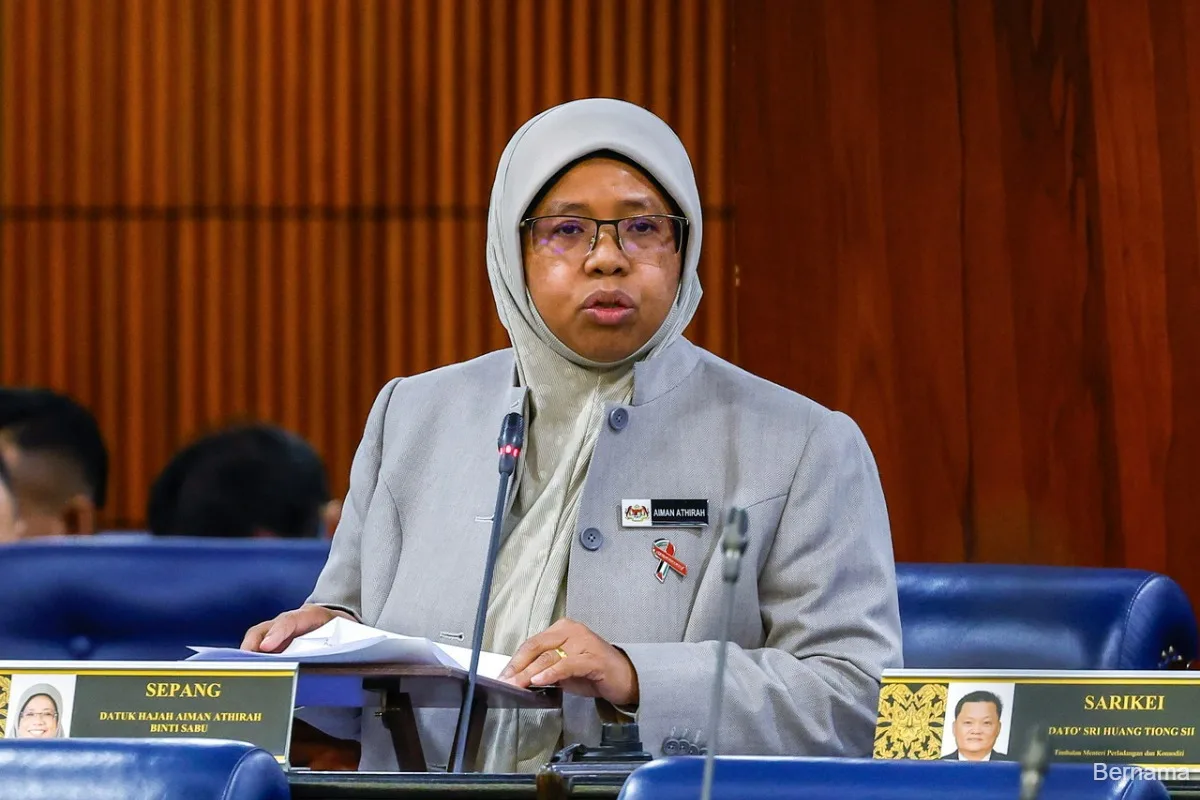
The issue of unsold homes is driven by a mismatch in supply and demand across various market segments, not limited to affordable housing alone, according to Datuk Aiman Athirah Sabu. She said, "This shows that unsold housing is not limited to affordable housing alone, but is also influenced by a broader mismatch between supply and demand across different market segments" [4].
Homeownership remains relatively strong among low-income households, with a rate of 76.3% recorded in 2024 for the bottom four income deciles [2, 3, 4, 5]. Datuk Aiman Athirah Sabu noted in Mandarin that "我国低收入家庭的拥屋率达76.3%,青年及首购族在置业方面所面对的挑战,需更全面的解决方案" (The homeownership rate among low-income families is 76.3%; youth and first-time buyers face challenges requiring more comprehensive solutions) [5].
The Ministry of Housing and Local Government does not hold specific homeownership data by age group due to how data is categorized by the Department of Statistics Malaysia (DOSM), focusing on income and locality rather than age or constituency [1, 4, 5]. To improve planning and policy formulation, the ministry is developing an integrated national housing data system [1, 2, 3, 4, 5].
The government is finalizing a new National Housing Policy that prioritizes providing more responsive housing, strengthening financing mechanisms, enhancing data integration, and addressing the supply-demand mismatch. Datuk Aiman Athirah Sabu said, "Through the new National Housing Policy, which is being finalised, the government is placing emphasis on providing housing that is more responsive to the needs of the people, strengthening the housing financing ecosystem, enhancing the integrated housing database, and reducing the mismatch between housing supply and market demand" [3].
Affordable home prices do not depend solely on construction costs but also on balancing affordability for buyers with sustainability for developers. Datuk Aiman Athirah Sabu remarked, "Affordable home prices are not solely determined by construction costs, but also take into account the need to strike a balance between housing affordability for the public and the sustainability of property development by developers" [2].
Affordable housing mapping has been conducted using median household income data by state and district from the 2024 Household Income and Basic Amenities Survey, providing detailed insights for targeted interventions [2, 3, 5].
The finalization of the National Housing Policy and the deployment of the integrated housing database are expected to shape efforts to reduce unsold homes and better match housing supply with demand in the coming months [1, 2, 3, 4, 5].