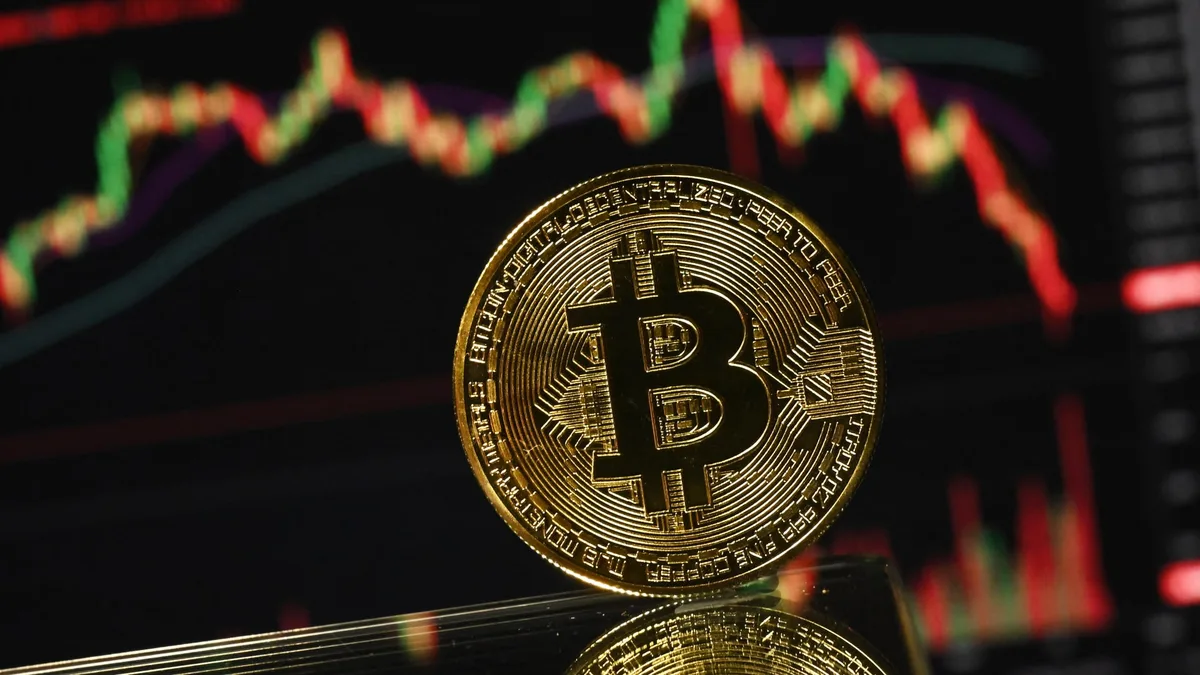
Bitcoin dropped to an intra-day low near $59,024 on June 24, 2026, marking its lowest level since October 10, 2024, before falling further to around $58,131 on June 25 amid a broader cryptocurrency market selloff and a major crypto options expiration on Deribit [1, 2, 3]. On June 23, Bitcoin briefly fell to about $61,877, its lowest point in nearly two weeks, reflecting a selloff in the technology sector [4, 5]. By June 25, Bitcoin had declined nearly 54% from its October 2024 record high of about $126,000 while the global crypto market capitalization dropped from $4.28 trillion to approximately $2 trillion [2].
Other major cryptocurrencies followed Bitcoin’s downward trajectory. Ether fell around 5.6%, while Solana and XRP declined 6.4% and 3.3%, respectively, on June 23 [4, 5]. Crypto-related equities also slid, with Coinbase Global and stablecoin issuer Circle Internet Group shares declining amid the risk-off environment [5].
Investor withdrawals contributed to Bitcoin’s price pressure. U.S.-listed spot Bitcoin exchange-traded funds (ETFs) recorded $2.4 billion in outflows for June so far. The week ending June 24 saw $182 million in outflows, marking seven consecutive weeks of net ETF exits. Total ETF assets declined to $77.5 billion from $113 billion at the end of 2025 [4, 5, 1].
The overall crypto market cap fell 4% to about $2.06 trillion on June 24, with Bitcoin’s market cap dropping 5% to $1.19 trillion. Trading volumes surged 17.4% that day as volatility increased amid the selloff [3]. Bitcoin’s monthly loss expanded to 22.4% as of June 24, wiping out earlier 2026 gains and driving the year-to-date decline to roughly 32% [3].
The downward pressure on digital assets stems from multiple sources. The tech sector selloff curbed appetite for risk assets, alongside concerns over AI companies’ heavy spending. Hedge fund founder Philippe Laffont cited competition from investments like SpaceX and AI-backed businesses as factors weighing on Bitcoin [4, 5, 1, 2, 3]. Federal Reserve inflation policies and delays in crypto market regulation also dampened investor sentiment [s1–s5]. Nevertheless, Sam Callahan, director of bitcoin strategy at OranjeBTC, noted that Bitcoin’s volatility is lower than in prior bear markets due to increased institutional participation, stating, "Bitcoin's not as volatile as it was in previous bear markets because of the investor base: it's larger, it's more liquid... and so you're going to see declining volatility both on the upside and the downside" [1].
Bitcoin had previously traded mostly below $65,000 during June 2026 and briefly fell below $60,000 earlier in the month [4, 5]. The recent $10 billion expiration of crypto options on Deribit on June 25 exacerbated selling pressure [2]. Looking ahead, market participants remain wary as regulatory uncertainties and macroeconomic factors continue to influence crypto asset prices.