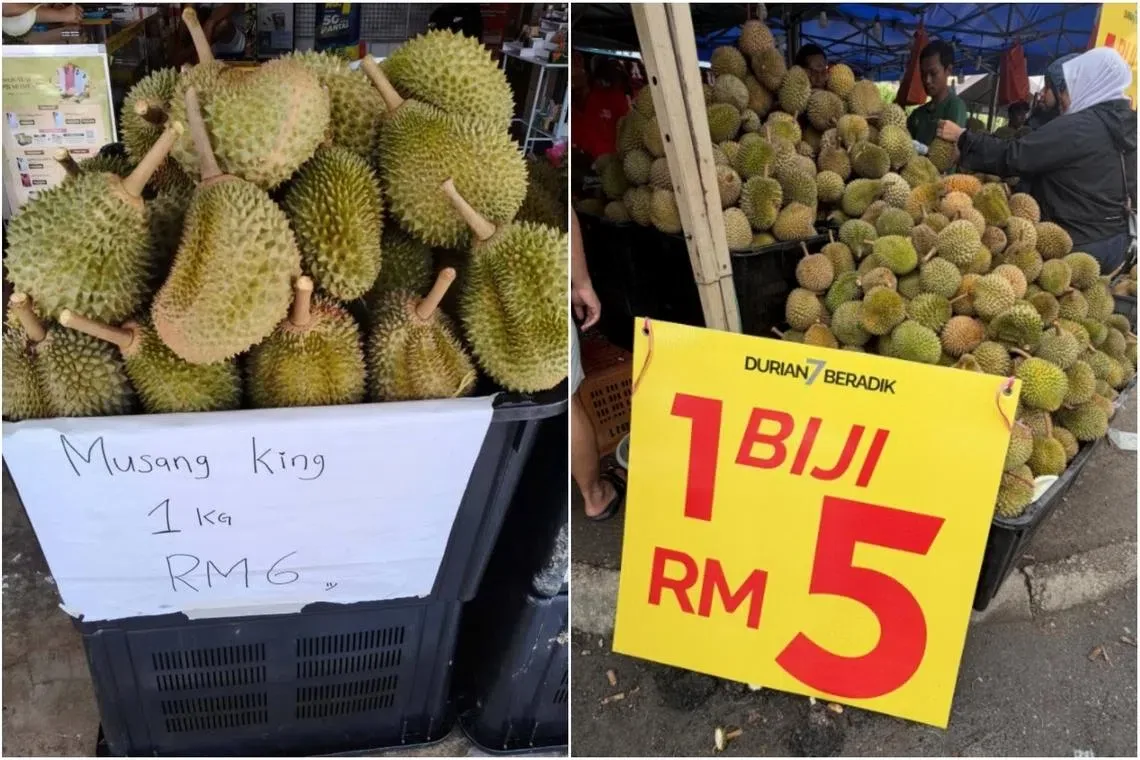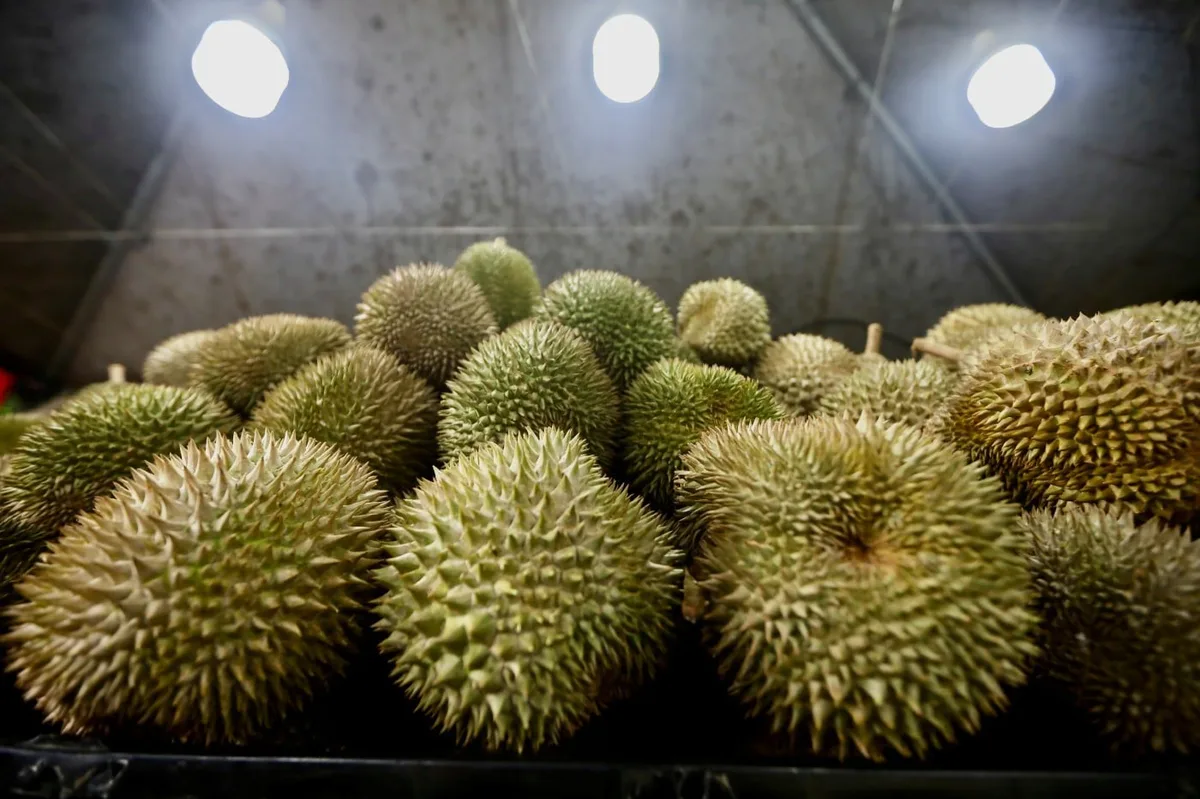
Durian prices in Malaysia have crashed to unprecedented lows this June amid a nationwide glut caused by a bumper harvest and hotter temperatures triggering early fruiting. Regular durians are selling for as little as RM0.50 per fruit, while Musang King prices dropped to around RM6 per kg, the lowest seen in recent years according to some sources [1]. Premium varieties like Musang King in Malaysia are generally selling for less than RM20 per kg amid the oversupply [2]. Johor durian traders reported simultaneous fruiting across nearly all orchards, leading to surges in supply and daily sales volumes reaching up to 3 tonnes [2].
Many Malaysian vendors have launched aggressive promotions to clear stock quickly, such as allowing customers to fill sacks with durians for fixed prices [1]. Johor trader Jefrizal Auzar said, "I do not think customers have ever enjoyed prices this low, especially for premium durians, which can now be bought for less than RM20 per kilogramme" [2]. There are some differences in reported Musang King prices, with one source indicating about RM6 per kg, while others suggest prices between RM10 and RM19 per kg [1, 2].
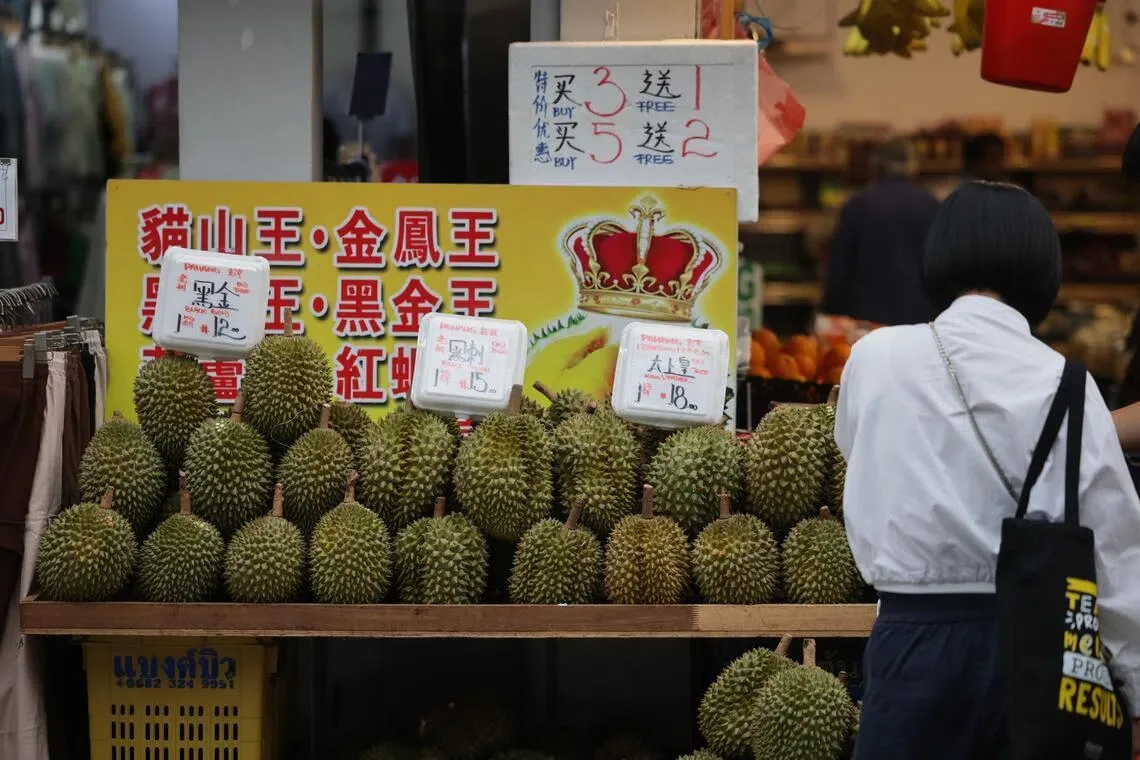
Singapore’s durian prices have also fallen but not as sharply. Mao Shan Wang durian dropped from around S$28 per kg in March to about S$20 per kg by June 23, with expectations to bottom near S$18 per kg [3]. Red Prawn durian prices in Singapore fell from S$14 to S$12 per kg in the same period [3]. Singapore sellers attribute their relatively higher prices to higher operating costs, including overhead, transport, and the Goods and Services Tax. Melvin Chua, founder of Durian Garden, noted, "As a producer country, (Malaysia is) flushed with stock and can afford to sell it for cheap, but our operating costs here are very high" [3]. Kelvin Tan, co-founder of 99 Old Trees, commented on the price crash, saying, "This is the cheapest it’s been in the last five years" [3].
The current durian season in Malaysia, which began in early June, is expected to last until August [2]. The simultaneous large-scale fruiting and resulting oversupply have set new low prices not seen for many years [1, 2]. Traders and sellers continue to adjust to the conditions as the season progresses.