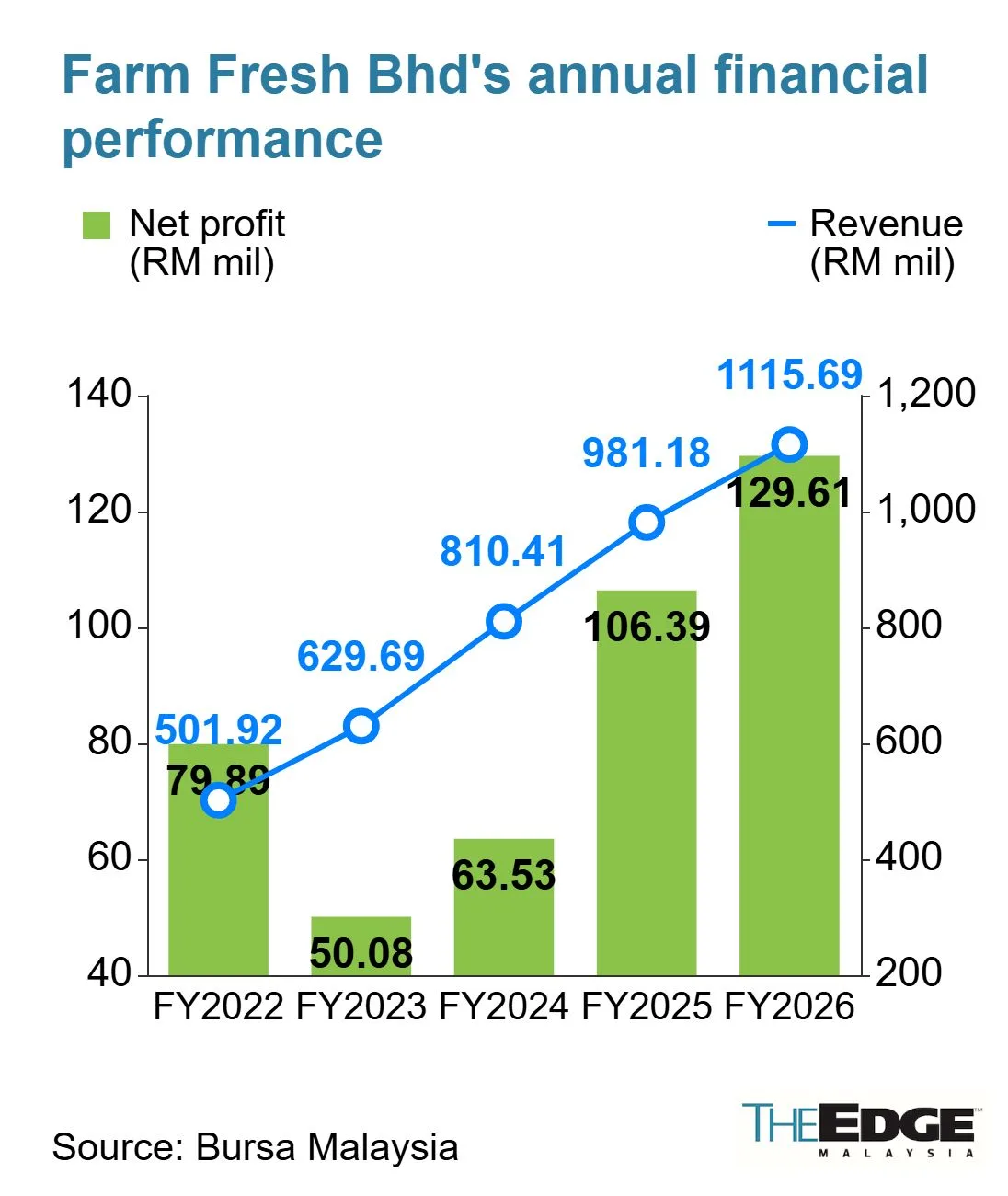
Farm Fresh posted a net profit of RM129.61 million for the financial year ended March 31, 2026, up 22% from the previous year and a record high for the company [1, 2, 3, 4]. Revenue grew about 13.7% to RM1.11 billion, surpassing RM1 billion for the first time since its 2022 listing, according to most sources. One source reported revenue at RM1.12 billion [1, 2, 3, 4].
Domestic sales rose about 20% thanks to new products, school milk programs, mini markets, and e-commerce channels [1, 2, 3]. However, the fourth quarter of FY2026 ended March 31 saw a slight 1.6% year-on-year dip in net profit to about RM27.9 million, while revenue gained around 13% to RM275.12 million [1, 2, 3, 4].
Farm Fresh plans to raise prices for selected plastic-bottled products by approximately 3% in Malaysia and 10% in Singapore starting June 2026 amid supply constraints [1, 2, 4]. The company boosted production of gable-top cartons to offset shortages in plastic bottles. It sourced high-density polyethylene (HDPE) resin from China, restoring plastic bottle supplies to pre-war levels before the ongoing Middle East conflict disrupted shipments [1, 2, 3, 4].
Farm Fresh said, “The blockade of the Strait of Hormuz has resulted in a severe supply shortage and a significant increase in plastic bottle prices due to the unavailability of high-density polyethylene (HDPE) resin, which relies on naphtha shipments from West Asia” [3]. This disruption affected shipping routes and raised raw material costs.
The company also acquired a Sabah ice cream company producing the Amelia brand. The deal included a distribution network of 25 trucks and about 3,500 freezers covering Kota Kinabalu, Tawau, and Inanam [1, 2]. The group stated it plans to utilise the space in the Amelia factory to run a pasteurised production line for East Malaysia and Brunei markets [1].
Meanwhile, revenue from Farm Fresh’s Australian operations declined 44.9% to RM44.8 million due to lower exports, highlighting challenges in that region [3].
Farm Fresh faces ongoing risks from the West Asia conflict impacting supply chains, with HDPE resin shortages affecting plastic bottle availability and prices [3]. The company’s next key date is June 2026, when price increases for selected plastic-bottled products take effect in Malaysia and Singapore [1, 2, 4].