Indonesia launched palm oil export control reforms on June 1, 2026, mandating producers to submit sales data through the new state-owned firm PT Danantara Sumberdaya Indonesia [1, 2]. Exporters may continue handling transactions until Danantara takes full control by September or January 1, 2027, at the latest [1, 2].
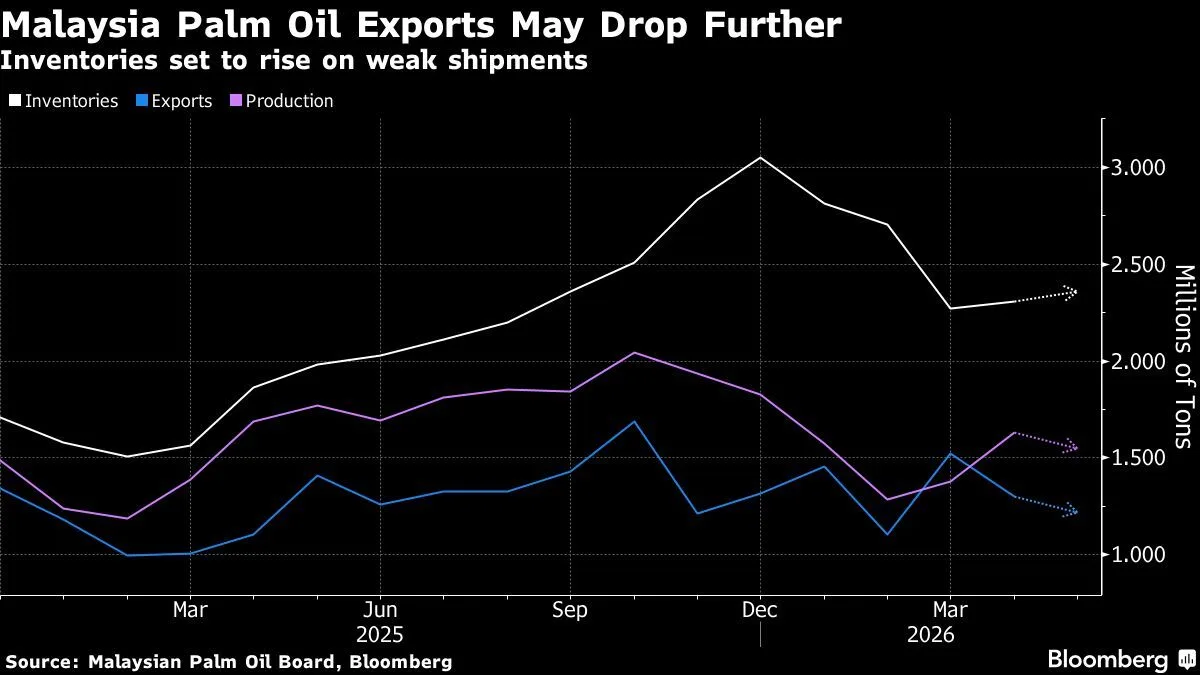
Malaysian palm oil exports dropped 6.2% month-on-month to 1.22 million tonnes in May, marking their weakest level since February, following a 14% decline in April [1, 2]. At the same time, Malaysia’s palm oil inventories rose 2.2% to 2.36 million tonnes, while crude palm oil production fell 4.9% to 1.55 million tonnes [1, 2].
The reforms have made Indonesian palm oil prices more attractive than Malaysian supplies, increasing competitive pressure on Malaysia’s exports and futures markets [1, 2]. Early hopes that Indonesia’s export policy changes would divert demand toward Malaysia have not materialized, in part because key buyers like India had already stocked up on Malaysian palm oil in the first quarter of 2026 [1, 2].
"If Indonesia starts pushing out more exports until the new policy is fully implemented, that would intensify competition with Malaysia and weigh on its shipments," said Paramalingam Supramaniam, director at Pelindung Bestari Sdn [1].
Despite May’s weak export figures, some recovery is expected for June. Sathia Varqa, senior analyst with Fastmarkets Palm Oil Analytics, noted that easing prices in May prompted major importers to restock after two slow months of buying [1].
The Malaysian Palm Oil Board is scheduled to publish official export and production statistics on June 10, 2026 [1, 2].