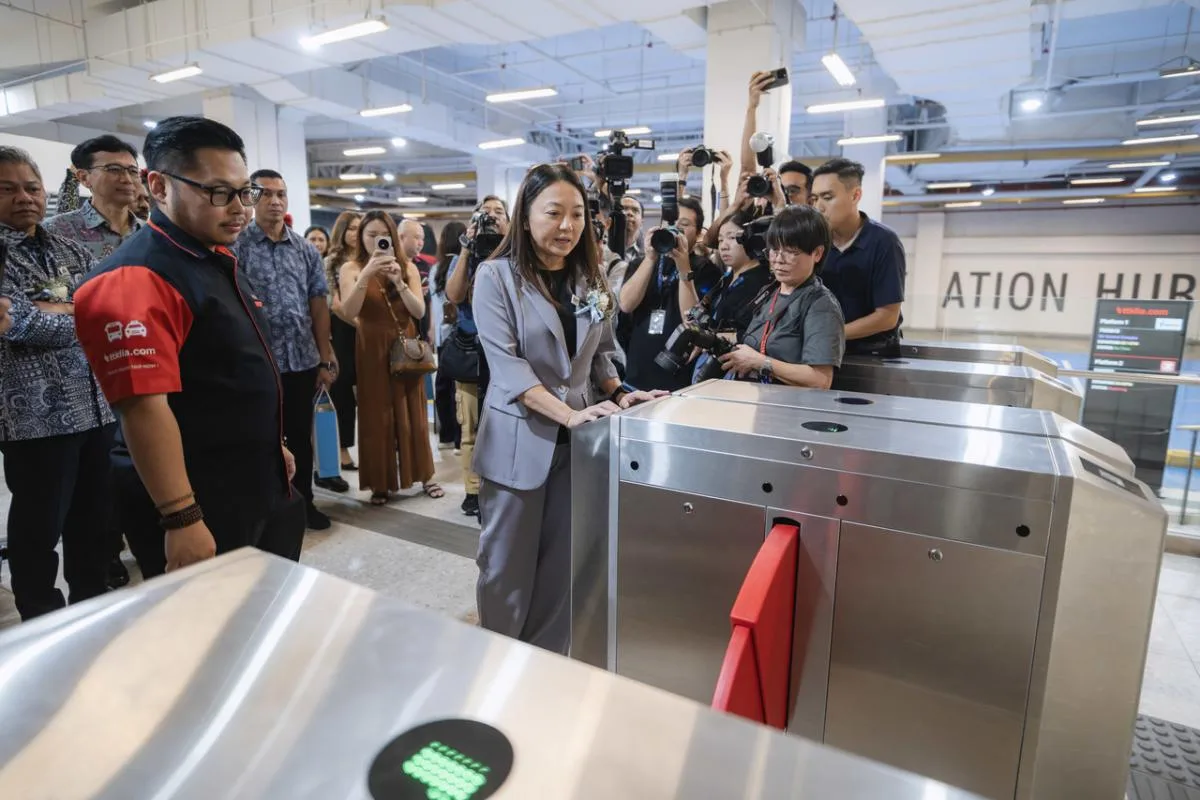
The LaLaport Transportation Hub (LTH) officially opened on July 16, 2026, in Kuala Lumpur city centre beside the Hang Tuah LRT and Monorail interchange [1, 2, 3]. It aims to serve up to 10,000 passengers daily by providing seamless connections among rail, express buses, e-hailing services, taxis, and shared mobility options via a sheltered pedestrian walkway [1, 2, 3].
LTH features 11 bus parking bays, an air-conditioned waiting area, manned counters, self-service kiosks, and a Passenger Information Display System that provides real-time bus schedules [1, 2]. The hub operates about 150 bus trips daily with around 30 operators, including a 24-hour express bus service connecting Kuala Lumpur and Singapore [2, 3].
Dewan Bandaraya Kuala Lumpur (DBKL) introduced three-year operating licenses for transport terminals at LTH, replacing annual renewals to offer greater assurances to operators. Hannah Yeoh highlighted that "the LaLaport Transportation Hub is a welcome addition to Kuala Lumpur's transport network" and that "licensing services for three years make it easier for business operators and provide greater assurance and security" [1, 3].
The hub is designed to cater to persons with disabilities, senior citizens, families with young children, and those with temporary mobility needs [3]. Initial passenger volume is around 3,000 daily, expected to grow to full capacity of 10,000 as usage increases [3].
Kuala Lumpur handles approximately 1.2 million people entering and leaving each day, with 5.5 million journeys recorded daily across the city [1, 2, 3]. Around 10,000 operational CCTV cameras have been installed citywide to enhance safety and accessibility [1, 2, 3].
The launch reflects close Malaysia-Japan cooperation in sustainable urban development following Prime Minister Anwar Ibrahim’s recent visit to Japan in mid-July 2026. Noriyuki Shikata said the opening "reflected the close cooperation between Malaysia and Japan in advancing sustainable urban development" [1].
LTH is positioned as a key gateway for travelers between Kuala Lumpur and Singapore with integrated transport connections supporting growing cross-border mobility [1, 2, 3].