Standard Chartered announced over 7,000 job cuts replacing "lower-value human capital" with artificial intelligence, signaling deep shifts in banking employment worldwide [1]. Meta began laying off 10% of its global workforce in May 2026 while installing software to track employees' computer activity to improve AI training [1]. Amazon cut around 30,000 corporate jobs in recent months to focus more on AI and efficiency [1]. Fintech firm Block slashed nearly half its staff in February 2026, citing AI disruptions [1].
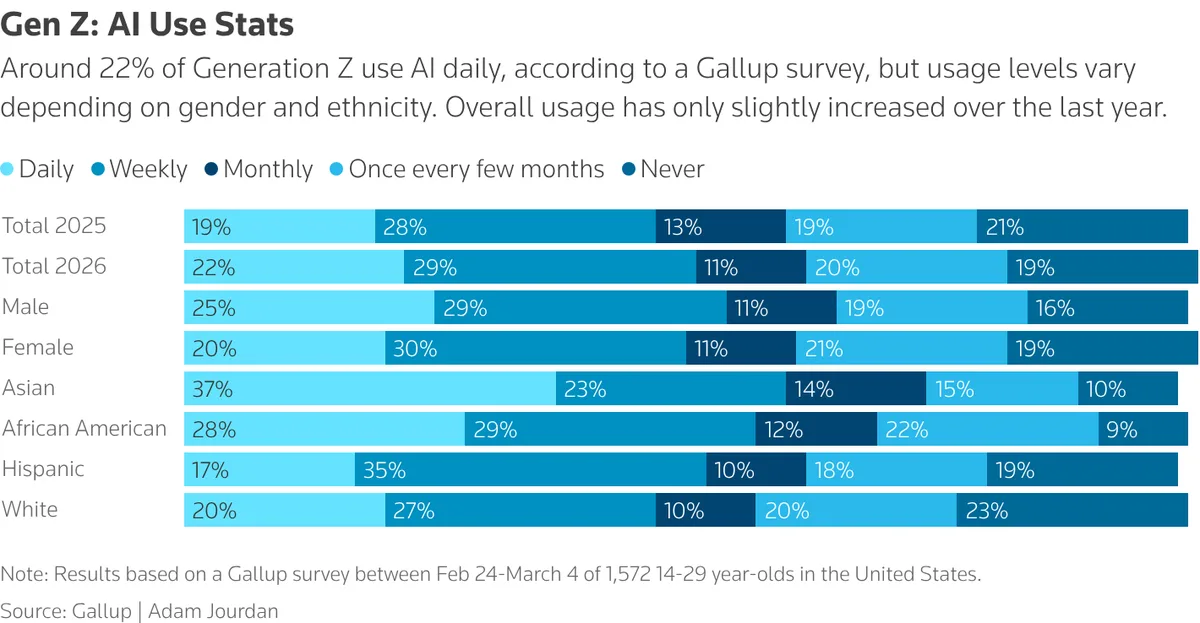
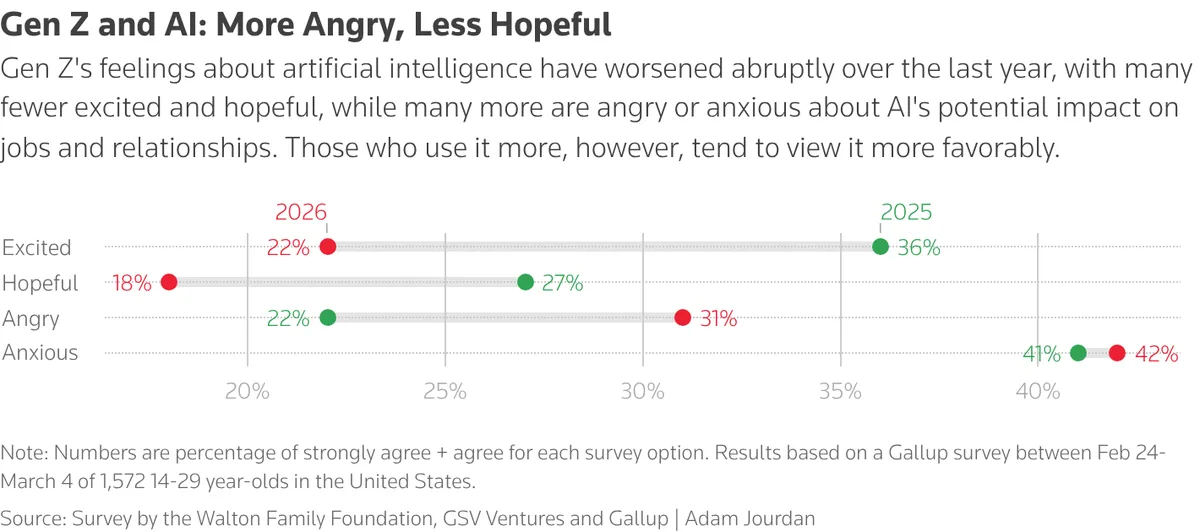
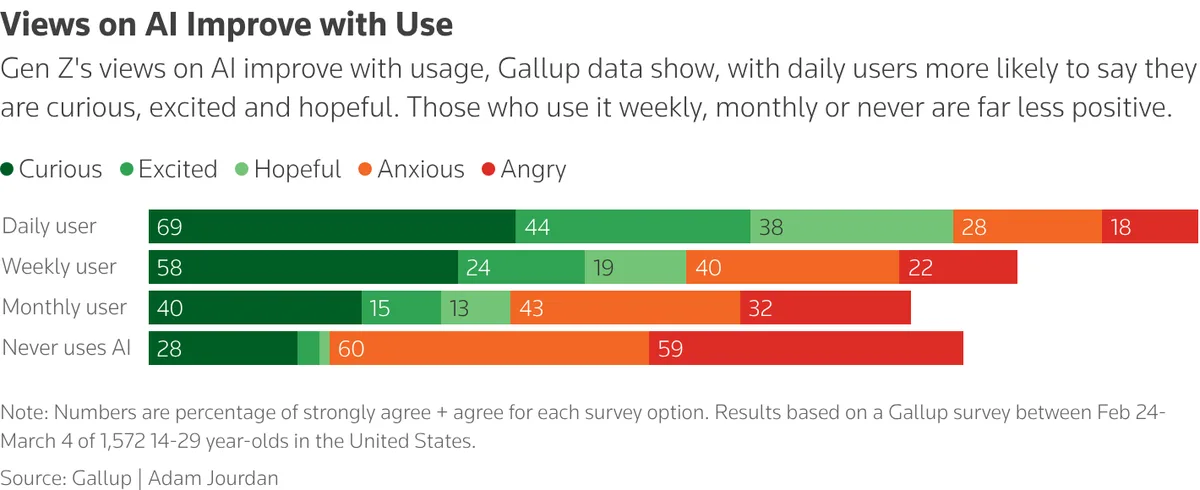
The workforce upheaval is met with growing anxiety, especially among younger workers. A Gallup report in April 2026 found rising numbers of Generation Z individuals feeling anxious or angry about AI, with fewer expressing hope compared with a year earlier [1]. Young "digital natives" entering jobs express fears that AI will change their daily work and lives dramatically [1].
Former Google CEO Eric Schmidt warned AI's impact would be "larger, faster, and more consequential" than anything before. Speaking at the University of Arizona graduation in May 2026, he said, "It will touch every profession, every classroom, every hospital, every laboratory, every person, and every relationship you have" [1, 2].
Resistance to AI adoption is rising in different sectors and regions. Chinese courts, South Korean carmaker unions, Hollywood scriptwriters, and India's film industry have pushed back against automation and AI's role in jobs [1].
In contrast, some firms are leveraging digital tools to support growth. Maybank in Malaysia offers SMEs tailored digital business solutions, currently assisting about 70% of the country's small and medium enterprises [1].
The wave of layoffs and technology shifts show no sign of slowing. Meta's job cuts started in May 2026, and further adjustments by other firms are expected as AI integration deepens [1].