Malaysia expects its current energy supply security to last until July 2026, Prime Minister Datuk Seri Anwar Ibrahim confirmed on May 22. "God willing, it is sufficient," he said, reassuring the public of stability at least through mid-year [1, 2, 3].
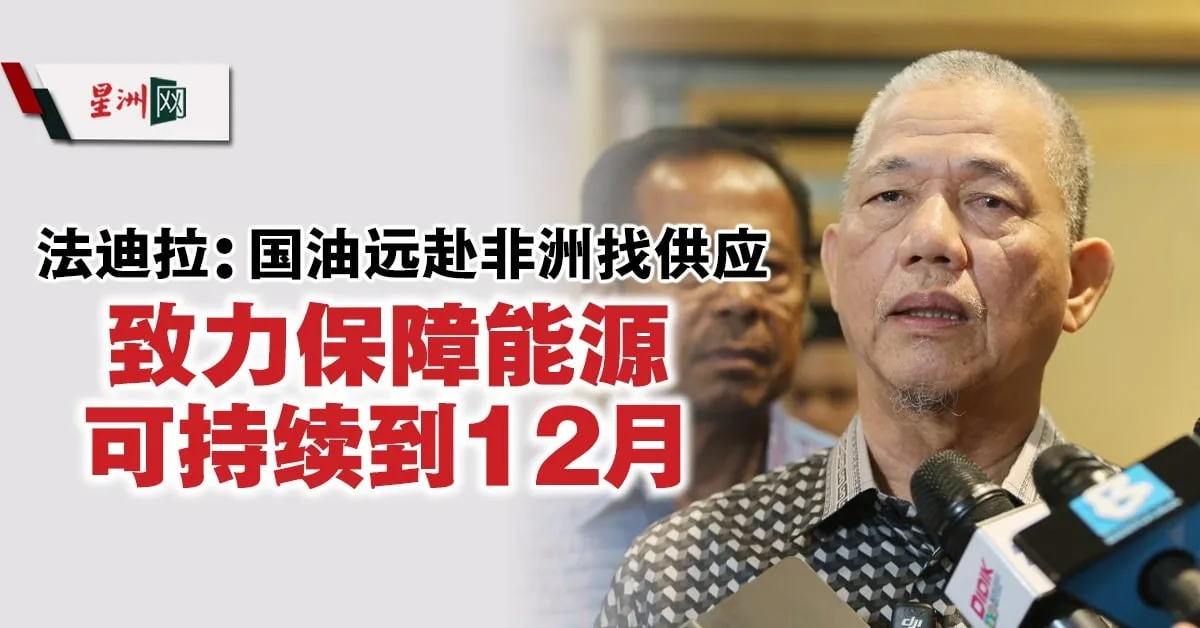
Deputy Prime Minister Datuk Seri Fadillah Yusof, who also serves as Minister of Energy Transition and Water Transformation, stated the government is intensifying efforts to extend supply security through December 2026. Petronas is actively seeking additional sources, including imports from Africa. "At present, Insya-Allah, our energy supply security will last until July. PETRONAS is working tirelessly to secure available supplies, even having to go to Africa," he said. "If all the supplies can be secured, Insya-Allah, we will be able to ensure our energy supply security until December," Fadillah added [4, 5, 6, 7, 8, 9].
The government urged Malaysians to reduce energy consumption to stretch reserves. "We want to reduce usage and encourage energy conservation so that we can extend the lifespan of our oil and gas supplies," Fadillah said [4, 5, 6, 7, 8, 9].
Malaysia remains a net energy importer despite being a producer, due to exporting premium-quality products, according to government sources [2, 3]. The global energy crisis triggered by Middle East conflicts is disrupting supply chains and raising energy costs worldwide. These disruptions affect logistics, healthcare, manufacturing, and consumer prices [4, 5, 6, 7, 8, 9].
The National Economic Action Council meets weekly to assess the crisis and implement measures focusing on small and medium enterprises and job preservation [4, 5, 6, 7, 8, 9].
On May 21, ASEAN member states agreed to accelerate the ASEAN Power Grid initiative and regional energy connectivity efforts, aiming to boost regional energy stability [10, 5].
Domestically, Tenaga Nasional Berhad plans a RM40 billion investment over two years to upgrade Malaysia’s power grid. This includes deploying AI-enabled smart grid technology to improve efficiency and reliability [10, 5].
The government also launched the Large Scale Solar phase 5 (LSS5) project, targeting 2,000 megawatts of capacity by 2027. It is tendering LSS6 and considering LSS7 plus Battery Energy Storage Systems for grid stability [10, 5].
Deputy Prime Minister Fadillah stressed the role of technology in national resilience: "Technology guided by integrity can become one of the greatest forces for national resilience, shared prosperity, and social good," he said [10, 5].
As of May 2026, global energy markets remain relatively stable, with slight rises in LNG prices and minor declines in coal prices [1]. Some Malaysians, however, appear to underestimate the crisis’s severity [4, 5, 6, 7, 8].
The government’s immediate next step is to secure additional energy supplies from international sources while encouraging domestic conservation to stretch reserves through December 2026 [4, 5, 6, 7, 8, 9].