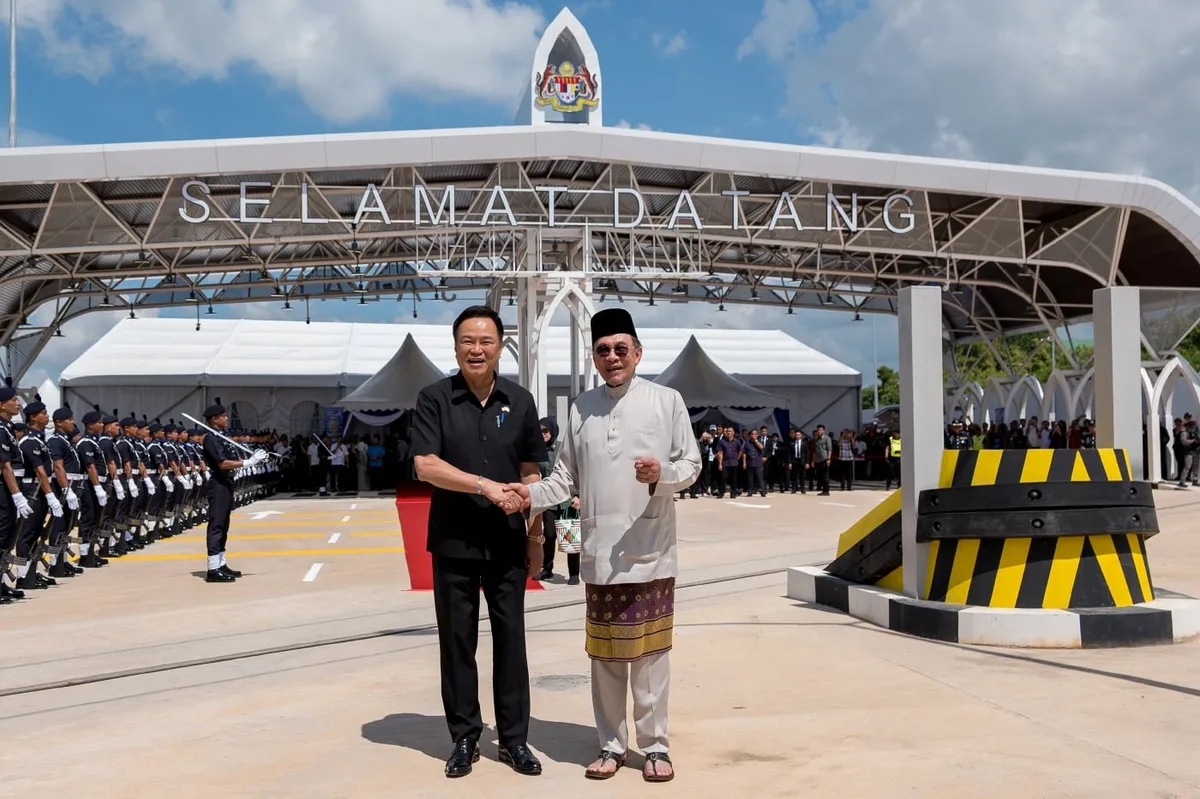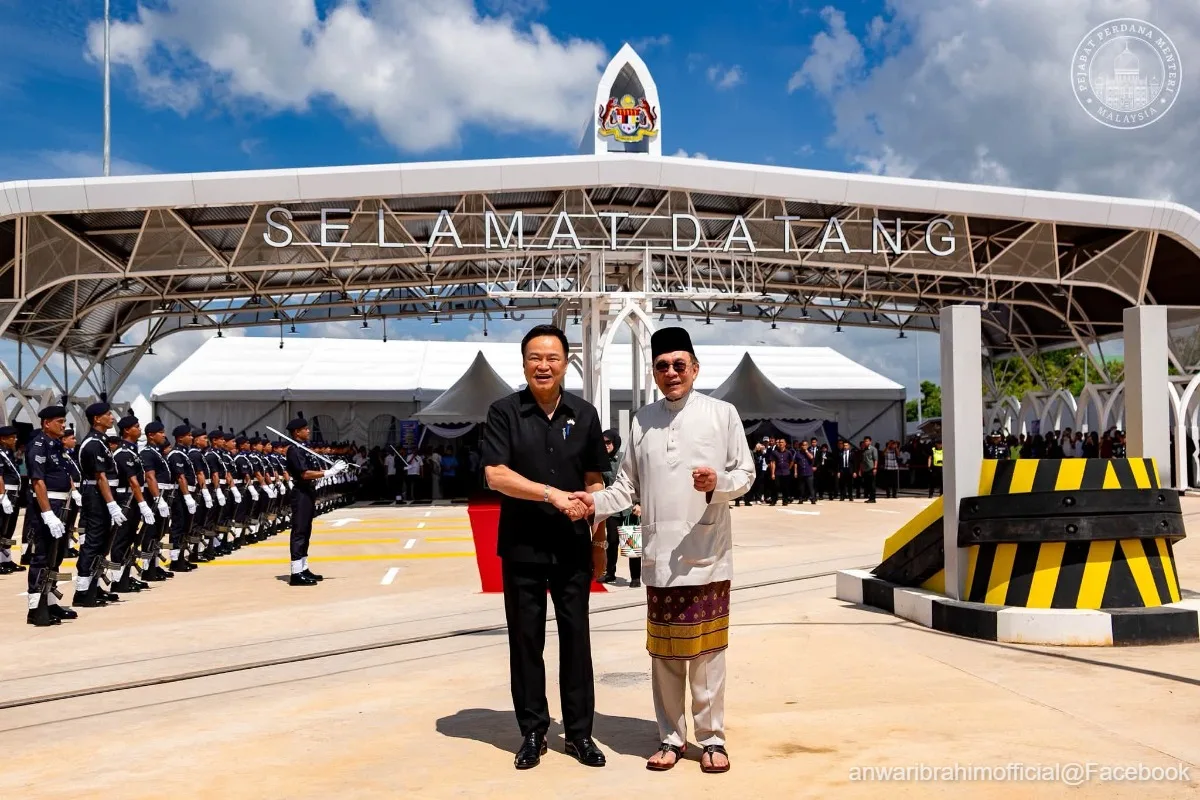
Malaysia and Thailand officially opened a new border road connecting Malaysia’s Bukit Kayu Hitam Immigration, Customs, Quarantine and Security (ICQS) Complex in Kedah with Thailand’s Sadao Customs, Immigration and Quarantine (CIQ) Complex in Songkhla on July 10-11, 2026 [1, 2, 3]. The route opened to all road users at 6 a.m. on July 11, while the existing Bukit Kayu Hitam-Danok border crossing closed permanently at midnight that day [2, 3].
The new road is designed to reduce traffic congestion at both border facilities, especially for container trucks and cargo vehicles. It features modern, integrated, and larger infrastructure to improve cross-border trade, tourism, logistics efficiency, and border security [2, 4, 3, 5]. The Sadao CIQ complex was purpose-built for heavy commercial traffic, with separate lanes for freight and passengers; the old checkpoint remains open only for pedestrians and private vehicles [3, 5].
Malaysia’s Prime Minister Datuk Seri Anwar Ibrahim said, "Today marks another historical venture... through this new venture project, we should be able to use it as a base to propel the economy of both regions" [1]. He added that the two countries "have gone beyond normal diplomatic relations by demonstrating our commitment to establishing a Special Border Economic Zone covering northern Malaysia and southern Thailand to spur economic growth" [4]. Thailand’s Prime Minister Anutin Charnvirakul said the road will "ease cross-border travel and cargo movement while reducing congestion at the Sadao CIQ, the busiest gateway on the Malaysia-Thailand border" [4].
The new connection is expected to facilitate smoother movement of goods and tourists, support supply chains, and stimulate economic development in Malaysian border states including Perlis, Kedah, Kelantan, Perak, and Penang [1, 4, 6, 5]. The project symbolizes longstanding friendship and close cooperation that also supports ASEAN connectivity and regional integration efforts [2, 5].
Both governments reaffirmed their bilateral trade target of reaching USD 30 billion by 2027, roughly RM 122-127.5 billion [1, 6, 5]. Leaders emphasized ongoing cooperation to resolve customs, immigration, fisheries, and trade issues to enable business, with Anwar Ibrahim noting, "We are friends and we have each other's phone numbers, so we can contact each other to alleviate whatever issues arise from our joint border efforts" [1, 6, 5].
The official launch ceremony on July 10 saw Malaysia’s and Thailand’s prime ministers attend, marking a key milestone in border relations and economic cooperation [1, 4, 6, 5]. The new border road began full public operations early July 11 [2, 3], marking a shift in border traffic management and signaling closer economic ties.