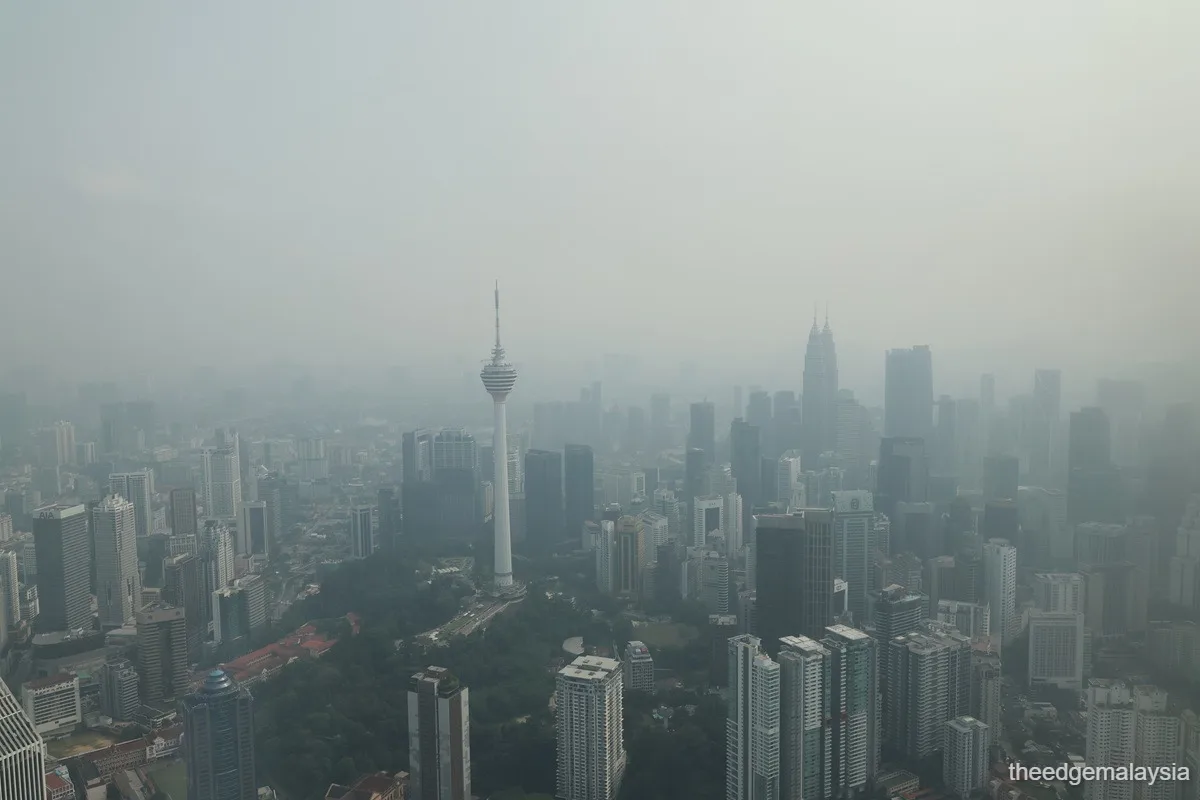
Malaysia began cloud seeding operations in Putrajaya on August 30 to address severe haze and dwindling water supplies, with further operations planned from September 3 to 5 in Sarawak and northern Peninsular Malaysia including Kedah and Perlis [1, 2, 3, 4, 5].
Deputy Prime Minister Datuk Seri Dr Ahmad Zahid Hamidi said the efforts are coordinated with the Malaysian Meteorological Department and the Royal Malaysian Air Force. He emphasized, "Cloud seeding is carried out not only according to need but also depending on weather conditions. Even when clouds are present, we need to monitor their movement to determine whether they are moving towards the targeted areas" [1, 2].
Severe haze attributed to transboundary fires in Kalimantan continues to impact Sarawak, with about three-quarters of the state affected. Zahid noted, "Sarawak must be helped. The fires in Kalimantan have spread too widely, affecting about three-quarters of Sarawak. We must help" [5].
Air Pollutant Index (API) readings remained hazardous on September 1 in multiple Sarawak districts: 374 in Serian, 295 in Kuching, 214 in Sri Aman, and 300 in Samarahan. On August 30, Serian’s API hit a high of 412 at midday according to some official sources, though earlier that day the Department of Environment recorded 364 in the morning. Samarahan and Kuching also recorded very unhealthy levels, with some discrepancies in exact readings between morning and midday reports [1, 6, 2, 3, 4].
The cloud seeding operations in Sarawak will focus on eight dams, including Batang Ai, Bakun, Murum, Bengoh, Gerugu, Assyakirin, Sika, and Matang, aiming to raise water levels critically low after dry weather [5]. Similar efforts in the northern Peninsula will target water reservoirs in Kedah and Perlis to boost supply and reduce haze effects [4, 5].
Deputy Prime Minister Zahid also stated, "What the National Disaster Management Agency (Nadma), together with the Malaysian Meteorological Department (MetMalaysia) and the Royal Malaysian Air Force (RMAF), are doing is conducting cloud seeding as quickly as possible" [5]. However, authorities caution that cloud seeding depends heavily on the presence of suitable clouds and atmospheric conditions. Minister Datuk Seri Arthur Joseph Kurup said, "If the weather is too dry and hot and there are no clouds, cloud seeding cannot be carried out" [4].
Health officials advise residents in haze-affected zones to wear masks, reduce outdoor activities, stay hydrated, and seek medical attention if experiencing breathing difficulties [4].
The next phase of cloud seeding is scheduled from September 3 to 5 across Sarawak, Kedah, Perlis, and northern Peninsular Malaysia to mitigate haze and low dam levels [1, 2, 3, 4, 5].