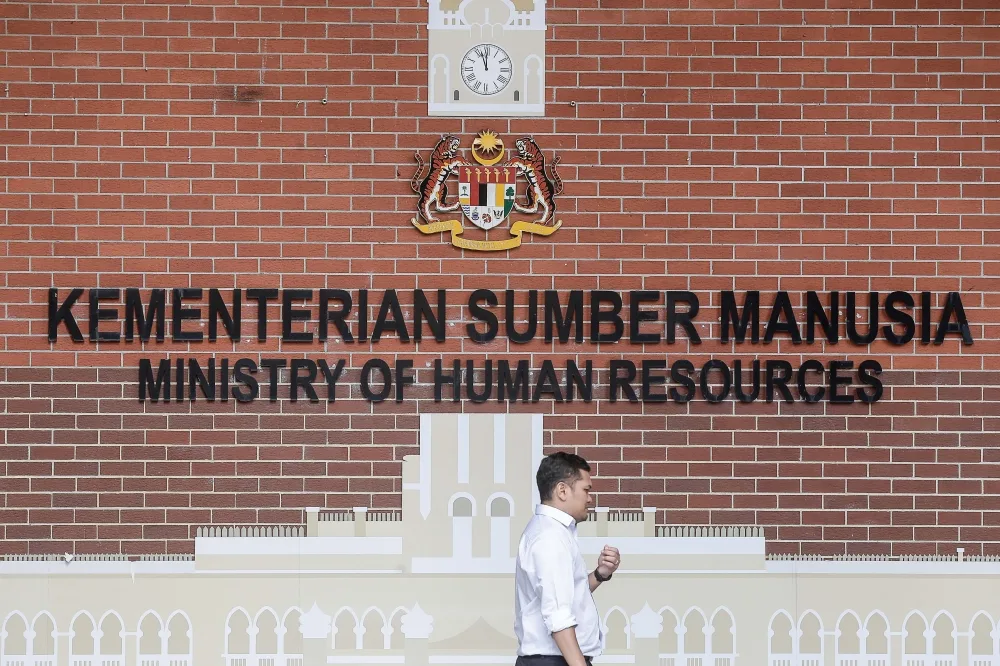
Malaysia's government disbursed RM64,076,884.75 in cash incentives to 4,025 private-sector employers participating in the Progressive Wage Policy as of June 5, 2026 [1, 2, 3]. The policy operates under the Madani Economy framework and has benefited 51,363 local skilled workers so far [1, 2, 3].
The wholesale and retail trade sector, including motor vehicle and motorcycle repair, had the highest employer participation at 26.7%, followed by manufacturing at 15.7%. Other sectors that saw notable involvement included professional, scientific, and technical activities at 11.1%, education at 7.4%, and accommodation and food services at 6.9% [1, 2, 3].
Regarding company size, small companies made up the largest share of employers claiming incentives at 50.2%, while large and medium companies each accounted for 18.4%. Micro enterprises comprised 13.1% of participating employers [1, 2, 3].
The incentive scheme has raised wages for skilled workers, especially professionals and technicians or associate professionals, who account for 45.9% of the total workers involved [1, 2, 3]. Among professionals, the median basic salary increased by RM350 from RM2,900 to RM3,250, a 12.1% rise. Their average basic salary rose by RM364.36 from RM2,930.74 to RM3,295.10 [1, 2, 3].
For technicians and associate professionals, the median basic salary increased by RM250 from RM2,350 to RM2,600, a 10.6% gain. Their average basic salary climbed RM294.38 from RM2,557.35 to RM2,851.72 [1, 2, 3].