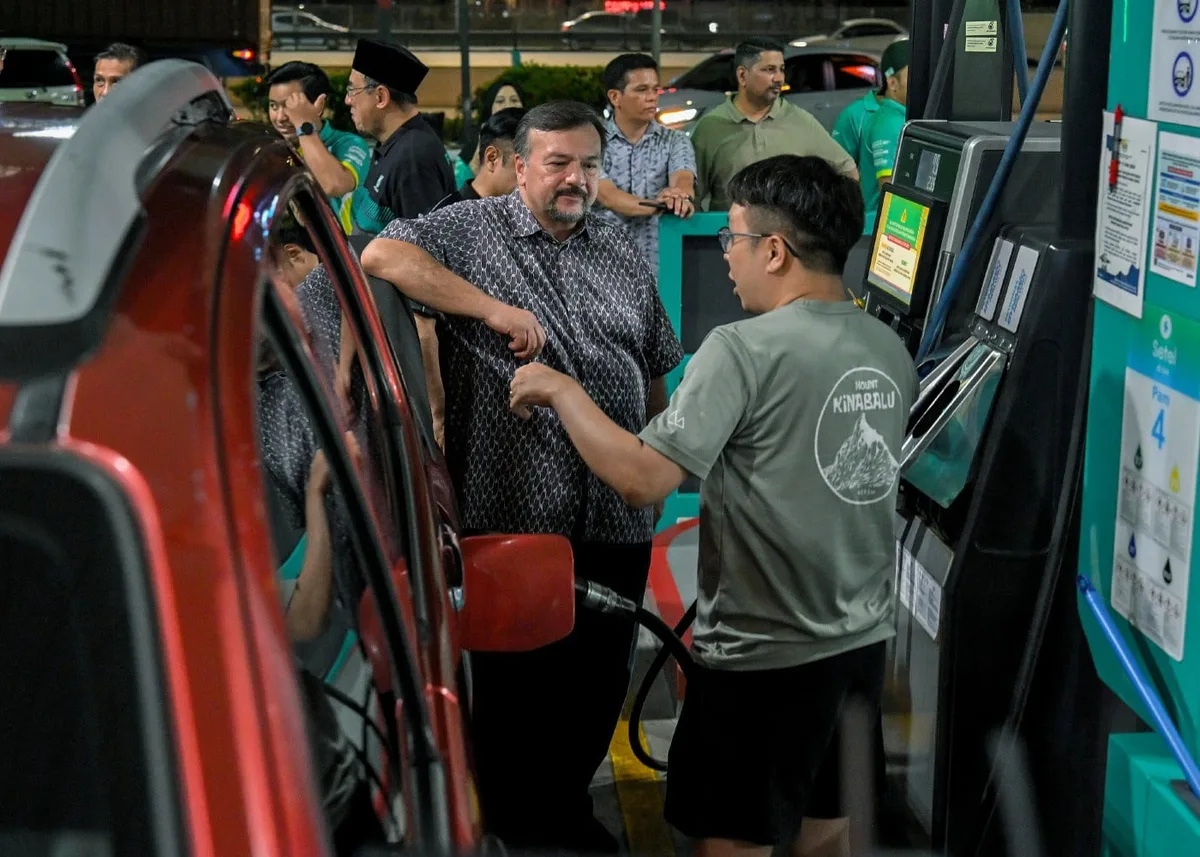
Malaysia’s fuel subsidy bill for petroleum products in 2026 is expected to reach nearly RM40 billion if current market prices remain steady, more than doubling the RM15 billion budget allocation for the year, Prime Minister Datuk Seri Anwar Ibrahim confirmed in parliament on July 1, 2026 [1, 2, 3].
The government spent about RM800 million monthly on subsidies for petrol and diesel in January and February. Following a rise in global crude oil prices, monthly subsidy spending surged to around RM5 billion in March and April [1, 2, 3]. Malaysia subsidizes petrol and diesel through programs such as BUDI95, enabling eligible users to buy RON95 petrol at RM1.99 per litre and diesel at RM2.10 per litre [1, 2, 3].
Special subsidies apply to groups like fishermen, who get diesel at RM1.65 per litre. Farmers receive BUDI Agri-Komoditi cash assistance, which was recently increased from RM200 to RM400 monthly. Public transport and logistics operators obtain diesel at controlled prices ranging from RM1.88 to RM2.15 per litre depending on their region [2, 3].
Starting June 27-28, 2026, the government began early implementation of the Budi Diesel scheme in Peninsular Malaysia. The scheme allows eligible diesel vehicle owners to apply online via the Budi Madani portal for an additional flexible quota of subsidised diesel up to 200 litres monthly. The diesel price under the scheme was initially RM2.15 per litre, then reduced to RM2.10 starting July 1 [4, 5]. Within two days of launch, more than 18,000 applications and 40,000 transactions were processed. Second Finance Minister Datuk Seri Amir Hamzah Azizan said, “From yesterday until now, more than 40,000 transactions have been recorded involving users benefiting from the Budi Diesel programme” [5].
The government also introduced a quota transfer facility allowing quota linked to vehicle owners to be transferred to actual users through MyKad verification [4, 5]. However, concerns have been raised in Sabah over the 200-litre monthly quota limit, seen as insufficient by some rural users including teachers, farmers, and tourism operators who rely heavily on diesel fuel. Sabah Teachers’ Union president Murkam Hussien said, “The 200-litre monthly quota is seen as insufficient to meet their actual needs, particularly for teachers who commute daily to work in rural areas” [6]. By contrast, officials say the quota is adequate for most eligible users in Peninsular Malaysia [4, 5].
Officials assert Malaysia’s petroleum supply remains stable and sufficient despite the global energy crisis [2, 3]. Separately, the government announced plans to repurpose retiring coal-fired power plants into renewable energy hubs and battery storage under a new National Coal Site Repurposing Framework. Deputy Prime Minister Datuk Seri Fadillah Yusof said, “Rather than allowing these assets to become stranded, we should view them as opportunities to create new economic value” [7].
The fuel subsidy outlook and diesel subsidy rollout will continue to be monitored throughout 2026 as market prices fluctuate.