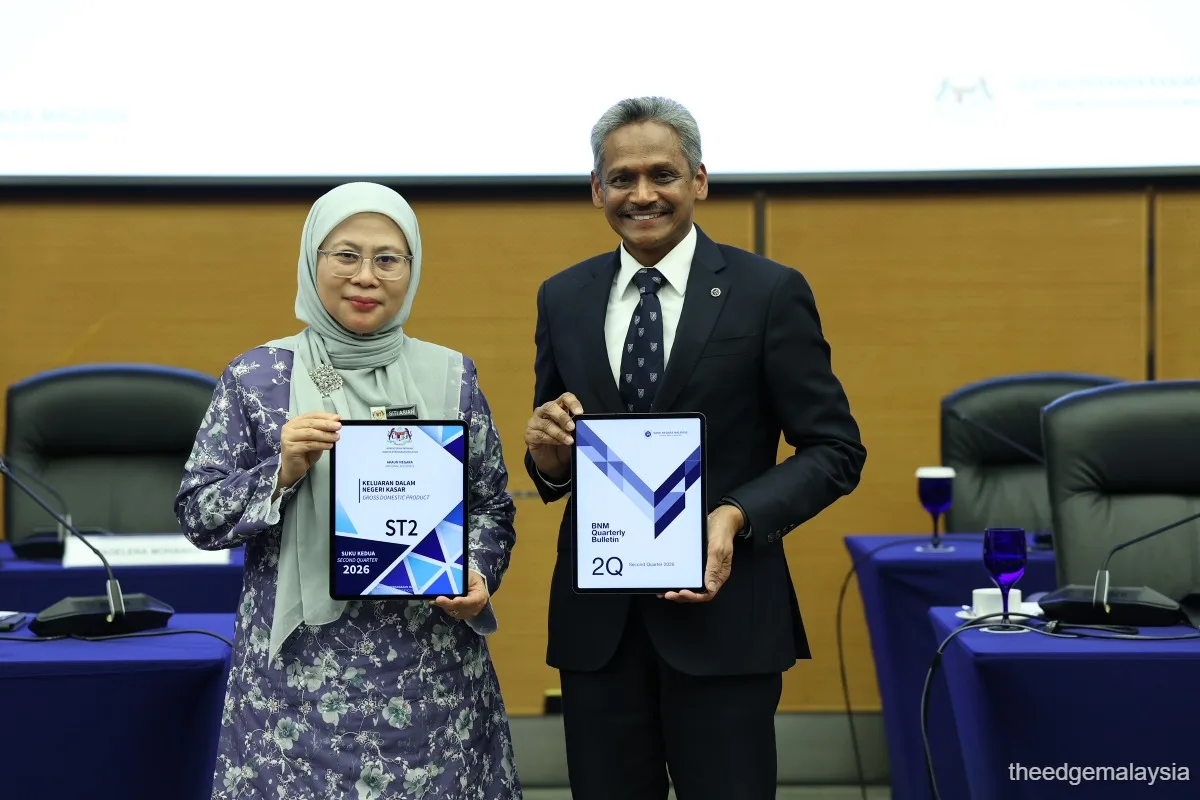
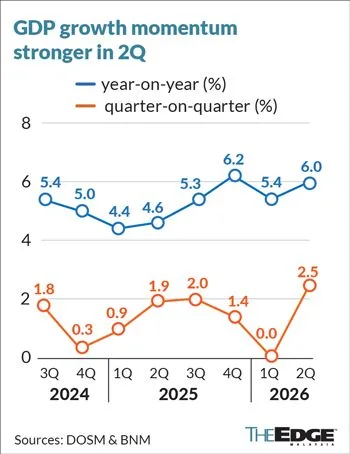
Malaysia’s gross domestic product grew 6.0% year-on-year in the second quarter of 2026, exceeding the official forecast of 5.8%, the central bank announced yesterday [1, 2, 3, 4]. Quarter-on-quarter, seasonally adjusted GDP rose by 2.5%, underscoring solid momentum in the economy [1].
Strong domestic demand fueled growth, with household spending supported by steady incomes and government policy measures. Private consumption grew by 4.8%, led by higher spending on dining, hotels, transport, and food and beverages [1, 4]. Public consumption and investment rose even faster, expanding 7.6% and 6.3% respectively in Q2, reflecting government efforts to stimulate economic activity [1].
Exports were a major driver in the quarter. Net exports surged 169%, pushing the trade surplus to 84 billion Malaysian ringgit—more than five times the previous level [1, 4]. The manufacturing sector grew 7.3%, led by electrical and electronics products, while mining rebounded with a 9.2% rise [1, 4]. Malaysia’s diversified export base and competitive ICT services contributed to its position as one of Southeast Asia’s fastest-growing economies, bolstered by growth in the AI sector [1, 5, 4].
Employment increased 1.1% to 16.8 million workers, while the unemployment rate remained steady at 3%. Inflation held at a moderate 1.9%, despite external cost pressures [1, 4].
Bank Negara Malaysia maintained its full-year GDP growth forecast at 4.0% to 5.0%. Governor Datuk Seri Abdullah Arshad said growth could be slightly below or above 5% for 2026 but expressed optimism about sustained momentum. “约5%可以低于5%,也可以高于5%,” he said [1, 5].
Prime Minister Datuk Seri Anwar Ibrahim emphasized that government policies have aimed to protect Malaysians from global inflation and supply shocks through targeted subsidies and financial aid. He added, "昌明政府不只是追求高经济增长数字,国家财富及发展必须用于提升人民生活,包括提供更有意义的收入、更优质的就业机会,以及援助弱势群体" [4, 6]. Despite the positive economic data, the government recognizes ongoing challenges for vulnerable groups amid rising living costs [4, 6].
Statistical differences between early GDP estimates and final figures reflect updated data rather than errors, the central bank noted [7].
Bank Negara’s official statement and economic briefing were released on August 14, alongside commentary from Prime Minister Anwar Ibrahim, highlighting recent reforms and growth prospects [1, 5, 7, 4, 6].