Malaysia’s fuel supply remains stable and sufficient to meet domestic demand through December 2026 despite renewed tensions and attacks near the Strait of Hormuz, the government said today [1, 2, 3, 4]. Economy Minister Datuk Seri Akmal Nasrullah Mohd Nasir told reporters on July 13 that the government is ensuring supply security by diversifying import sources, optimising domestic fuel production, and strengthening long-term supply agreements [2]. "The government will continue to ensure supply security through to December 2026 through three approaches being implemented," he said [2].
Between July 6 and 10, Brent crude oil prices rose 5.9%, from about US$69.82 to US$73.94 per barrel, driven by renewed US-Iran attacks and regional instability near the Strait of Hormuz, a key oil transit route [1, 2, 5, 4]. Liquefied natural gas prices also climbed 7.9% during this period due to global storage replenishment [2, 4]. Datuk Dr Tony Chia Han Teun, president of the Federation of Malaysian Freight Forwarders, said, "Hormuz handles roughly 20% of global oil consumption and a significant share of LNG trade. Governments will want energy flows restored first to stabilise markets" [6].
Prime Minister Datuk Seri Anwar Ibrahim announced that Petronas plans to begin exploration and drilling at major gas blocks in Turkmenistan as early as December 2026. He described the accelerated timeline as "among the fastest that has ever happened," normally expected to take one-and-a-half to two years before drilling starts [5]. Deputy Prime Minister Fadillah Yusof said the government and Petronas are working closely to secure Malaysia’s national energy supply amid the volatile geopolitical environment [3].
In defence policy, Defence Minister Datuk Seri Mohamed Khaled Nordin said Malaysia will diversify its defence suppliers to avoid dependence on any single power bloc, maintaining a neutral, non-aligned strategy [7]. "The Defence Ministry consistently ensures that the country's defence procurement strategy is based on national security interests and does not depend on a single power bloc or supplier," he said [7].
On July 13, the Dewan Rakyat passed the Control of Padi and Rice (Amendment) Bill 2026, updating enforcement and rice market regulation [8, 9]. Deputy Agriculture and Food Security Minister Datuk Chan Foong Hin explained the amendments would allow the ministry to update rice grade classifications last revised in 1992 to better suit current industry needs while safeguarding the public’s rice supply [8]. Penalties for rice-related offences have increased substantially to deter smuggling and manipulation; fines for first offences can now reach RM250,000, up from RM15,000 previously [8, 9].
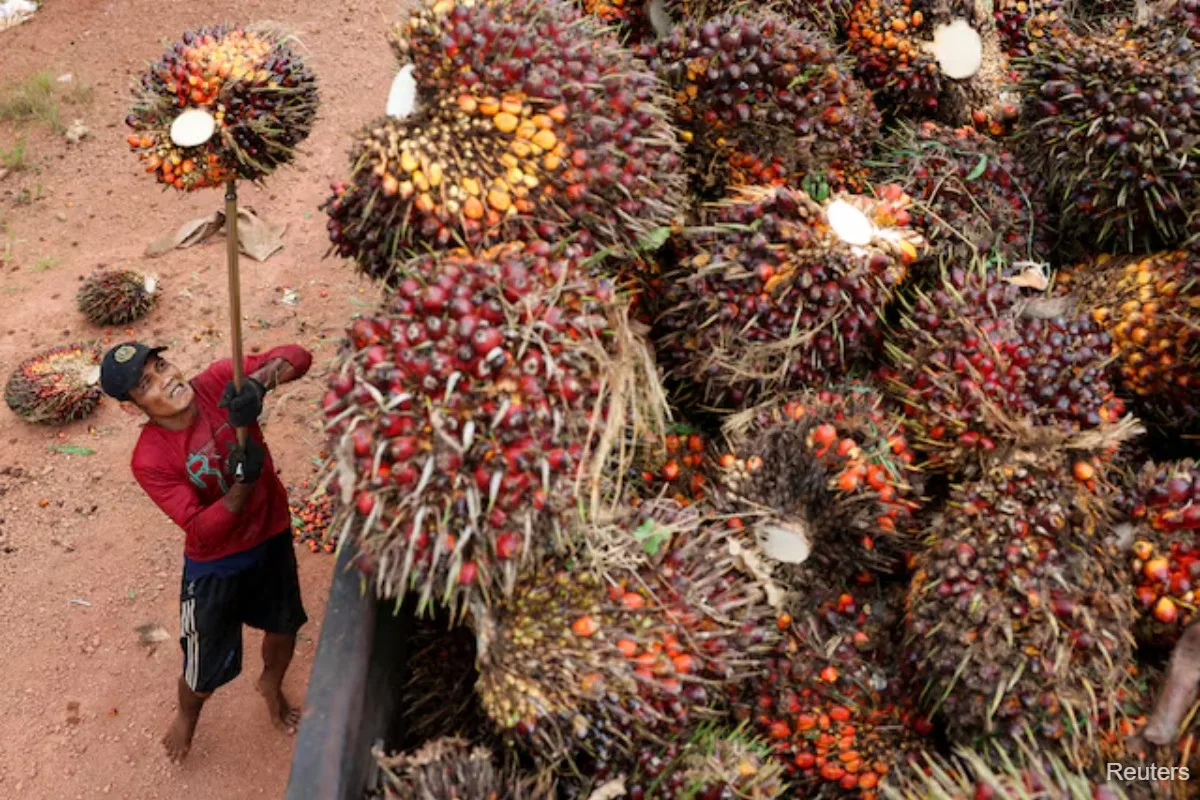
Indonesia’s palm oil exports dropped 25.1% year-on-year in May 2026 to 1.996 million metric tons, a decline likely to open opportunities for Malaysia’s palm oil sector amid rising Indonesian stockpiles and stricter biodiesel mandates reducing export volumes [10, 11]. The Malaysian Palm Oil Council expects Malaysia to gain market share in global palm oil markets [11].
PwC projects Malaysia’s infrastructure spending could reach US$728 billion by 2050, with transport, power, and digital sectors seeing strong growth [12].
Despite current supply stability, officials acknowledge ongoing geopolitical uncertainty and price volatility pose economic risks [3]. Malaysia will continue closely monitoring global developments to safeguard supply chains and markets [1, 2, 3, 4]. Petronas’s planned drilling in Turkmenistan, set for December 2026, marks a key next step in upstream energy expansion [5].