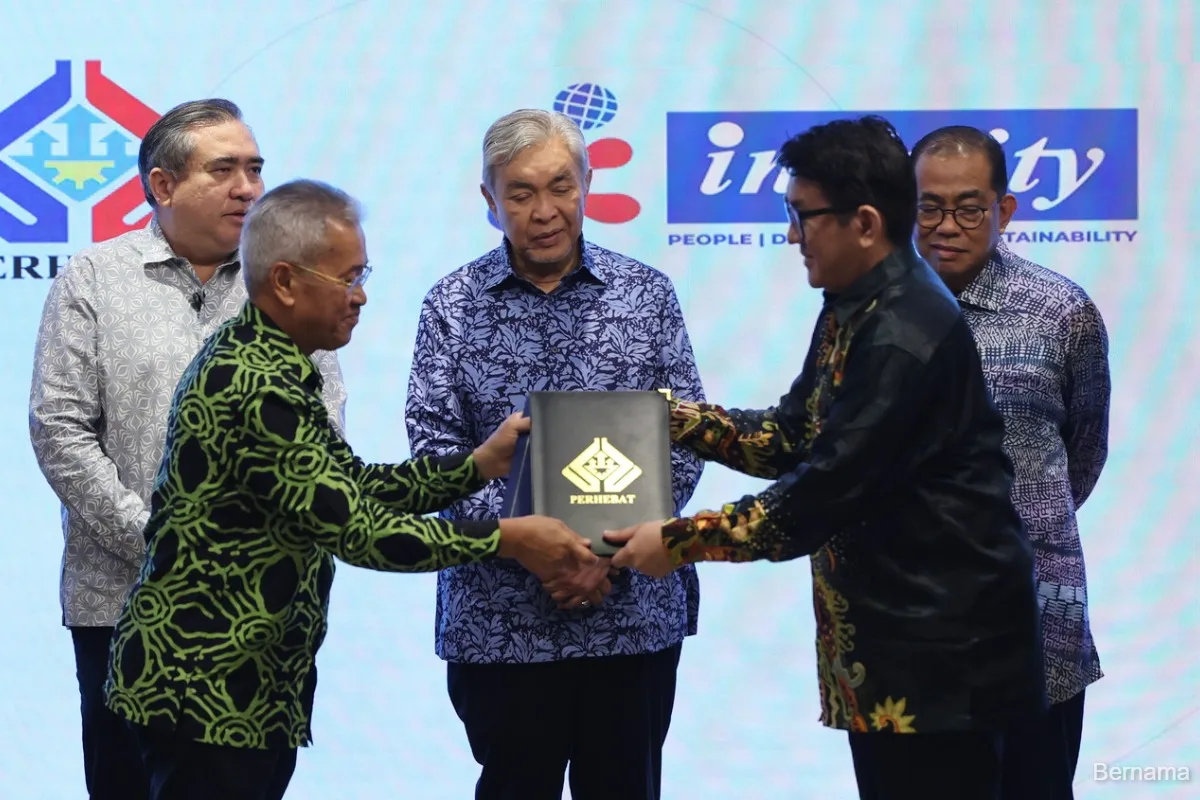
Malaysia's Ministry of Transport and Ministry of Defence unveiled a collaboration offering 3,208 job vacancies in the transport sector for armed forces veterans on June 4, 2026 [1, 2].
On June 6, during National TVET Day in Putrajaya, the Government-Industry TVET Coordination Body (GITC) launched the TVET Placement Centre (GTPC), a platform to connect TVET students, institutions, and industries for apprenticeships, training, and jobs [3, 4, 5]. GITC aims to have 1,000 companies participate by the end of 2026 and to facilitate 50,000 to 100,000 job placements through GTPC by 2027 [4].
Prime Minister Datuk Seri Anwar Ibrahim announced that starting July 2026, all government training institutions must provide slots for TVET students in emerging fields such as artificial intelligence, cryptology, and energy transition. He said, "They will be selected to master truly new fields, namely AI, cryptology and energy transition" [6, 7]. The Prime Minister emphasized that "employers and industry must cooperate with the government, particularly within the National TVET Council, to make it a success, so that there is proper coordination" [8].
Deputy Prime Minister Datuk Seri Dr Ahmad Zahid Hamidi proposed creating a dedicated TVET accreditation body independent of the current agencies, MQA and JPK, to better coordinate skills-based qualifications. He said, "As we have 1,395 TVET institutions, it would be better for accreditation to be carried out by a dedicated body without interfering with the accreditation functions currently undertaken by MQA and JPK" [9]. Zahid called TVET "no longer a secondary pathway but the primary route to quality employment, better income, social mobility and national economic competitiveness" [3].
Malaysia targets 650,000 TVET students by the end of 2026 across 1,395 institutions, up from about 587,000 students in 2025 [10]. The TVET 2.0 programme includes new focus areas such as robotics, cryptocurrency, renewable energy, maintenance, repair and overhaul (MRO), and maritime engineering [8]. MARA's TVET institutions reported a 99.5% employability rate for graduates, while the overall TVET graduate employability rate reached 98.7% as of May 2026 [5].
The government allocated RM50 million from the Skills Development Fund Corporation to support TVET 2.0, contingent on employer and industry cooperation [8, 11]. Deputy Prime Minister Zahid highlighted swift government support during recent collaborations, stating, "When Perhebat stepped outside its comfort zone and pursued something extraordinary, it received an immediate response from the MOT and swift support from the defence minister" [1].
The new requirements for government training in emerging fields start in July 2026, aiming to prepare students for advanced skills and better job prospects in fast-growing industries [6, 7].