Malaysian manufacturers are asking the government to avoid imposing new taxes in Budget 2027 and to reintroduce the Goods and Services Tax (GST) at a lower rate of 3% to replace the current Sales and Services Tax (SST) system. The Federation of Malaysian Manufacturers (FMM) argues the SST causes "cost and competitiveness concerns" due to cascading tax effects embedded in production costs [1, 2].
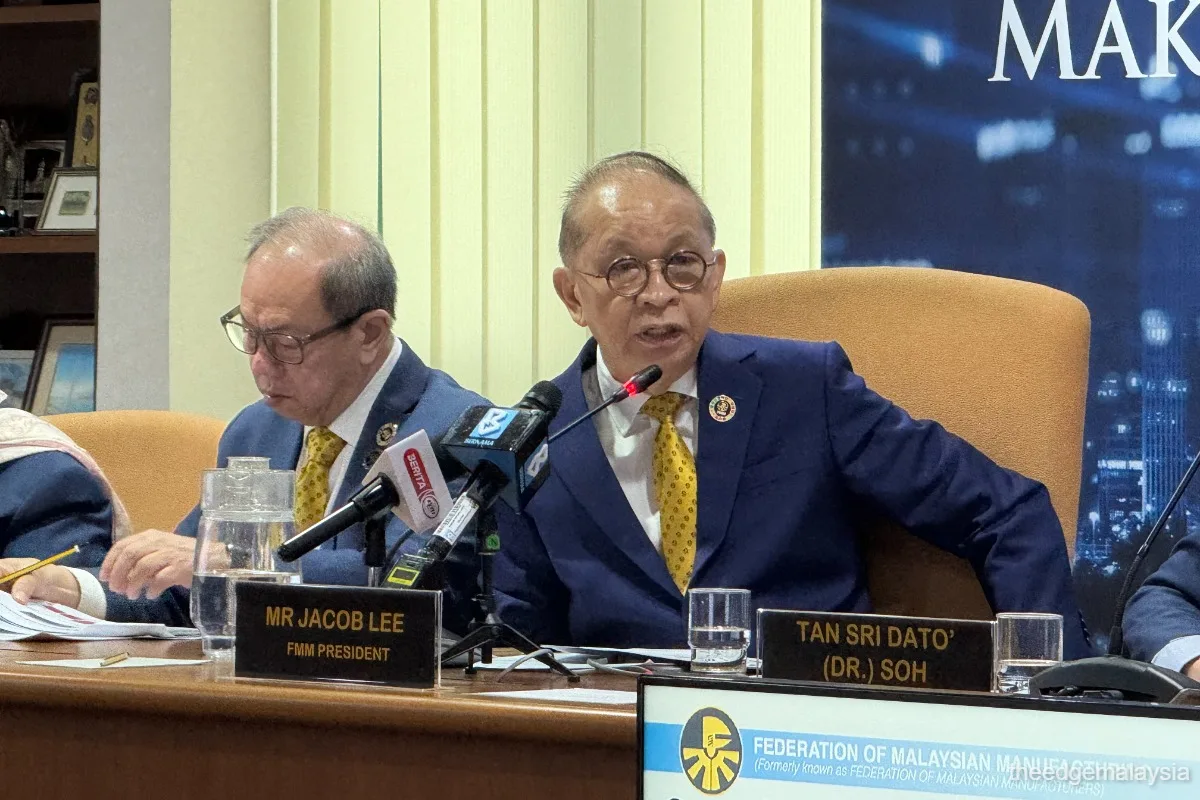
According to a recent FMM survey, 61% of manufacturers support bringing back GST to address issues of tax cascading and unrecoverable input taxes. Most manufacturers favor a GST rate between 3% and 5%, with 41% preferring the 3% rate. FMM president Jacob Lee Chor Kok said, "We feel that a reasonable 3% will be more acceptable to the market" [1, 2]. However, Prime Minister Datuk Seri Anwar Ibrahim stated the SST will remain the foundation of Malaysia's tax system for now, saying the country is not ready for a broad GST reintroduction [1].
Manufacturers face a challenging operating environment in the second half of 2026 amid rising costs and geopolitical uncertainty. An FMM survey revealed that 96% of manufacturers are affected by geopolitical tensions, citing raw material shortages and increased logistics expenses linked to the ongoing war in West Asia. The automotive, plastics, pharmaceutical, and electrical and electronics sectors are among those impacted [3, 4].
Jacob Lee noted, "Due to the disruptions in the Strait of Hormuz, a significant number of firms are turning to suppliers in Singapore and China as they seek reliable alternatives to stabilise their supply chains." Manufacturers are also shifting sourcing to Canada and Central Asia to avoid risky routes [5, 3, 4].
Rising freight, logistics, energy, and fuel costs remain major challenges in 2026. Despite these pressures, some firms continue with planned capital spending and employment growth. Lee said, "This shows that the businesses are actually resilient and quite confident of the prospect" [5, 3].
The FMM submitted a range of Budget 2027 proposals including lower SME taxes with a tiered income tax system, a RM1.5 billion package to support smart manufacturing adoption, and a RM1 billion endowment fund for industrial research and innovation. It also suggested redirecting foreign-worker levy collections into skills development and automation initiatives [6].
On the trade front, Malaysian exporters including micro, small, and medium enterprises (MSMEs) are seeking to strengthen two-way cross-border e-commerce partnerships with China to improve market access. Initiatives include a Smart Durian Fast Track for expedited customs clearance on durian exports, a sector valued at RM1.51 billion in 2023. Datuk Mohd Izani Ghani of Malaysia Airports Holdings said, "Through the Smart Durian Fast Track, KLIA will serve as a practical test bed to advance a more seamless cargo journey" [7, 8].
Malaysia and Macau are deepening strategic cooperation covering trade, finance, technology, education, and tourism, with Malaysia aiming to use Macau's gateway role in the Greater Bay Area to boost ASEAN business access [9]. Meanwhile, the semiconductor industry is pushing to move beyond assembly into higher-value chip design and research and development to gain greater share in the global value chain [10].
On September 3, FMM released its Business Conditions Survey highlighting these issues and presenting its Budget 2027 proposals during press conferences led by president Jacob Lee. Maybank Investment Bank on September 4 issued a cautious outlook for Malaysian corporates in the year’s second half, citing lingering geopolitical effects and commodity price rises [1, 5, 3, 11, 2, 6, 4].