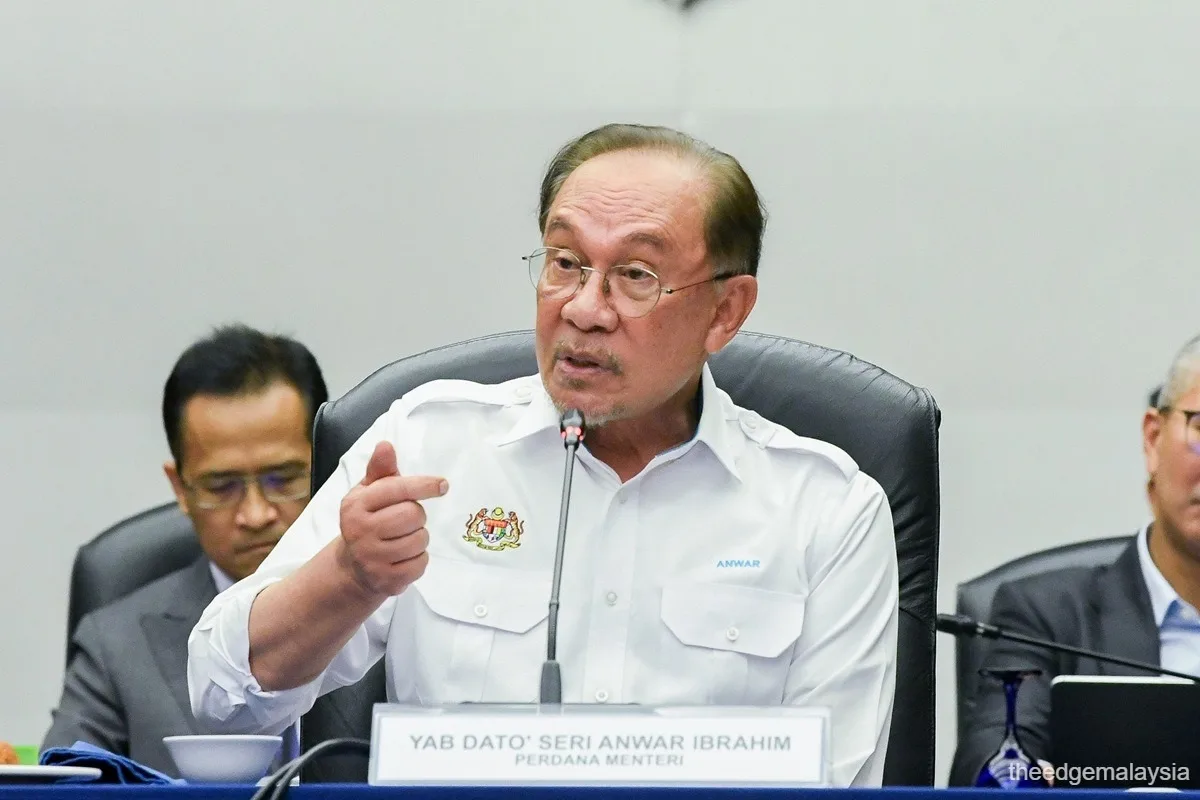
Malaysian Prime Minister Datuk Seri Anwar Ibrahim concluded a three-day official visit to Japan from June 8 to 10, 2026, at the invitation of the Japanese government. He was accompanied by senior ministers, including Foreign Affairs Minister Datuk Seri Mohamad Hasan and Investment, Trade and Industry Minister Datuk Seri Johari Abdul Ghani [1, 2].
During the visit, Anwar delivered a special lecture at the University of Tokyo and gave the keynote address at the 31st Nikkei Forum: Future of Asia. He called for stronger multilateral cooperation and warned against protectionism and the weaponization of trade and technology. He stated, "Do we agree that there should be punitive tariffs or discriminatory policies? (No,) we don't. Do we support free trade? (If yes), then say it as a policy" [2, 3, 4, 5, 6, 7].
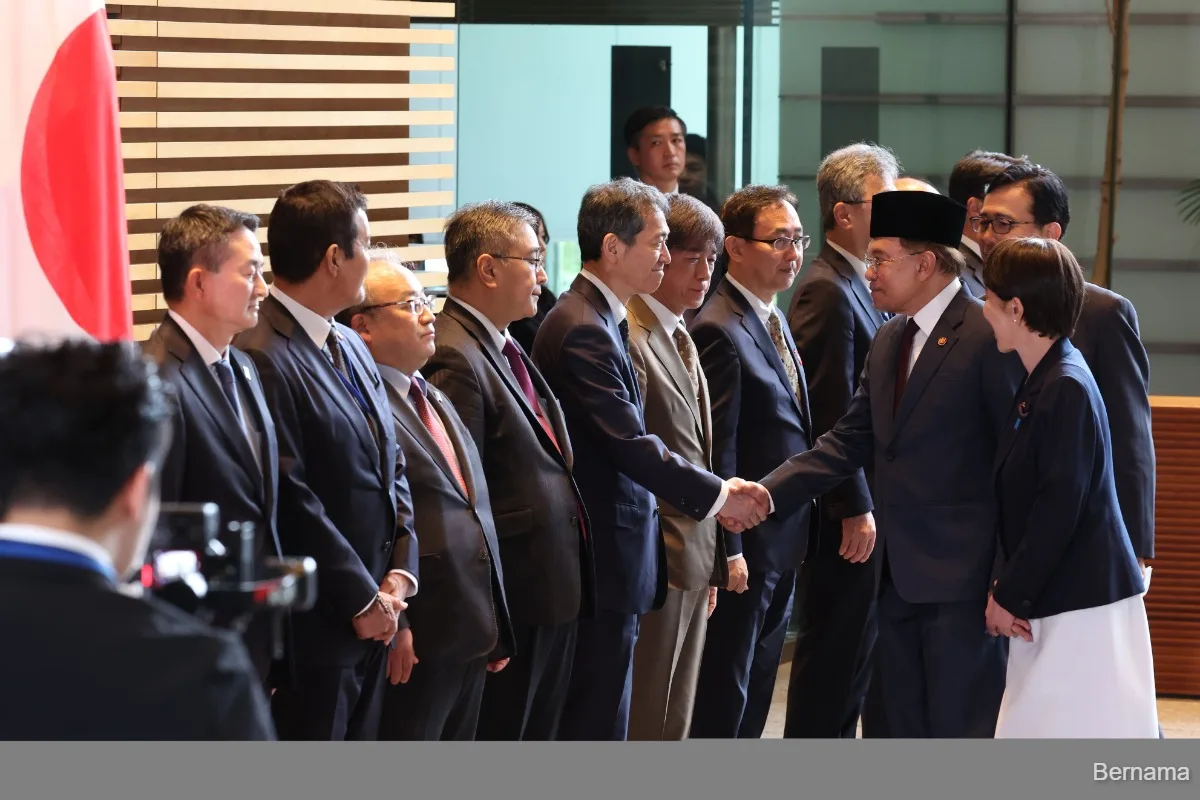
Anwar met with Japanese Prime Minister Sanae Takaichi for a bilateral meeting and was received with an official welcoming ceremony. The two leaders discussed green technology, energy resilience, regional security, defence cooperation, and higher education collaboration [1, 2, 7].
Malaysia and Japan agreed to deepen strategic ties in several key areas: semiconductors, artificial intelligence (AI), digital innovation, talent development, green technologies, critical minerals, and energy security. A Malaysia-Japan AI Platform was established to facilitate collaboration between companies, startups, and research institutes from both countries [7, 8].
A major energy deal was signed between Malaysia’s PETRONAS and Japan’s JERA Co Inc for a 20-year liquefied natural gas (LNG) supply agreement, reinforcing energy security cooperation. Japan currently imports about 15% of its LNG from Malaysia, a key supplier also of naphtha and refining capabilities [7, 8].
The countries also agreed to expand cooperation on maritime security, defence engagement, and combating transnational crime under Japan’s Official Security Assistance framework [7, 8].
Anwar urged Japanese companies to invest in Malaysia’s high-tech sectors including semiconductors, AI, quantum computing, and digital industries, as well as traditional sectors like oil and gas. He held discussions with executives from IBM, Mitsubishi, Eneos, Shizen Energy, Denso, and Marubeni to explore investments in energy, halal industries, AI, and advanced computing. "We have become a semiconductor hub in the region, and that sector is expanding very rapidly," he said. "Malaysia and Japan can make a meaningful contribution [to semiconductor supply chains and technology ecosystems]" [9, 6].
Bilateral trade reached RM142.96 billion (US$33.39 billion) in 2025, with Japan ranking as Malaysia’s fifth-largest trading partner globally. As of December 2025, nearly 2,900 Japanese manufacturing projects in Malaysia have attracted RM107.9 billion (US$31 billion) in investment and generated more than 347,000 jobs [1].
Anwar’s visit ended on June 10 with his return flight to Malaysia later that day. Ahead, Malaysia is set for the 16th Johor state election on July 11, 2026, with nomination day scheduled for June 27 and early voting on July 7 [2, 7, 10].