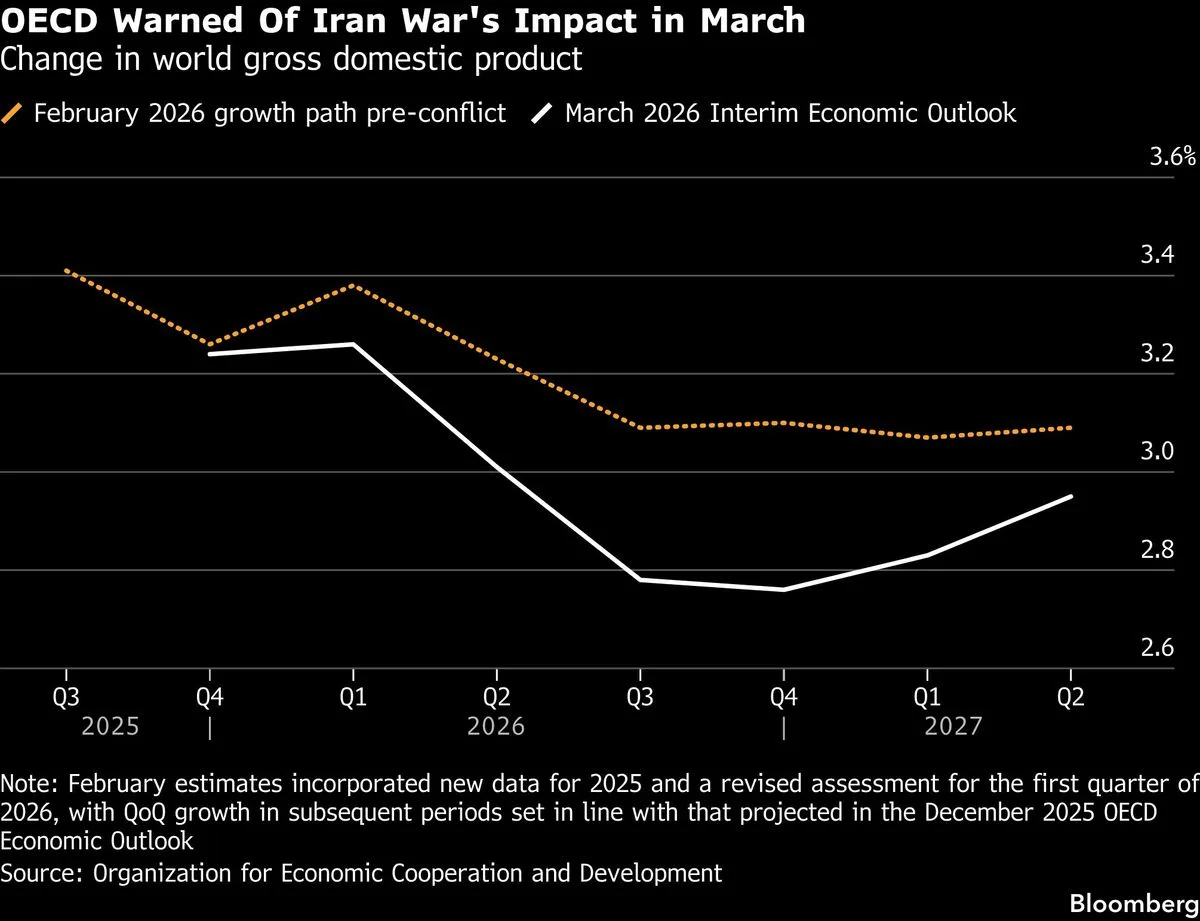
The ongoing Middle East conflict is weighing on global economic growth while pushing inflation higher, according to multiple international organizations and experts [1, 2, 3]. OECD Secretary-General Mathias Cormann said, "The overall assessment is that it’s putting downward pressure on growth and upward pressure on inflation" as energy price shocks risk spreading into broader wage increases [1].
The United Nations released a mid-2026 report projecting global GDP growth of 2.5%, a 0.2 percentage point downgrade from January forecasts and below pre-pandemic levels [2]. The report cited surging energy prices and increased production costs linked to the crisis as major factors [2].
Regional growth outlooks reflect the strain. Western Asia’s economy is expected to slow sharply from 3.6% in 2025 to 1.4% in 2026 due to infrastructure damage and disruptions to oil production, trade, and tourism [2]. The European Union’s growth forecast weakens to 1.1% from 1.5%, while the US economy remains steady with an estimated 2.0% expansion this year despite challenges [2].
The conflict has intensified financial stress in developing countries. UN official Li Junhua said, "The Middle East crisis has intensified strains across developing economies," with rising borrowing costs and capital flow pressures raising debt vulnerabilities at a critical moment for sustainable development [2].
Oil markets have reacted sharply. Brent crude rose above $109 per barrel and West Texas Intermediate topped $105 amid fears around the Strait of Hormuz, a key oil transport route under geopolitical threat [3]. This volatility has unsettled global bond markets, complicating efforts for G7 finance ministers and central bankers who met in Paris May 18 to address risks including the US budget deficit and China’s trade surplus [1, 3].
Cormann noted central banks face a delicate balance: "If energy price shocks start contaminating prices more broadly... then central banks will need to take action even if the economy growth outlook is somewhat weaker" [1].
US President Donald Trump’s Middle East policies and Federal Reserve leadership uncertainty are adding to market volatility and inflation concerns, according to sources [3]. The Strait of Hormuz remains a critical flashpoint with potential closure risks influencing oil prices [3].
The OECD will issue updated global economic forecasts June 3 to reflect these worsening conditions, providing further clarity on growth and inflation trajectories amid the ongoing geopolitical crisis [1, 3].