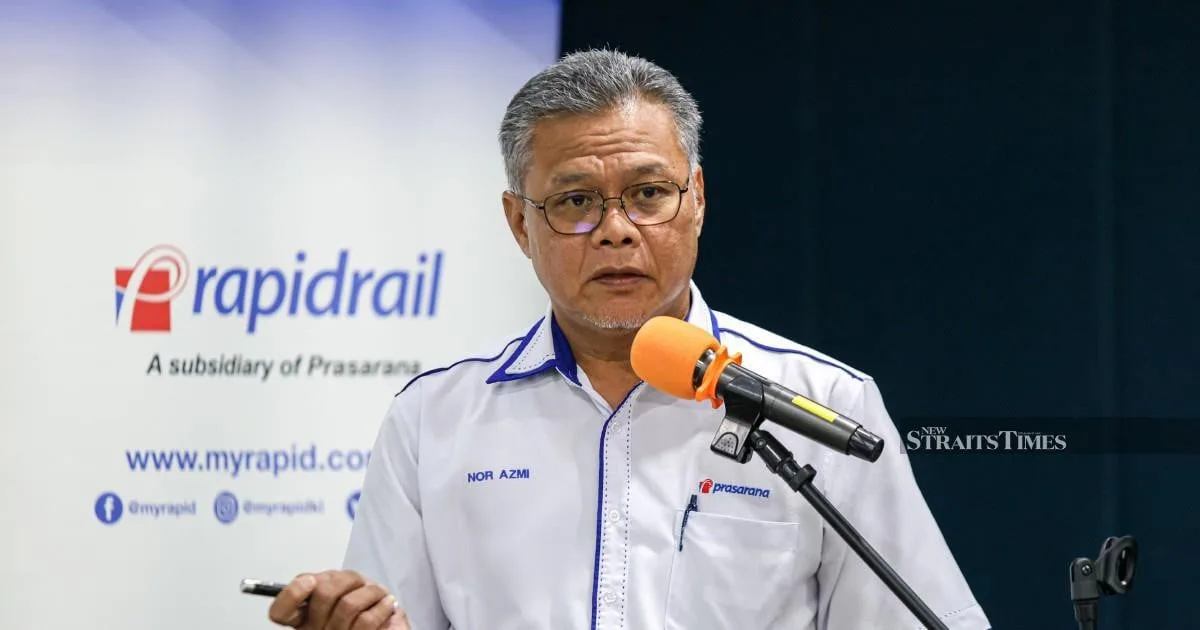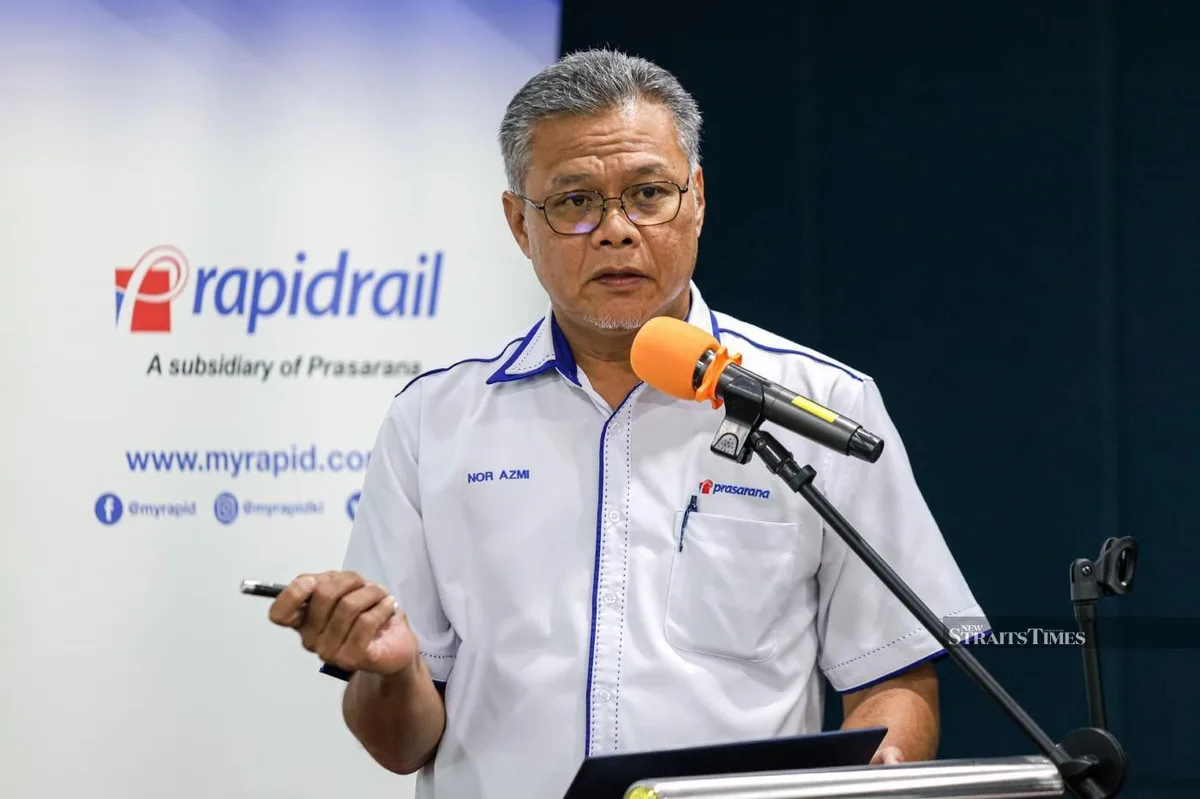
Rapid Rail plans to replace the existing Kelana Jaya Line trains with 26 new train sets, aiming for full operation by 2031 [1, 2]. The first new train is scheduled to arrive in 2029, with the full replacement expected to be completed by the end of 2030 [1, 2]. Nor Azmi Mohd Yusof said, "Insya-Allah, by 2031, we will be able to operate with the new trains" [1].
The current trains undergo condition-based maintenance, where components showing early signs of damage are replaced proactively instead of following fixed schedules. Nor Azmi explained, "Through this proactive approach, inspections are carried out more frequently and any components that show early signs of damage will be replaced immediately without having to wait for the original replacement schedule in the maintenance manual" [2].
On May 12, 2026, an incident occurred involving a melted battery cable on a Kelana Jaya Line train. Inspections of all trains found no further similar issues [1].
System upgrades on the Kelana Jaya Line have caused temporary instability and some service disruptions. Nor Azmi noted, "Typically, it takes between one and two years for a system to reach stable performance. That is why projects come with a two-year defect liability period, during which performance is closely monitored and improvements are made" [1]. Stabilisation is expected within this 1-2 year timeframe [1, 2].
Passenger demand on the Kelana Jaya Line has risen sharply. The line recorded a load factor of 109 percent in April 2026, reflecting high usage [1, 2]. Ridership increased about 11 percent this year [2]. Rapid Rail has responded by running more trains and using phased congestion control to ensure safety. Nor Azmi said, "It is a great trust for us to ensure that rail services in the Klang Valley continue to operate well and smoothly" [2].
The arrival of the first new train set in 2029 will mark a crucial step toward completing the fleet replacement by the end of 2030 and reaching full new train operation on the Kelana Jaya Line in 2031 [1, 2].