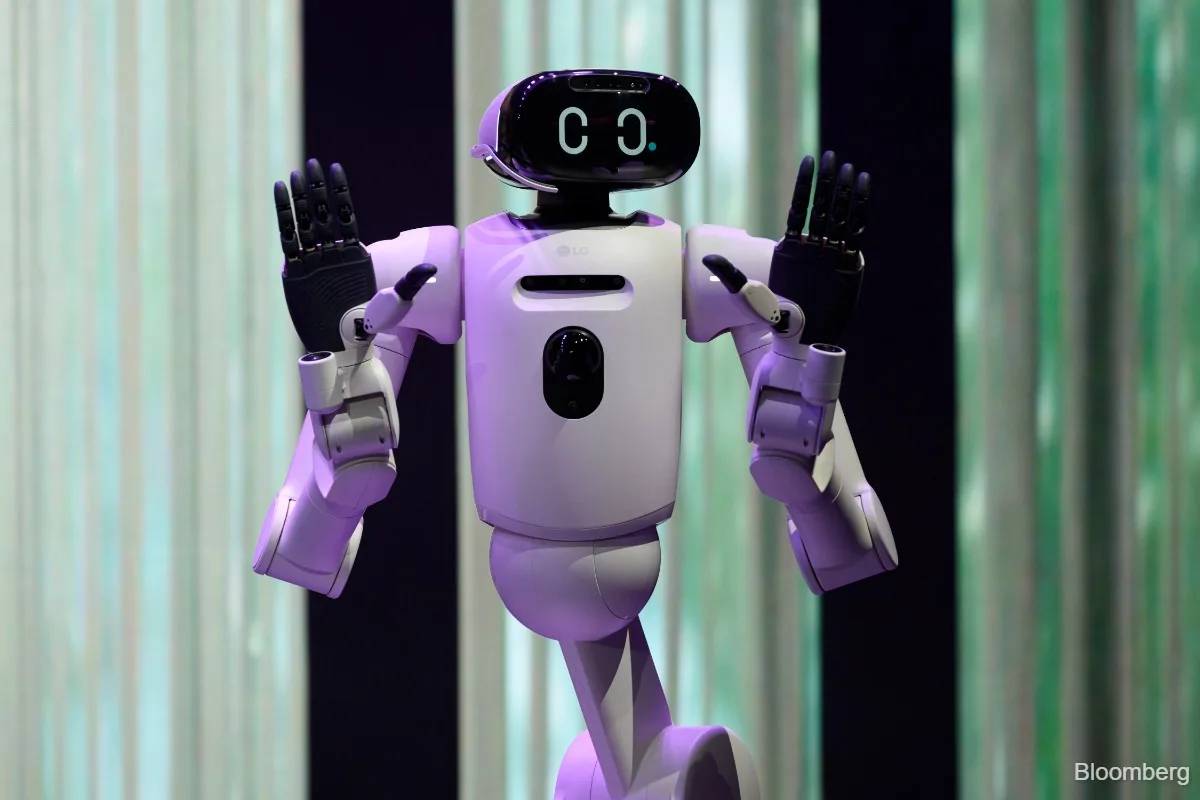
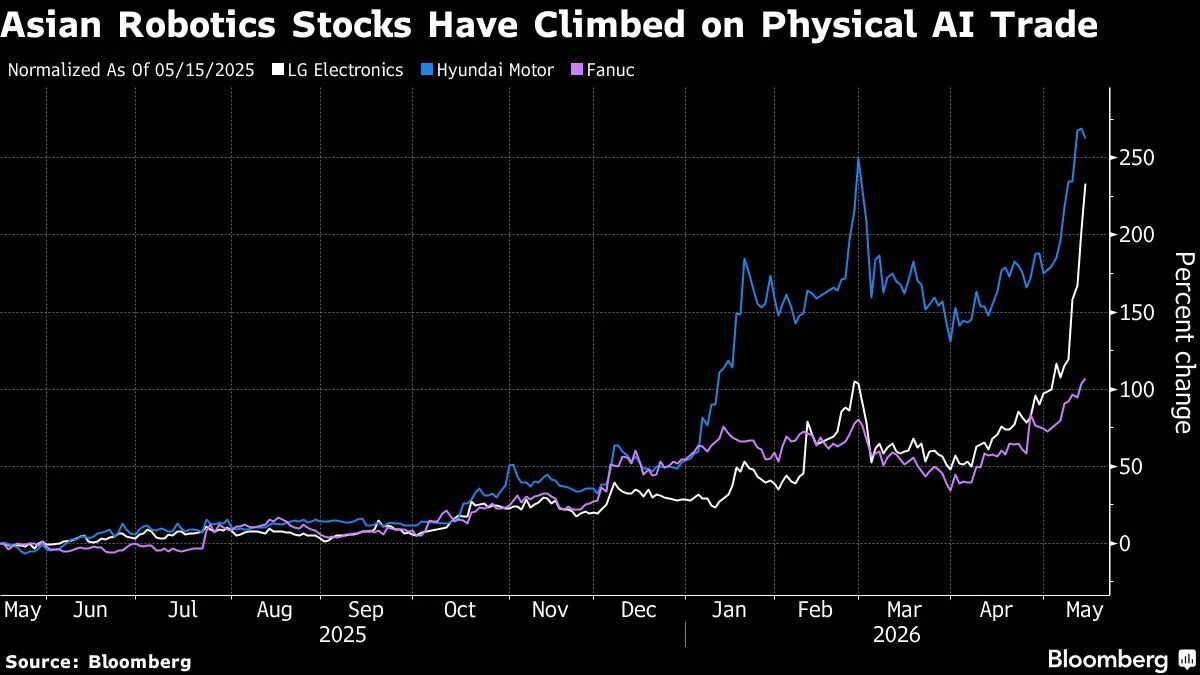
Robotics stocks led Asian markets higher today as investors focused on the expanding physical AI sector beyond semiconductors. South Korea's LG Electronics shares surged 55% in Seoul amid reports of talks with Nvidia on a humanoid robot partnership [1, 2, 3]. Japan's Fanuc rose about 10% following a deal with Google to develop AI for industrial robots [1, 2, 3]. Hyundai Motor's shares increased on reports the South Korean military is exploring a strategic robotics partnership [1, 2, 3].
Taiwan’s Hiwin Technologies stock jumped after reporting better-than-expected earnings, adding to sector gains [1, 2, 3]. Meanwhile, China’s Shenzhen LDRobot shares more than doubled during their Hong Kong market debut [1, 2, 3]. Nvidia CEO Jensen Huang recently described humanoid robots and autonomous machines as the next major computing platform after generative AI [1, 2, 3].
China leads Asia in robotics production capacity and humanoid robot development, while Japan benefits from decades of factory automation dominance [1, 2, 3]. South Korea aims to broaden AI exposure beyond memory chips into robotics technology [1, 2, 3].
The physical AI market is forecast to expand at a 47% compound annual growth rate to reach $15.2 billion by 2032, according to a MarketsandMarkets report released last month [1, 2, 3]. Gary Tan, portfolio manager at Allspring Global Investments, said, "The rally in robotics stocks reflects the AI cycle moving from digital into physical deployment. 'Physical AI' is emerging as the next leg of the AI trade." [2]
However, Saxo Markets strategist Charu Chanana advised caution, noting that physical AI faces complex hurdles including safety, regulation, supply chains, and customer trust. She said, "The robotics sector is still early-stage and manufacturers ultimately need to prove profitability to support valuations," highlighting the challenges beyond rapid stock gains [3].
On May 15, 2026, robotic and humanoid stocks rose again in Korea and China even as chip shares declined, reflecting ongoing investor enthusiasm for physical AI innovation [1, 2]. Market watchers will closely track announcements and earnings reports through the rest of the year as companies seek to turn AI robotics advances into sustainable business growth.