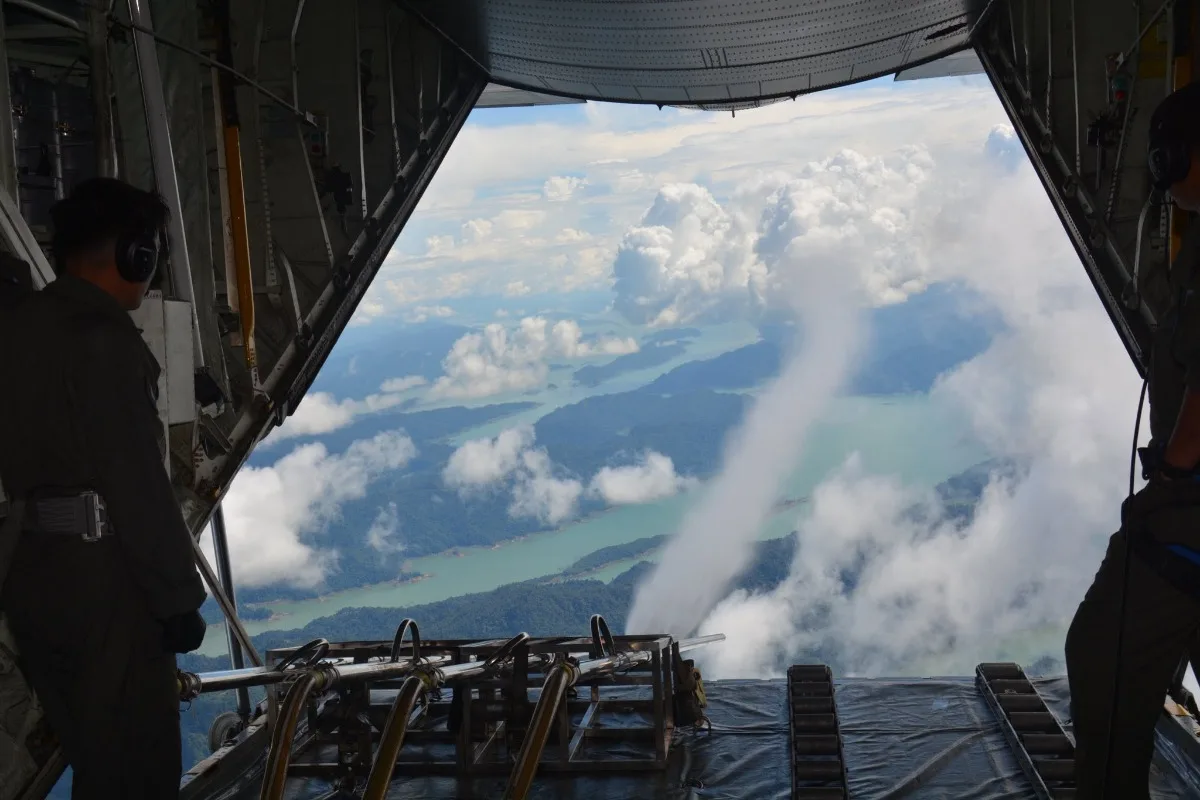
Sarawak started a three-day cloud seeding operation on September 3, 2026, aimed at increasing water levels in key dams and 13 water catchment areas amid hot, dry conditions [1, 2, 3, 4, 5, 6, 7]. The operation initially targets the Batang Ai hydroelectric dam, then moves to the Murum and Bakun dams, before expanding to other water catchments across multiple divisions [1, 2, 4, 5, 6]. Sarawak Deputy Premier Datuk Amar Douglas Uggah Embas said, “Our target today is first the Batang Ai hydroelectric plant area. After that, the team will move to Murum and Bakun, where they will assess the cloud conditions in these areas.” [1] He also noted the urgency with October forecasted to be hotter and drier, adding, "We want to increase the water levels as much as possible while we still can." [2]
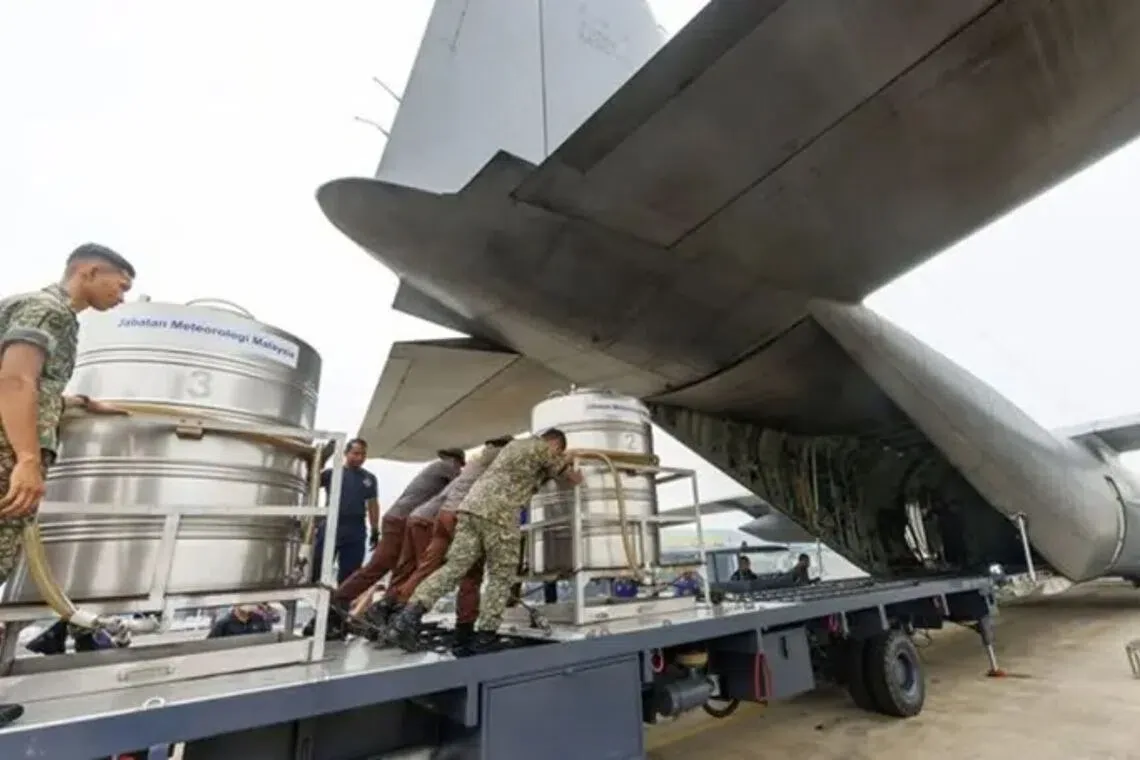
The operation is coordinated by the National Disaster Management Agency (NADMA), the Malaysian Meteorological Department (MetMalaysia), and the Royal Malaysian Air Force (RMAF) [1, 3, 4, 5, 7]. A RMAF C-130 aircraft carries four tanks containing a total of 7,200 litres of salt solution made from 800 kilograms of salt, used to seed clouds at altitudes between 1,500 and 2,130 meters [2, 3, 7]. Mohd Ridzuan Adam from MetMalaysia explained that after identifying suitable towering cumulus clouds through atmospheric analysis, the aircraft sprays salt water to induce rainfall within one to three hours, depending on stability and wind [3].
While the operation also aims to help reduce haze caused by smoke from numerous hotspots mainly in Indonesian Kalimantan, the focus remains on increasing dam water storage rather than haze mitigation alone. Mohd Ridzuan Adam said, "The operation is more focused on increasing dam water levels rather than solely addressing the haze problem." [7] Deputy Premier Uggah emphasized cooperation with Indonesia, stating, "We hope that they will continue to do their best to reduce the number of hotspots there. If the number of hotspots is reduced, then the haze will also decrease because the number of hotspots here in Sarawak is very low." [5]
Sarawak has conducted two prior cloud seeding operations earlier in 2026, in May and June [2, 4]. However, cloud seeding during the southwest monsoon remains challenging due to stable atmospheric conditions, limiting opportunities [3, 7]. Public warnings have been issued urging vulnerable groups to take health precautions against haze exposure [2, 7].
The cloud seeding flights, each weighing about eight tonnes including the payload, will continue through September 5, with possible extensions if weather conditions remain favorable [3, 4, 5, 7]. Sarawak Energy is monitoring reservoir levels and water supply status throughout the operation [2].