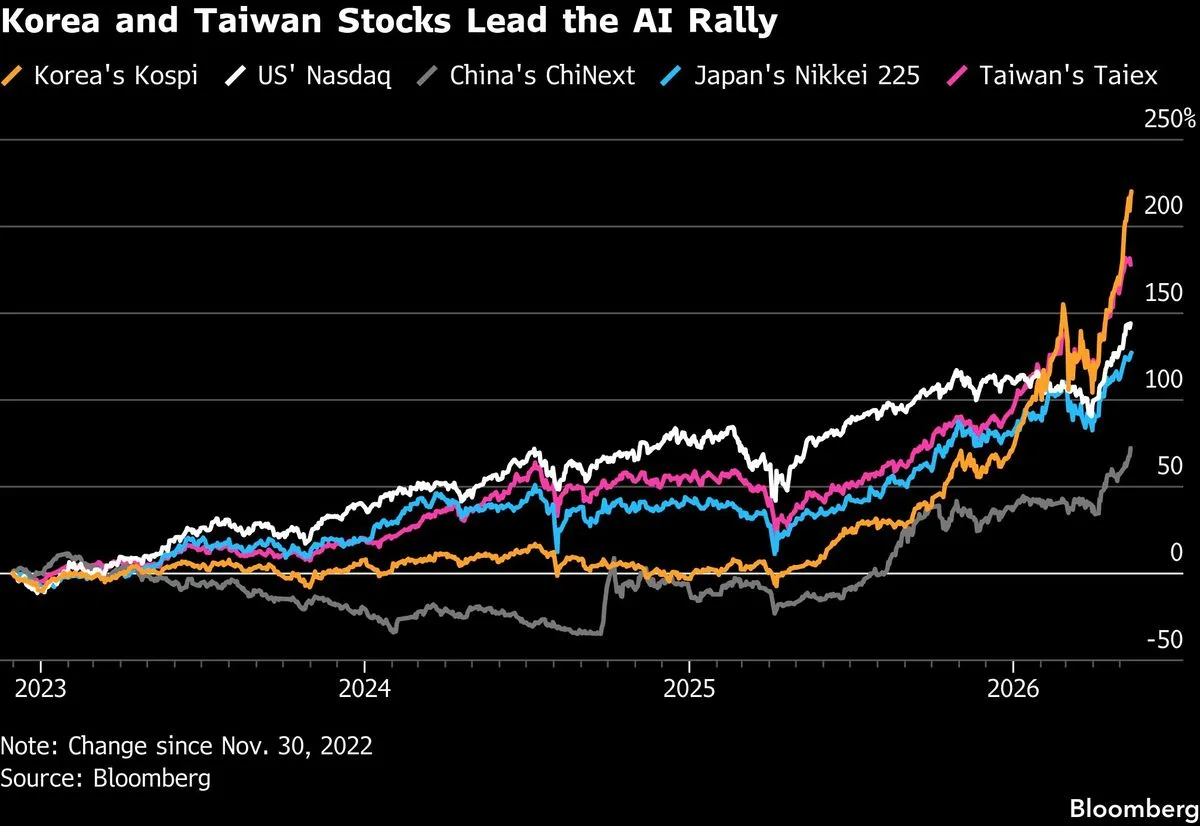
South Korea’s stock market, valued at approximately US$4.6 trillion, has surged about 200% over the past year, outpacing every other market worldwide [1, 2, 3]. The Kospi index has become the most volatile major stock gauge globally as daily price swings of 5% or more have become common [1, 2, 3].
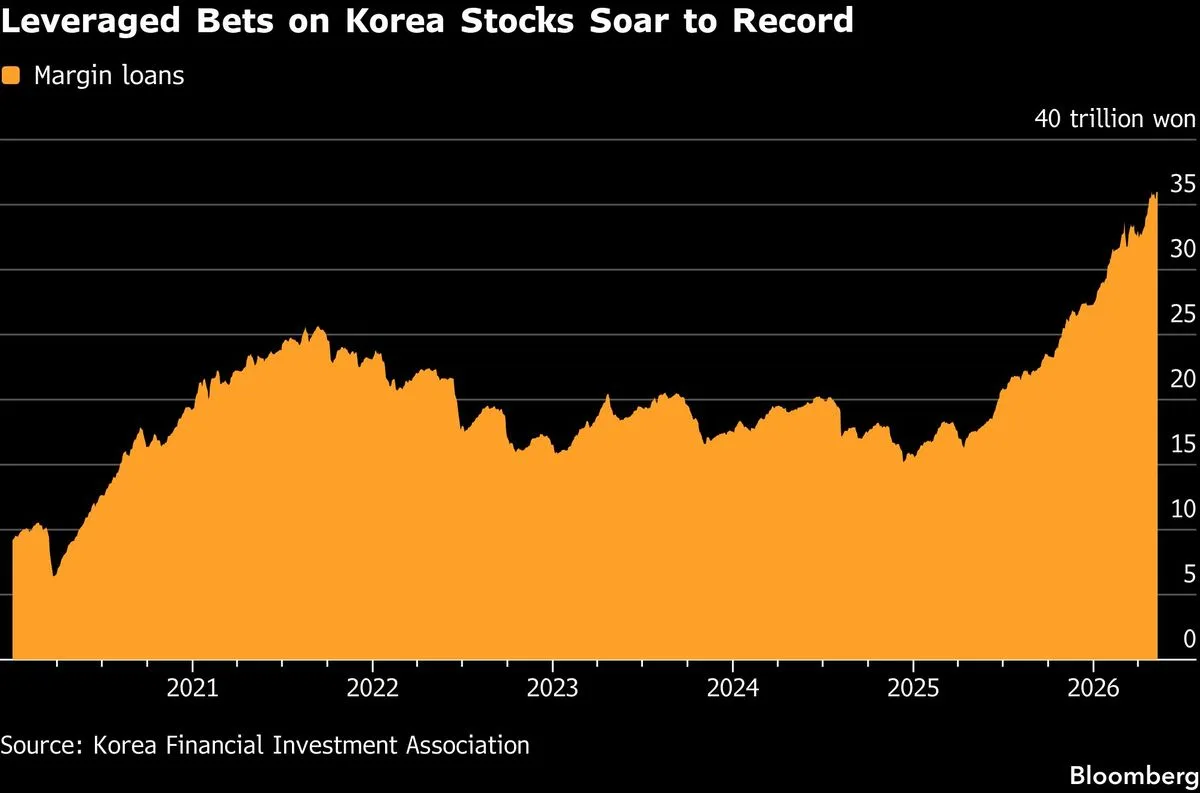
The rally is driven largely by excitement over South Korean chipmakers’ key role in the global artificial intelligence boom, which has attracted intense investor interest [2, 3]. Trading volumes have soared to record highs, fueled by locals borrowing record sums to amplify their bets, creating a speculative mania that shows few signs of cooling [1, 2, 3].
Toss Securities reported a near tenfold increase in new stock account openings for under-18s in the first quarter of 2026 compared to a year earlier, highlighting the enthusiasm among young retail investors [2, 3]. Jang Eunjung from Toss Securities said, "The mood in the retail community is very hot, nearly maniacal. Will we ever see such a vertical rally again?" [2]
However, the market has seen sharp selloffs amid fears the rally may be overextended. On May 12, the Kospi index lost about US$300 billion in value in less than two hours, triggering jitters about an overheating bubble [2, 3]. Kim Taewhan commented, "People with FOMO see others making big profits and may jump in recklessly, often using excessive leverage. But no one knows when the bull run will end." He cautioned that investors often increase stakes near peaks and risk losses, citing his own experience from the 2018 Bitcoin craze [2].
Market nerve was also affected by a Facebook post from a senior government official hinting at a possible "citizen dividend" from AI profits. The government clarified this was a personal opinion, not official policy, but the comment briefly unsettled investors [2, 3].
The South Korean stock market remains a focal point of speculation. Authorities and market watchers are likely watching closely as investors weigh the risks of what has become a historic run. No major regulatory actions or policy changes have been reported yet following recent volatility.