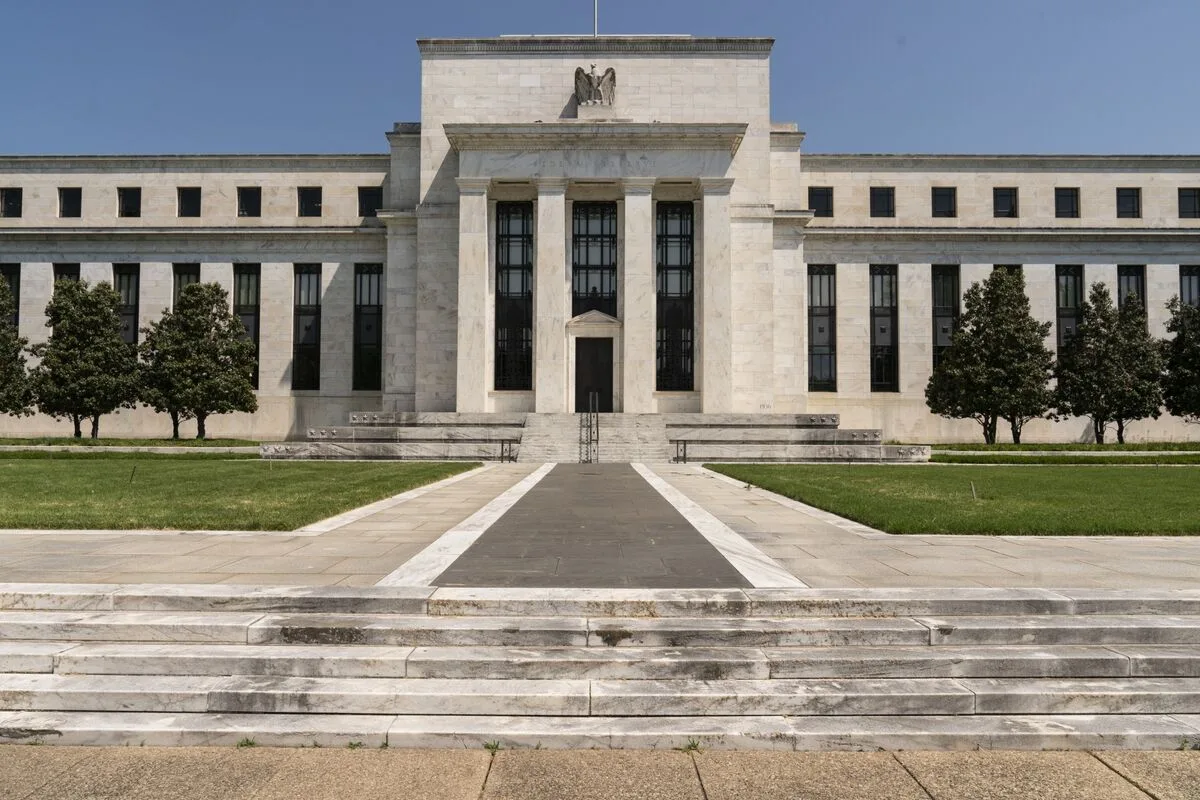
The US dollar surged to a seven-month high on June 23, reaching levels not seen since November 2025, driven by expectations that the Federal Reserve will raise interest rates twice by early 2027 [1]. Traders are pricing in nearly two quarter-point increases in US interest rates, reflecting confidence in further monetary tightening [1]. Protection costs against additional dollar gains relative to losses over the next 12 months have hit their highest point in over a year, signaling strong market conviction on further dollar strength [1].
Meanwhile, Japan’s central bank raised its policy interest rate to 1% in June, the highest since 1995, and indicated more hikes may be needed towards a neutral rate of around 2% [2, 3, 4]. Hawkish BOJ board member Naoki Tamura said, "What I envisage as a baseline path is raising the policy interest rate by 0.25 percentage points at intervals of a few months towards the neutral interest rate level of 2%. If the chance of upside price risks materialising heightens, it's necessary to accelerate the pace of rate hikes without hesitation by increasing the frequency or size of rate hikes" [2, 4]. Underlying inflation in Japan has reached 2%, with risks fuelled by the Middle East conflict and a weak yen [3, 4]. The yen remains near its weakest since 1986, trading around 161.60 per dollar due to pressure from US rate increases and yen weakness [3, 4].
Southeast Asian currencies have also shifted amid global monetary events. The Malaysian ringgit recently weakened but retains support from the country’s solid fundamentals. Bank Negara Malaysia plans to intensify efforts to attract foreign exchange inflows through the Qualified Resident Investor programme and encouraging repatriation of overseas income [5, 6]. Moreover, Malaysia will expand pharmaceutical sourcing to include India, China, Turkey, Egypt, Thailand, and Indonesia to increase competition and reduce medicine prices, as Datuk Seri Suriani Ahmad commented, "We are going outsourcing. We will not remain too dependent on what pharmaceutical companies dictate to us" [7].
The Singapore dollar declined against the US dollar, with the USD/SGD exchange rate nearing 1.30 on June 24, the highest since November 2025 [8]. Analysts predict the rate could rise further to between 1.30 and 1.32 in the third and fourth quarters of 2026, noting that the Monetary Authority of Singapore is likely to maintain current policy in its July meeting [8]. A Sony Financial Group analyst remarked that speculation about Fed rate hikes has increased concerns over rising AI capital expenditure financing costs, accelerating declines in semiconductor shares [8].
In Australia, employment rebounded strongly in May with 40,300 jobs added, mostly part-time, pushing the unemployment rate down to 4.4% [9, 10]. Despite strong labor market data, inflation remains a worry; the Reserve Bank of Australia has raised rates three times in 2026 to 4.35%, with further hikes possible depending on inflation trends. Analyst Krishna Bhimavarapu said, "The labour market bouncing back against yesterday’s mixed inflation report allows the RBA to remain on an extended hold. However, the bigger risk is still-sticky inflation that precludes it from coming back into the target zone" [10].
Thailand reported export growth of 10.6% year-on-year in May, slightly below a Reuters poll forecast of 12%. Shipments to China fell by 2.5%. The Thai central bank kept interest rates steady in June and raised its 2026 economic growth forecast to 2.3% [11].
US inflation data released on June 24 showed consumer spending grew 0.3% month-on-month in May despite rising prices, supported by a strong labor market and higher tax refunds. The personal consumption expenditures price index rose 4.1% year-on-year, the highest in over three years [12].
The next major US Federal Reserve policy meetings and the July Monetary Authority of Singapore meeting are set to provide further direction for currency markets. Bank Negara Malaysia continues efforts to boost foreign currency inflows amid global shifts.