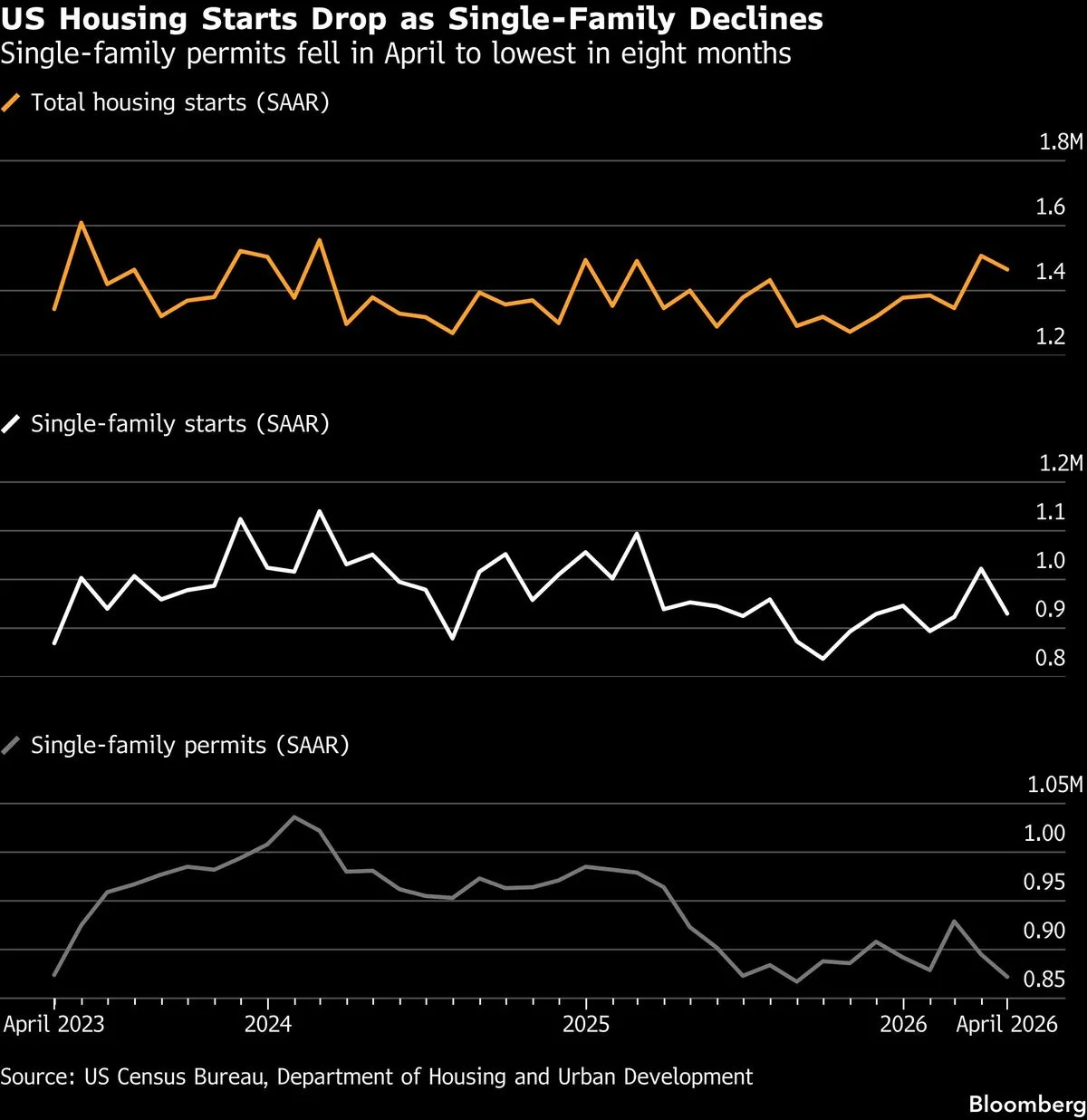
US housing starts decreased 2.8% in April 2026 to an annualized rate of 1.47 million homes, driven by a sharp 9% decline in single-family home starts to 930,000 units—the largest drop since August 2025. Multifamily housing starts rose more than 10% to the highest level since May 2023, partially offsetting the fall in single-family construction [1, 2, 3].
Single-family building permits also fell 2.6% in April to their lowest level since August 2025 as builders grew cautious amid elevated inventory, higher mortgage rates, weak consumer confidence, and tight household budgets [1, 2, 3]. New construction dropped in the South but rose in other US regions due to gains in multifamily projects [1].
Rising mortgage costs and inflation pressures have pushed the 30-year fixed mortgage rate to 6.51% as of mid-May, the highest level since August 2025. Freddie Mac’s chief economist Sam Khater said the "high rates, high prices' double whammy continues to suppress potential buyers’ willingness to purchase, leading to stagnant home sales and mortgage application activity" [3]. Pending sales of previously owned homes rose for a third straight month in April despite the environment [1, 2].
Bloomberg Economics economist Stuart Paul noted that affordability challenges will keep homeownership out of reach for many and force builders to focus on smaller, more affordable units. He said, "Affordability challenges will keep homeownership out of reach for the median household, and will keep builders focused on bringing smaller and more affordable units to market" [1].
Initial jobless claims showed little change in the week before the April reports, signaling muted layoffs in the overall economy [1]. The median economist forecast expected housing starts at 1.41 million for April, so the 1.47 million figure slightly exceeded estimates [3].
Builders are expected to continue monitoring mortgage costs, supply levels, and consumer demand as the housing market adjusts. Upcoming data on permits and starts in the next months will be closely watched for signs of stabilization or further decline.