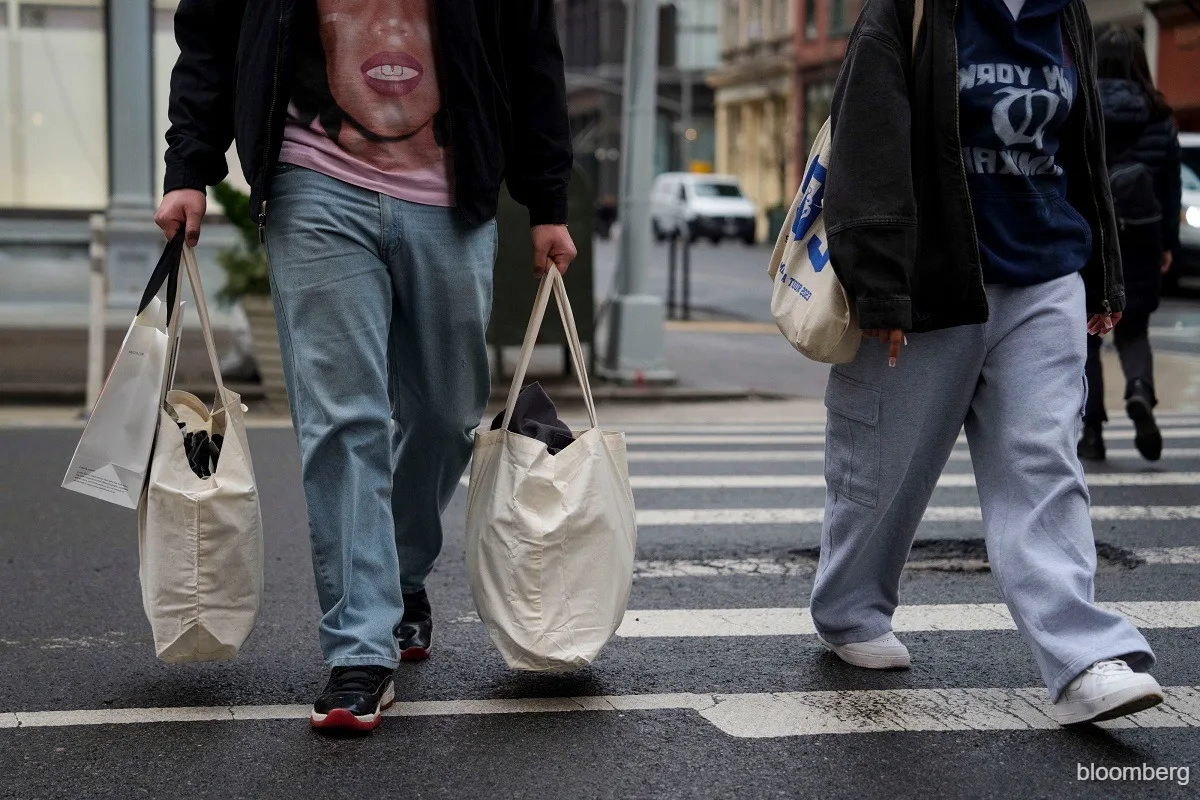
The US Commerce Department reported retail sales fell 0.6% month-on-month in July 2026, marking the largest decline since May 2025 and missing expectations of 0.1% growth [1, 2, 3, 4, 5]. Online retail sales declined 2.2% and automobile and parts sales dropped 1.8% in July. Sales at gas stations and electronics stores fell 0.9% and 0.5%, respectively, though clothing store sales rose 1.9% [2, 4, 5].
The decline partly reflected a pull-forward of promotional activity such as Amazon Prime Day from July to June, along with falling gasoline prices [1, 3]. Consumers showed increased sensitivity to rising gasoline prices in July compared with earlier in the year, creating a less supportive spending environment for the second half of 2026 [1, 3]. Heather Long, chief economist at Navy Federal Credit Union, said, "美国国内消费正显现出疲软迹象,7月零售数据在各个层面都令人失望。" Stephen Brown, chief North American economist at Capital Economics, noted, "当月数据弱于预期主要是由于非实体店零售大幅下降。"
Core retail sales excluding autos, gas, building materials, and food services also fell 0.4% in July after a revised increase in June [1, 3]. Despite the July weakness, economists expect consumer spending to remain supported by rising stock market wealth and upper-income households cashing in gains. US consumer spending grew at a 3.2% annualized rate in Q2 2026, while the overall economy grew 1.5% during the same period [1, 3].
Meanwhile, Bitcoin prices surged more than 20% between August 19 and 21, breaking above $70,000 and reaching intraday highs of approximately $71,628 on August 20 and $75,740 on August 21. This marked the highest level since May 2026 and triggered the largest short squeeze since 2021, with over $3 billion in short positions forcibly liquidated within 24 hours [6, 7, 8, 9, 10, 11]. Axel Rudolph, chief technical analyst at IG, said the rally "表明市场正在重拾信心。" BTSE COO 梅傑夫 added, "当殖利率下降、美元走弱,风险资产通常会上涨,我们已见到比特币伴随消息面上涨。"
The bitcoin surge reflected US Treasury plans to expand long-term bond buybacks, which resulted in falling bond yields and a weaker dollar, combined with optimism following a meeting between former President Trump and cryptocurrency industry leaders [6, 7, 8, 9, 10, 11]. VanEck Digital Assets research head Siegel said the price jump was "与美国清晰法案无关,真正的原因是美国财政部采取的措施,这重新燃起了市场对『财政主导』的担忧。"
Gold prices also rose to near three-month highs in August, reaching approximately $4,562 an ounce amid the weaker dollar and extended Treasury bond buybacks [12].
The US Commerce Department data marking July’s retail sales decline was released on August 14. Bitcoin’s rapid price surge and short squeeze unfolded from August 19 to August 21, following the high-profile crypto industry meeting with former President Trump on August 19 [1, 6]. Gold prices gained through the week leading to August 22 [12].