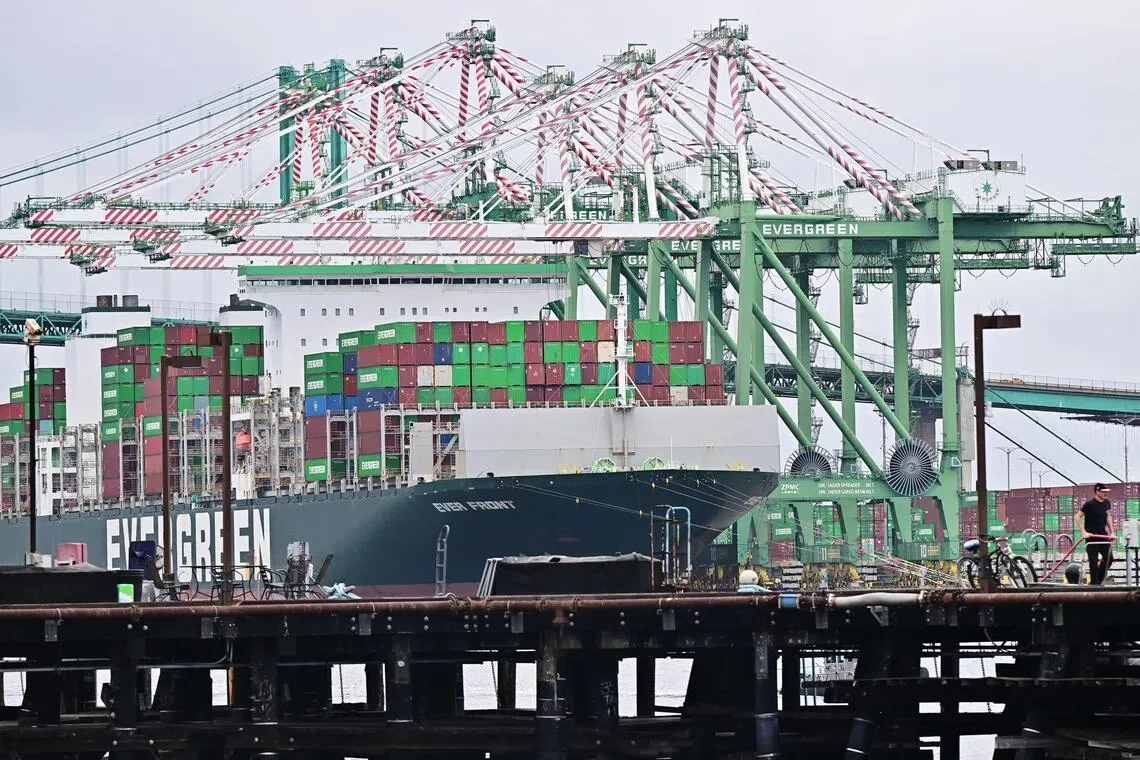
The US trade deficit in July 2026 expanded sharply to $88.6 billion, the largest monthly shortfall since March 2025, rising 24.4% from June, according to official data [1, 2, 3, 4, 5]. US imports grew 2.8% to about $399 billion, while exports fell 2.1% to near $311 billion [1, 2, 3, 4, 5].
The jump in imports was led by an 11.4% surge in capital goods, including computers, computer accessories, semiconductors, and telecommunications equipment—the biggest increase in that category since 1993 [1, 3, 5]. This reflects heavy investment in AI infrastructure, which remains a significant factor in US economic growth [1, 3, 5].
Among trading partners, the US trade deficit with Taiwan hit a record monthly high of $20.7 billion, largely due to semiconductor imports [2, 3, 4]. Deficits with Mexico, Thailand, South Korea, Malaysia, and Vietnam also reached new highs in July 2026 [2, 3, 4]. Meanwhile, the deficit with Canada narrowed to $3.2 billion amid an ongoing trade dispute and the US imposition of 50% tariffs on Canadian goods in August 2026 [1, 2, 3, 4, 5].
The US Supreme Court struck down many of the Trump administration’s global tariffs in February 2026, but the US replaced them with targeted tariffs on 60 trading partners in July 2026 [1, 2, 3, 4, 5]. US Commerce Secretary Howard Lutnick said new semiconductor tariffs are under consideration, adding, "What you’re going to see is a targeted, thoughtful tariff policy that basically says if you build here, you don’t pay" [2, 3, 4].
Geopolitical issues have also affected US trade. Iran’s blockade of the Strait of Hormuz has disrupted global energy and fertilizer shipments, indirectly impacting trade flows [1, 2, 3, 4, 5]. Additionally, companies accelerated imports earlier in 2026 to stockpile ahead of upcoming tariffs, causing recent volatility in trade figures [2, 3, 4, 5].
US tariff actions continue into August, with the recent 50% duties on Canadian goods provoking retaliatory measures from Canada [1, 2, 3, 4]. The new targeted semiconductor tariffs under review are expected to exempt companies that invest in US manufacturing facilities [2, 3, 4].