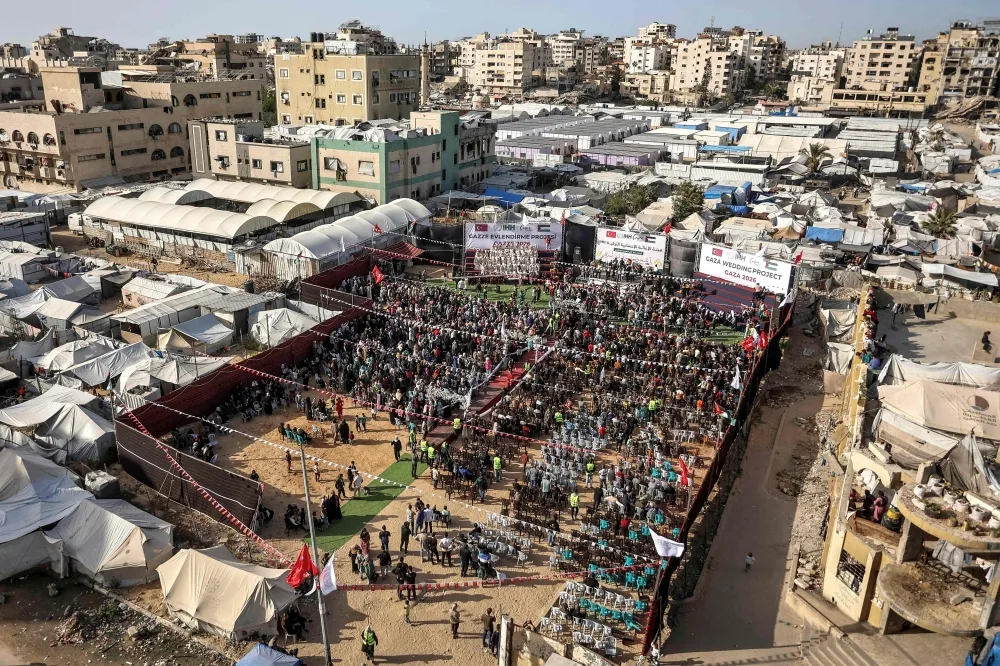
A mass wedding ceremony was held in Gaza City on May 16, 2026, uniting about 50 couples in a rare celebration during ongoing conflict and devastation in the region [1]. The event was organized and funded by the Turkish humanitarian organization IHH [1].
Most of Gaza’s population has been displaced by the war, with many living in tents or makeshift shelters due to the destruction of homes and infrastructure [2, 1]. "Most of the buildings around the venue have been destroyed and reduced to rubble, with the martyrs buried beneath them," said Fayqa Abu Zeid, emphasizing the challenges faced by residents. "We are trying, despite everything, to find joy and carry on living," she added [1].
The mass wedding gave participants a rare moment of joy and hope. Ali Mosbeh, one of the newlyweds, said, "I can’t quite believe that I’m finally getting married. I was sitting in the tent when my phone rang... I couldn’t believe it. I’m still in shock" [1]. Huda al-Kahlout reflected on the resilience of youth: "Our future is uncertain; we depend on aid to survive. But despite war, loss and death... Marriage remains a beautiful milestone for us young people" [1].
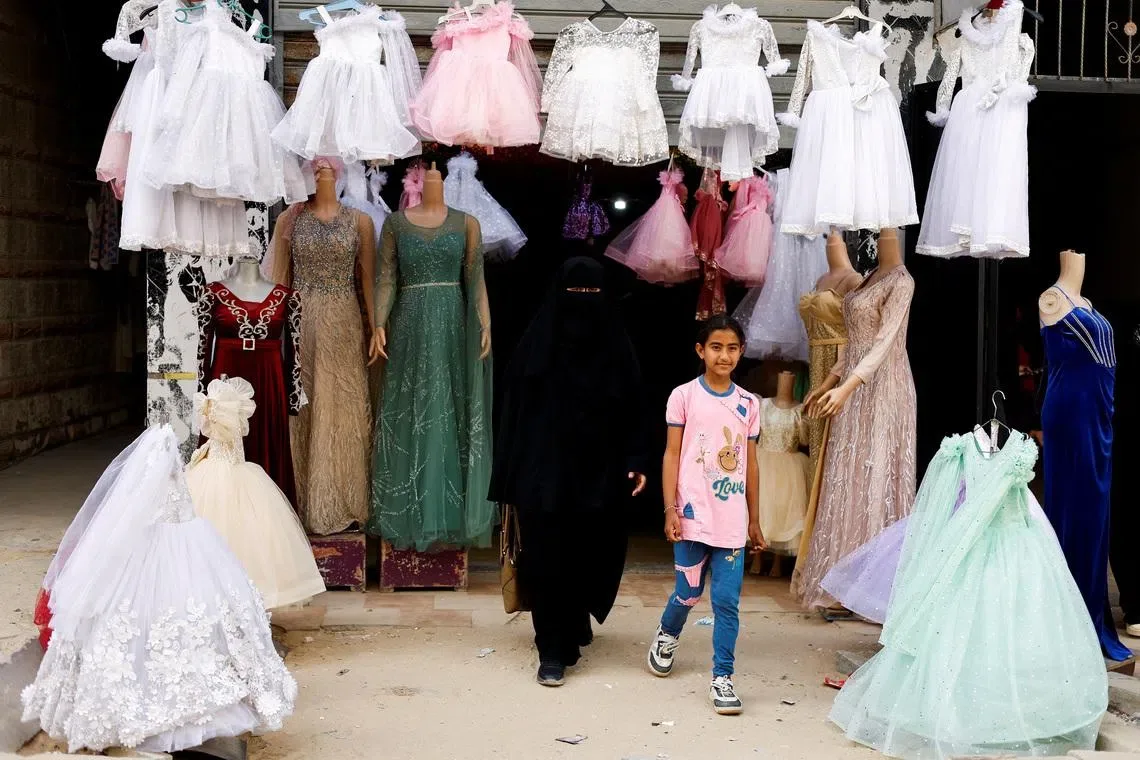
The conflict has caused severe shortages and steep price increases in bridal fabrics and dresses [2]. Fabric prices soared from 120–150 shekels (about $41–$51) before the war to roughly 500 shekels ($171) now [2]. The cheapest new wedding dresses start at around $1,000, far beyond the reach of most Gazans, who have less than $200 available for wedding expenses [2]. Shahed Fayez said, "The cheapest dress is $1,000 or more, that's the minimum, and all we have is less than $200. The entire dowry does not cover the price of a dress" [2].
Due to these costs and shortages, many brides refurbish old wedding gowns. Nisreen Al-Rantisi explained, "We try to reuse the old gowns that we have, produce them by fixing them a bit, work on them, wash them, arrange them, shape them" [2]. Rawan Shalouf added, "Before the war, prices were reasonable for everyone. But now, given the circumstances we’re in, the price of a dress is ridiculous" [2].
Newlywed couples often move into tents rather than furnished apartments because of displacement and damage to housing [1]. The wedding on May 16 was among few opportunities for celebration amid widespread hardship and destruction.
Reports following the event on May 18 documented ongoing struggles with wedding dress shortages and the efforts to refurbish old gowns as prices rise dramatically [2].