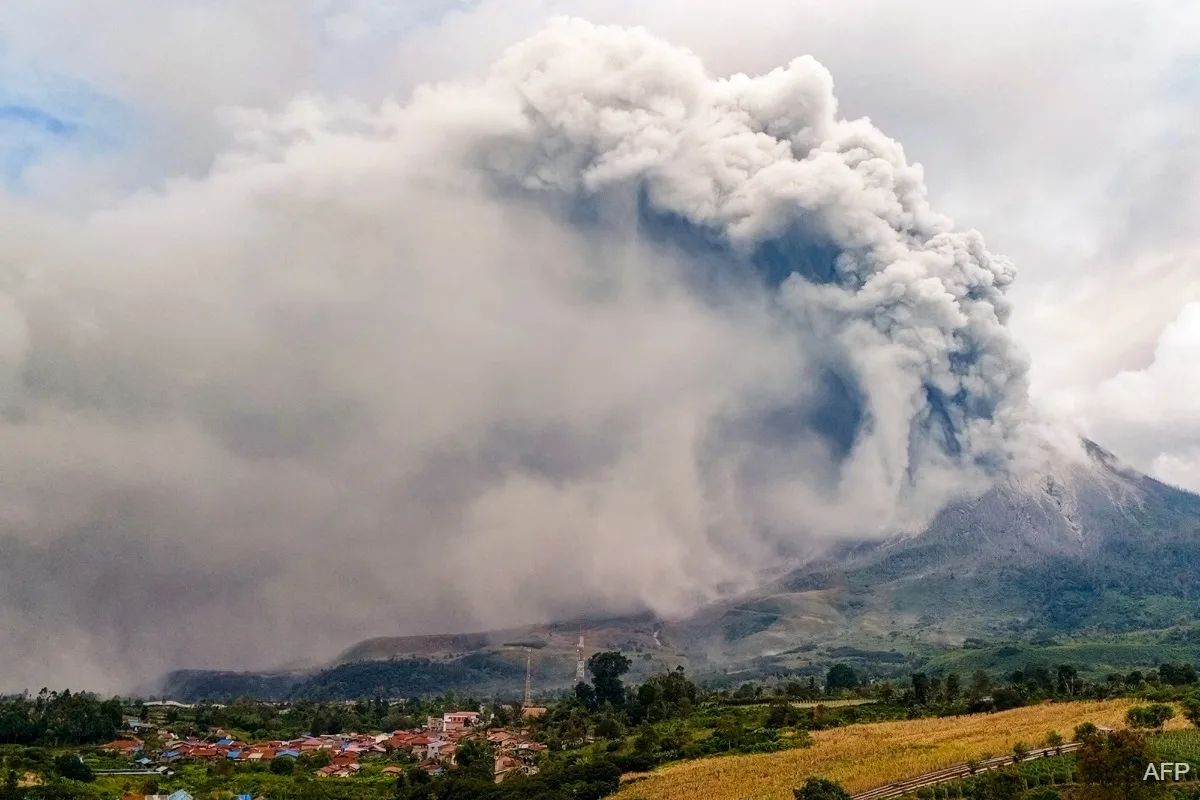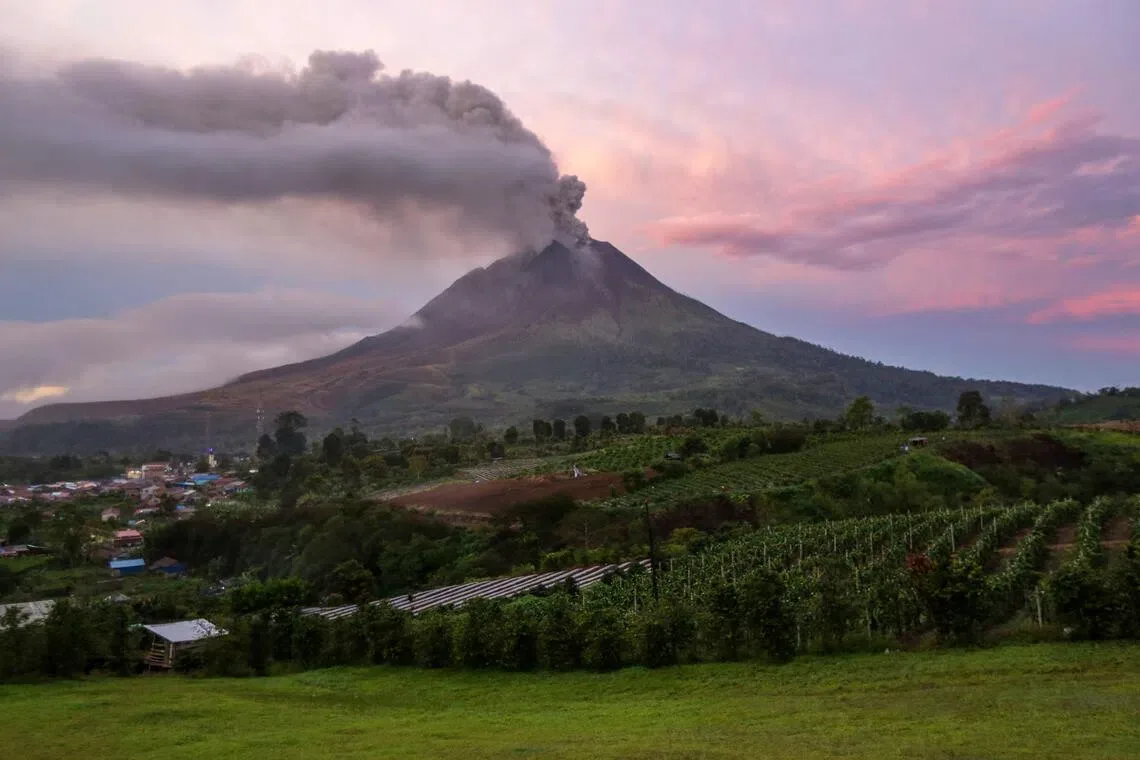
Mount Sinabung erupted on August 31, 2026, at 10:17 a.m. local time, sending a thick column of volcanic ash about 3.5 kilometers above the summit [1, 2, 3, 4]. Indonesian authorities raised the volcano’s activity status from Level II (Alert) to Level III (Standby) by 12:30 p.m. the same day after monitoring increased volcanic activity [1, 2, 3, 5, 6].
The eruption prompted the evacuation of 2,451 residents from nearby villages as a precautionary measure [1, 2, 3, 4]. The National Disaster Mitigation Agency and the Geological Agency advised residents and visitors to avoid activities within a three-kilometre radius of the summit and a six-kilometre radius to the south-southeast, with BNPB Acting Head Berton Panjaitan stating, "Residents and visitors are not permitted to carry out activities in relocated villages, within a three-kilometre radius of the summit, as well as within a sectoral radius of up to six kilometres towards the south-east" [1, 2, 3, 4, 5, 6].
The eruption also disrupted transportation. Kualanamu International Airport in North Sumatra temporarily suspended flights on August 31 from 10:50 a.m. to 12:45 p.m., roughly a 1 hour 55 minute closure, due to volcanic ash in the air [7, 8, 9]. The Consulate General of Malaysia in Medan urged Malaysians in the area to remain vigilant, avoid affected zones, and check with airlines for flight updates, noting, "Those travelling to or from Medan by air should contact their respective airlines directly for the latest information on any flight delays, rescheduling or cancellations" [1].
Mount Sinabung erupted again early on September 2, 2026, at 7:20 a.m., with an ash column reaching about 1,000 metres above the summit (approximately 3,460 metres above sea level) [5, 6]. This renewed activity led to the evacuation of 615 residents from 211 families in Kuta Tengah village to emergency shelters [5, 6]. Following this, the National Disaster Mitigation Agency expanded the danger zone around the volcano based on official recommendations [5, 6].
The situation remains under close observation by Indonesian authorities and disaster response teams as they continue monitoring volcanic activity and public safety in the region.