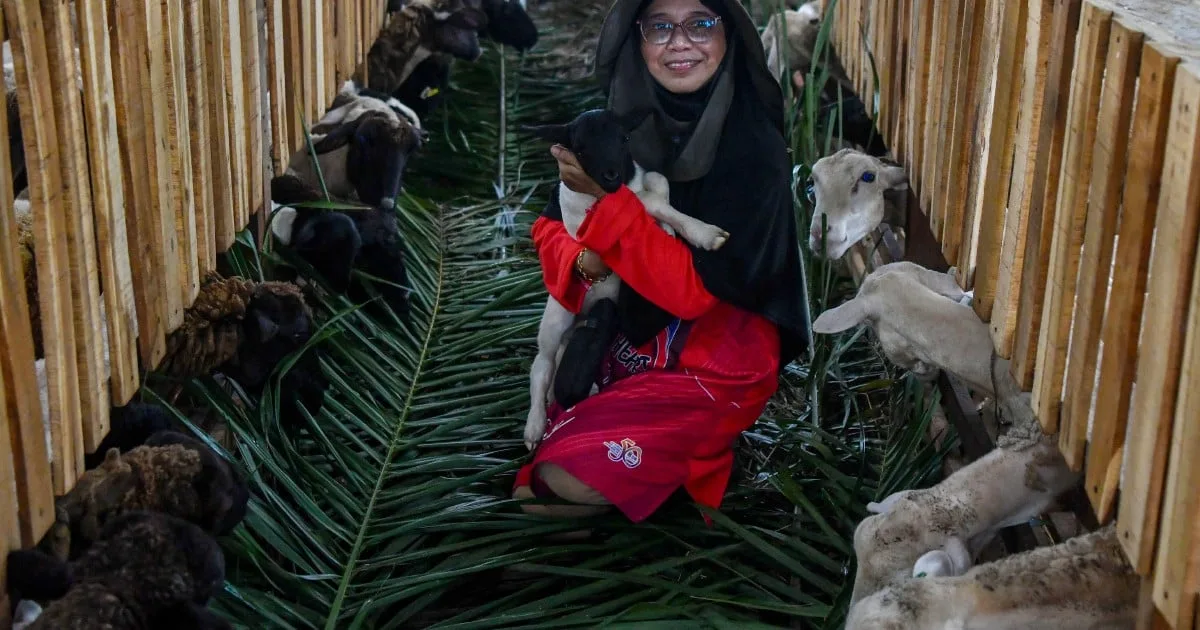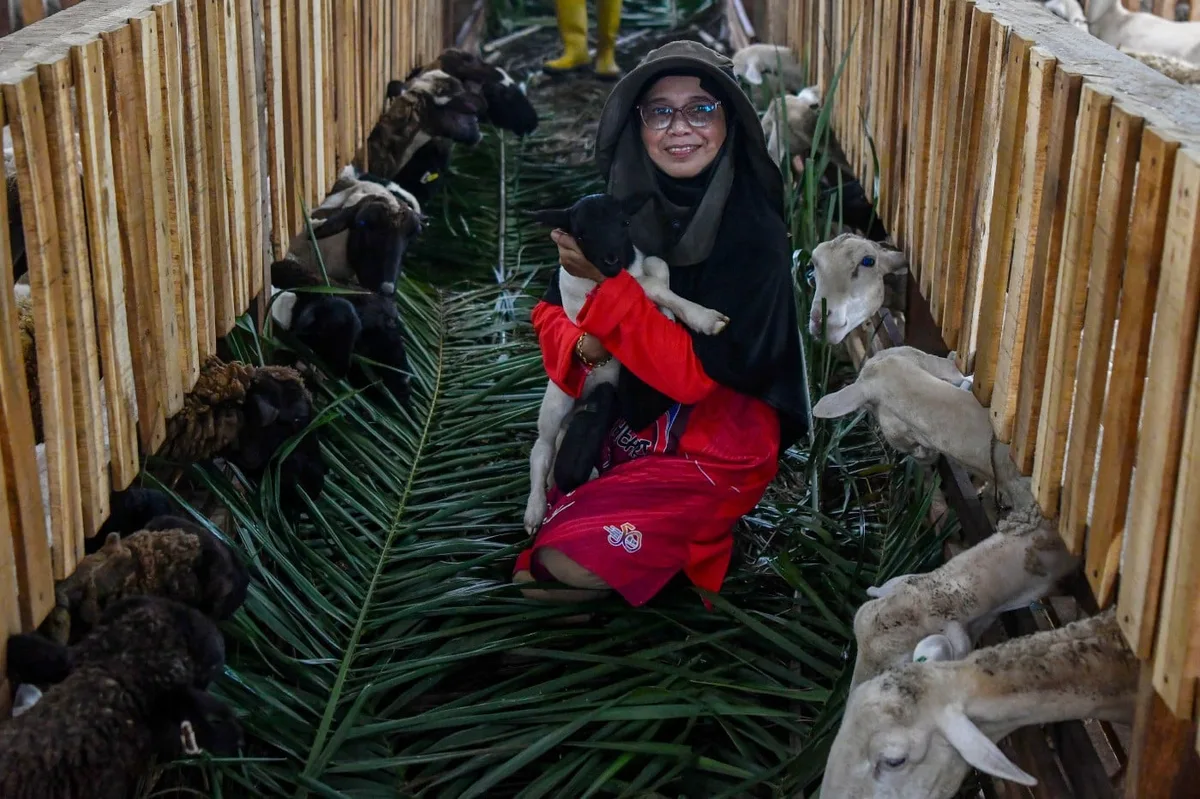
Dr Saedah Ali began her medical career in 1992 and helped pioneer cardiac surgery services at Universiti Sains Malaysia Specialist Hospital (HPUSM) in 2001 [1, 2]. She ventured into livestock farming in June 2018, nearly four years before taking optional retirement from medicine in 2022 [1, 2].
Her interest in farming grew from her late father's 1-hectare inherited land, which had become overgrown. Initially, she rented the land to villagers for about RM100 per year but later decided to develop it herself into a livestock farm [1, 2].
She started with eight goats and has since expanded to about 250 sheep and 90 goats [1, 2]. The farm mainly raises Dorper sheep, a crossbreed between Dorset and Persian Blackhead sheep, with nearly 90% of the breeding stock imported from Australia. She also raises Boer goats and Boer crossbreeds for meat production [1, 2].
More than 70% of the livestock feed comes from natural sources, including Napier and Bermuda grass grown on-site and silage, a fermented grass product, helping to keep costs sustainable. "More than 70 per cent of the livestock feed at this farm consists of Napier grass and Bermuda grass grown on-site, in addition to silage, which is fermented grass," Ali said [1, 2].
The local livestock sector faces challenges from cheap imported goats, which attract demand despite concerns about animal age and quality [1, 2]. For Ali, raising livestock has become a form of therapy after her intense medical career. "There is a form of communication and emotional connection when raising livestock. Although it can be exhausting, especially when I have to stay up at night when the animals are sick or giving birth, it has actually become a form of therapy to relieve work-related stress," she said [2].
As of May 2026, Dr Saedah Ali continues to operate her farm focusing on sheep and goats on the inherited land [1, 2].