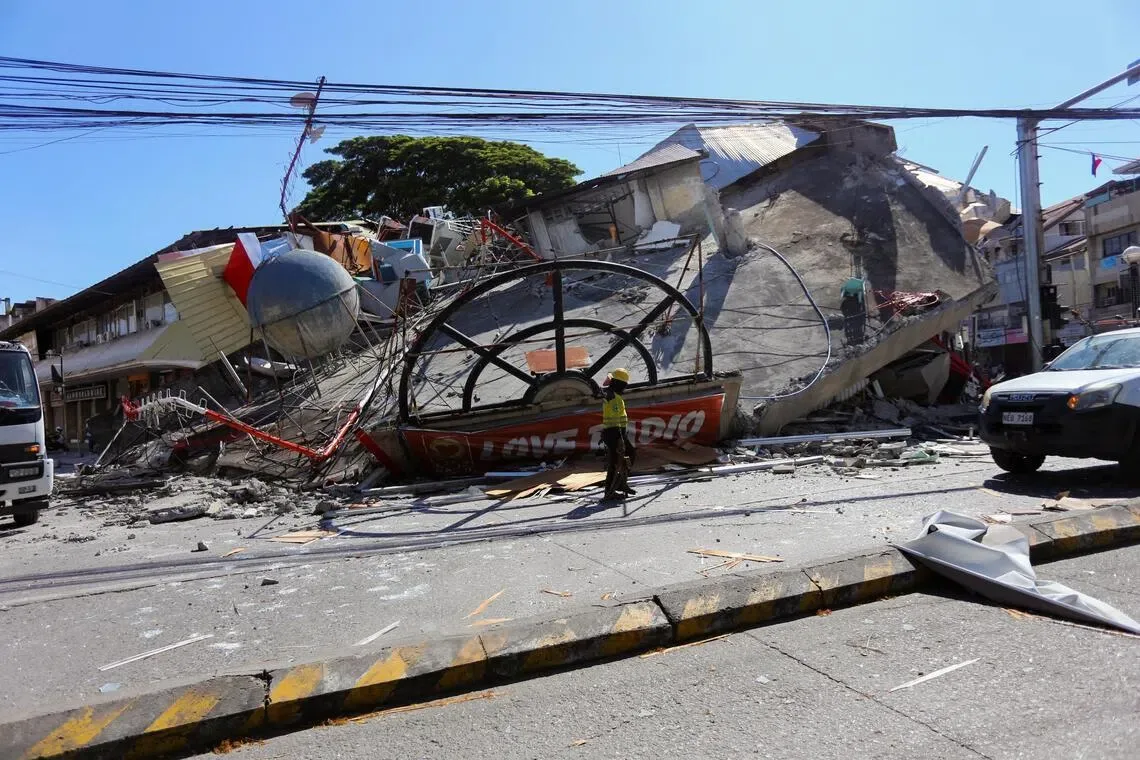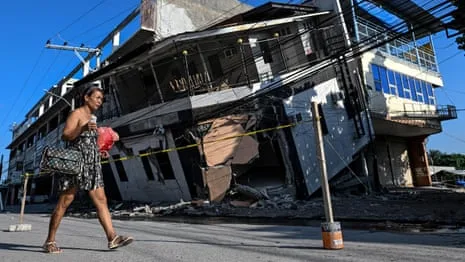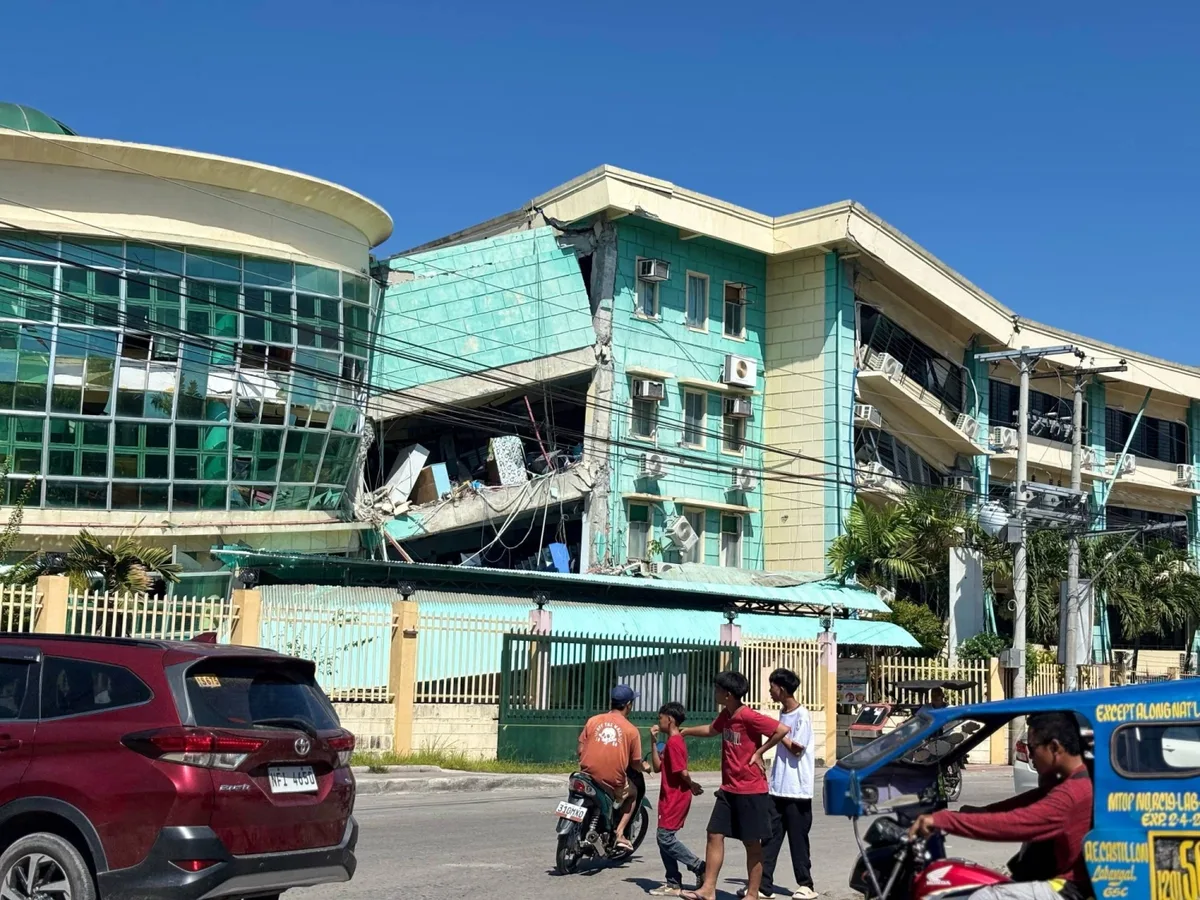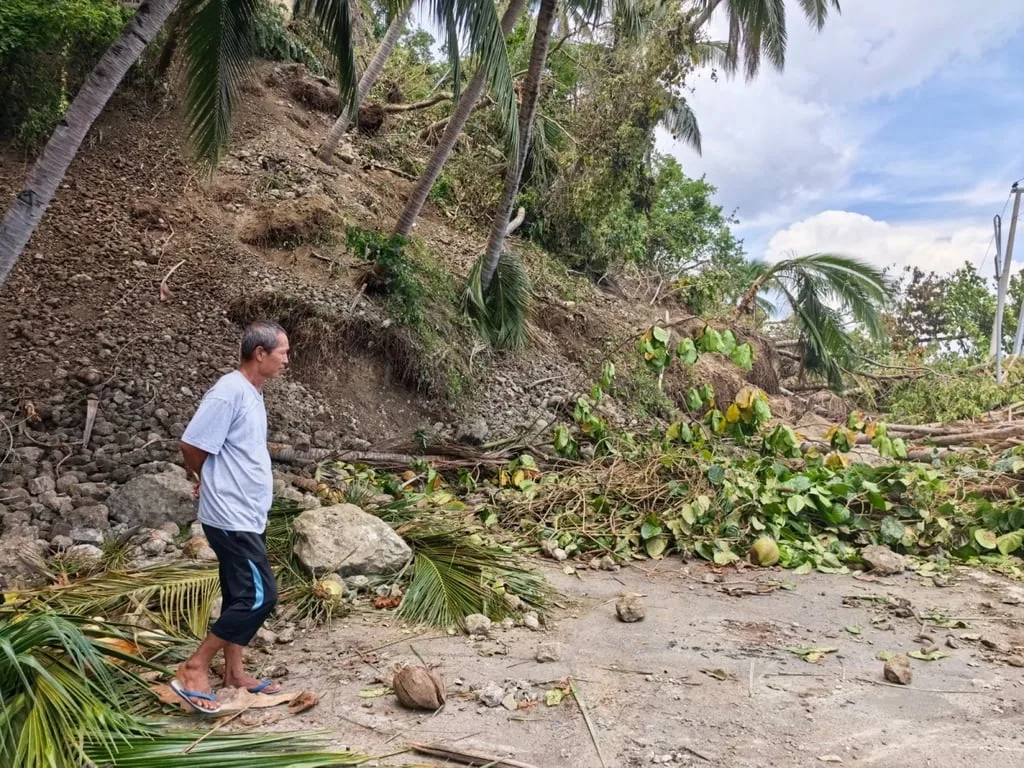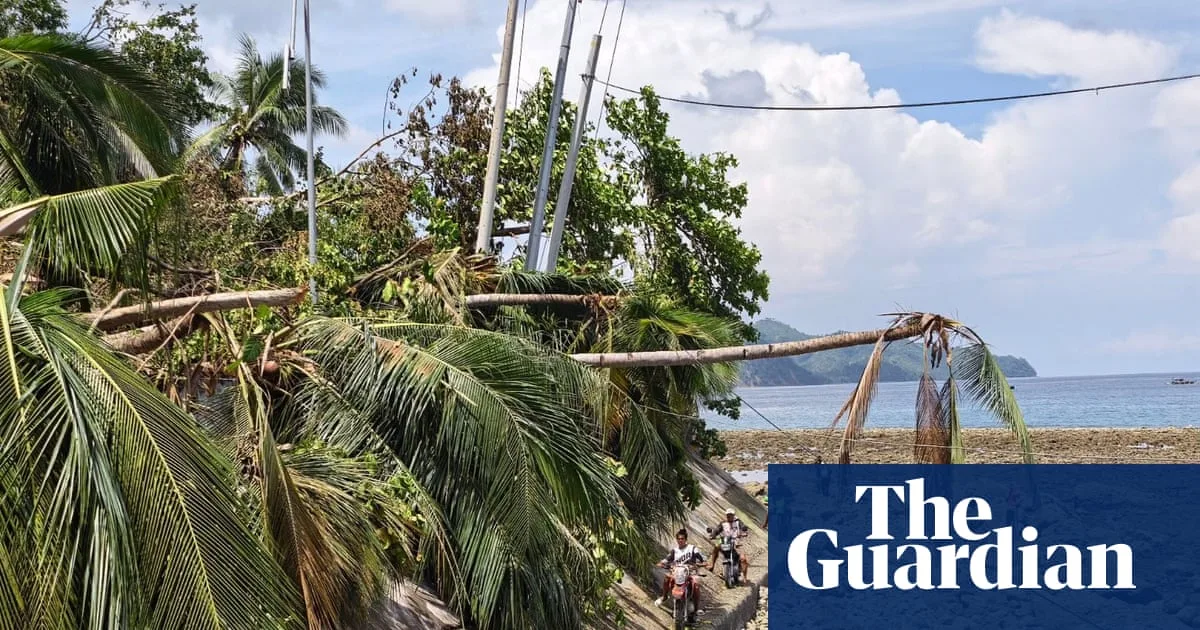
A powerful magnitude 7.8 earthquake struck southern Mindanao, Philippines, on June 8, 2026, killing at least 61 people and leaving more than 40 missing [1, 2, 3, 4, 5, 6].
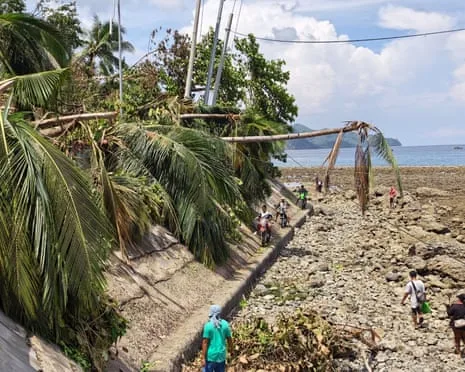
The quake caused coastal uplift that raised the seabed by as much as 2 meters (approximately 6.6 feet), extending the shoreline by up to 200 meters in some areas [1, 2, 3, 4, 6]. The geological shift exposed coral reefs and seagrass beds, resulting in widespread die-offs of corals, reef fish, eels, clams, and other marine life [1, 2, 3, 4, 6]. This uplift was caused by movement along the Cotabato Trench, located about 50 kilometers off the southern Mindanao coast [1, 2, 3, 4, 6].
Thousands of small earthquakes near the Cotabato Trench were recorded starting in January 2026, indicating rising seismic activity before the large quake [1, 2, 3, 4, 6].
The impact affected hundreds of thousands in Mindanao, with over 346,000 people reported as affected as of June 11-12 [7, 8, 9, 5]. The hardest hit areas, including General Santos City and Sarangani province, declared states of calamity due to extensive damage to homes, schools, hospitals, and infrastructure [8, 5].
Rescue efforts were slowed by aftershocks, rain, landslides, blocked roads, and unstable structures. Rene Punzalan, Sarangani provincial disaster chief, said, "Aftershocks are still slowing us down, plus it also rained last night, so we have to stop the operation for a while. Many days have passed since the earthquake, so it's going to be a miracle if any of them can be rescued alive. Our goal is just to retrieve their bodies" [8].
On June 13 or 14, a moderate 5.2-magnitude earthquake struck Mindanao at a depth of 10 km, about 101 km south of Koronadal City, but authorities reported no tsunami threat to Malaysia [7, 9].
As of June 13, the death toll had risen to 61 with over 1,200 injured and more than 553,000 people affected overall [5]. Rescue and recovery operations continue amid ongoing aftershocks and environmental challenges.