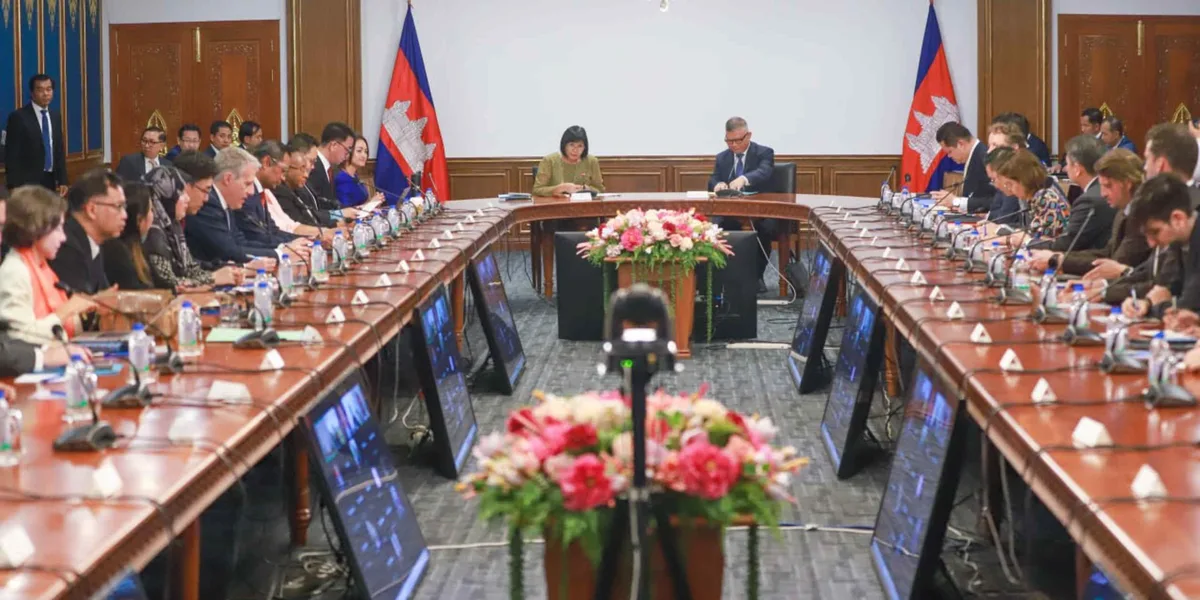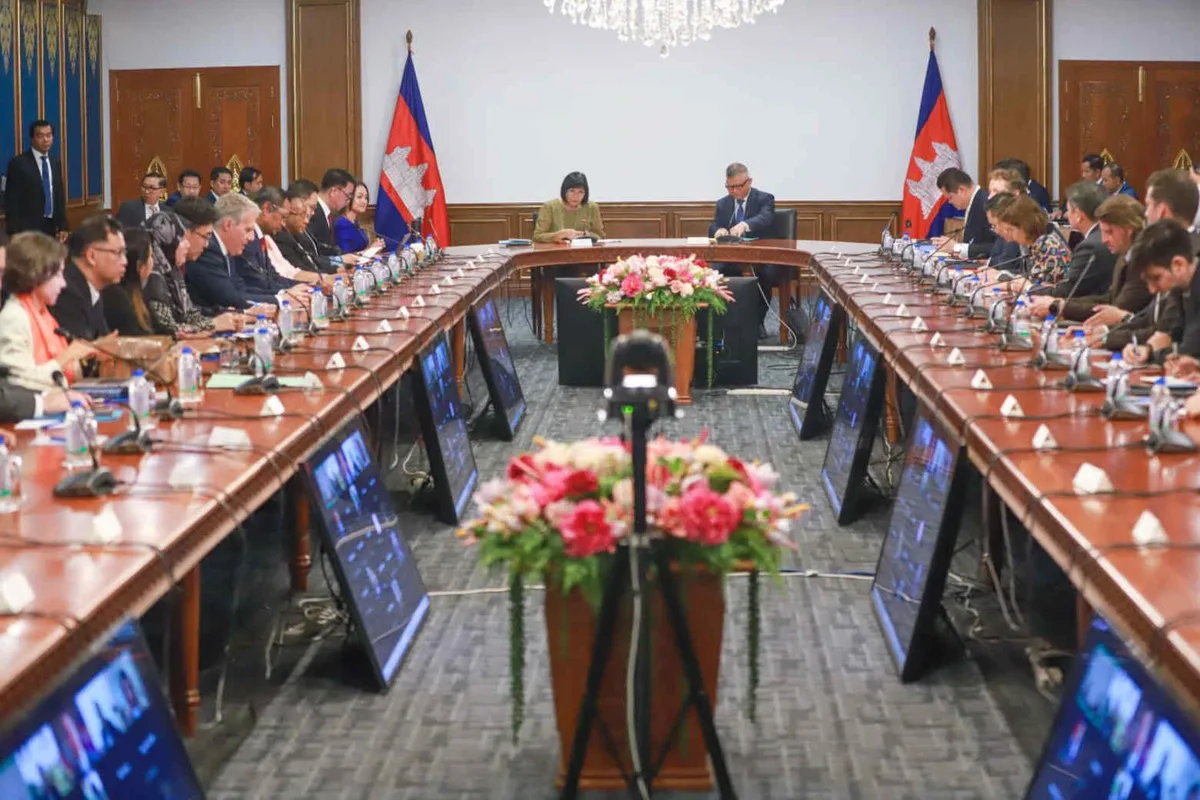
Cambodian officials publicly announced on August 28 that they have shut down over 700 online scam compounds and arrested nearly 30,000 suspects in a crackdown over the past year [1, 2, 3, 4, 5].
The operations targeted a network of scam centres running fake romantic relationship and cryptocurrency investment schemes that preyed on internet users globally [1, 2, 3, 4, 5]. The government stated that large-scale scam sites have been fully cleared, but criminals have adapted by shifting to decentralized, smaller-scale operations in guesthouses, condominiums, rental houses, vehicles, and coffee shops. "Although large-scale sites have been completely cleared, criminal groups have altered their tactics to decentralised, small-scale activities, hiding in guesthouses, condominiums, rental houses, vehicles and coffee shops," Cambodian authorities said [1].
Nearly 30,000 people have been arrested as part of the crackdown, including 15 high-ranking officials such as a deputy prosecutor, a deputy immigration director, a deputy police chief of Phnom Penh, a former foreign ministry director, and other police and military officers [1, 2, 3, 4, 5]. More than 3,400 suspects from 29 nationalities—including China, Vietnam, Australia, France, Japan, South Korea, Singapore, and Thailand—remain detained awaiting trial [1, 2, 3, 4, 5]. 855 additional suspects are wanted with arrest warrants issued [4, 5].
Authorities inspected 793 suspected scam locations, raiding 624 and collecting evidence at 169 other sites [4, 5]. A total of 408 major cases have been filed and moved to courts [4, 5]. Approximately 58,266 foreign nationals linked to scams have been deported, including 7,282 women; 22,045 were confirmed as direct participants in fraud schemes [1, 2, 3, 4, 5].
Under pressure from the US, China, and other countries, Cambodian officials intensified efforts to dismantle the cyberscam industry, which had made Cambodia a hub for such criminal syndicates [1, 2, 3, 4, 5]. In January, Cambodia extradited Chen Zhi, alleged scam boss and chairman of Prince Holding Group, to China following US and UK sanctions [1, 2, 3]. In April, Cambodia also extradited Li Xiong, former chairman of Huione Group accused by Beijing of involvement in a transnational gambling and fraud ring [1, 2, 3].
Senior Minister Chhay Sinareth said Cambodia has effectively controlled large-scale online scams and claimed no scam centres remain in the country: "柬埔寨已有效控制大规模网络诈骗活动,目前国内已不存在任何网络诈骗窝点" [4, 5]. Nonetheless, some human rights groups remain skeptical about the total eradication of offences, although Cambodian officials maintained no large-scale fraud compounds remain, as reported by Nikkei Asia [6].
Cambodian government officials briefed foreign diplomats on August 27 claiming eradication of all large-scale scam sites prior to the public announcement [6]. Earlier in March, a raid was conducted on a cyberscam operation centre in Phnom Penh [3].
Authorities continue prosecution efforts with thousands detained and hundreds more wanted, underscoring ongoing legal actions against the syndicates [4, 5].