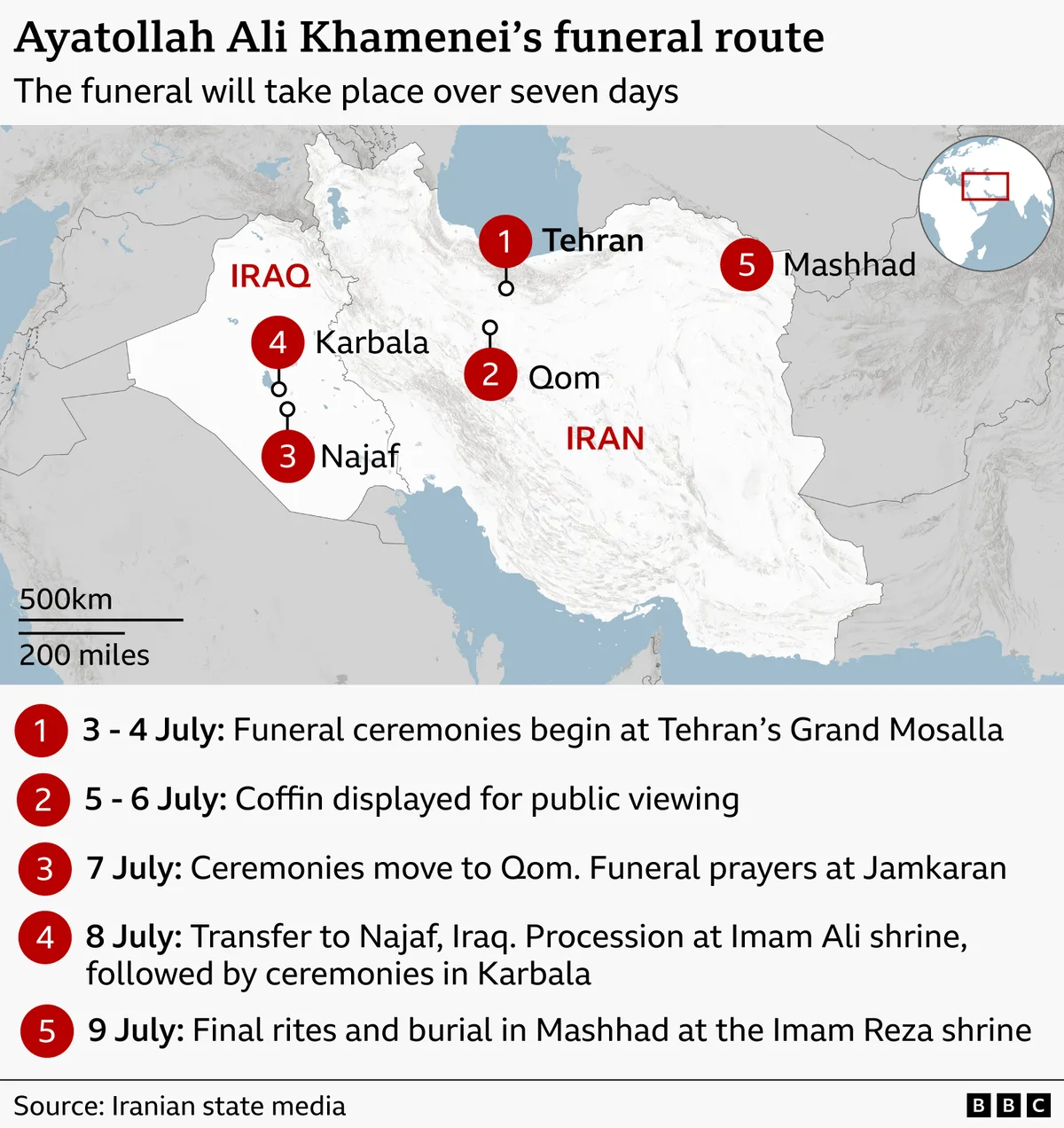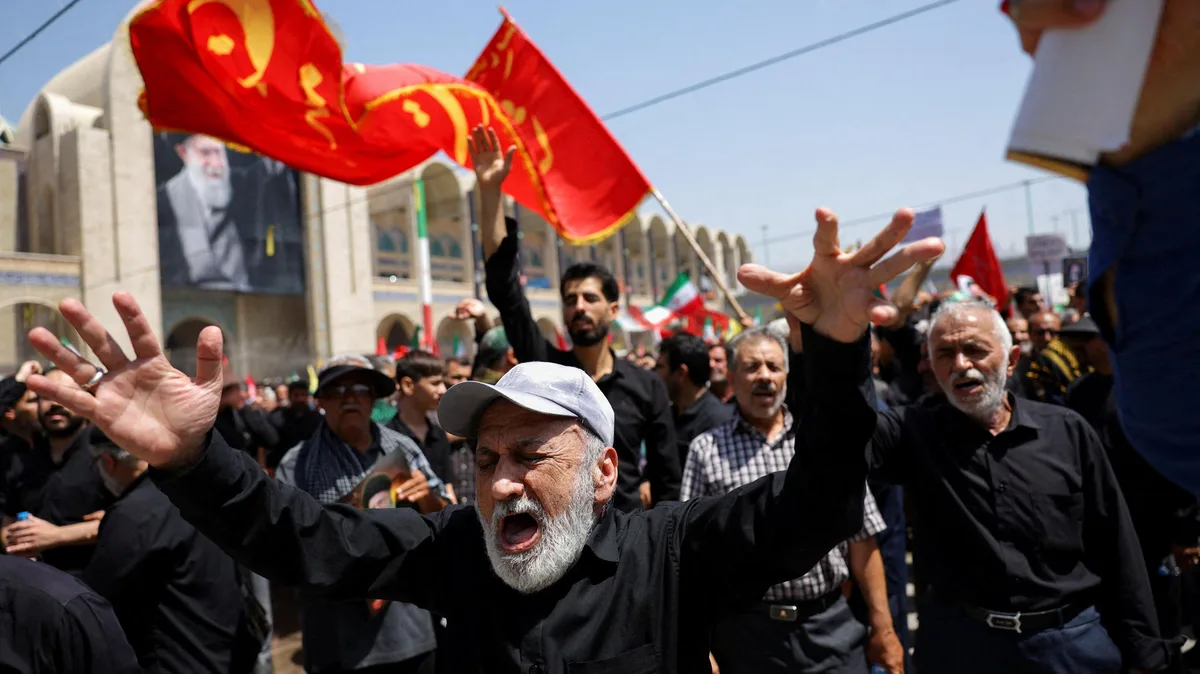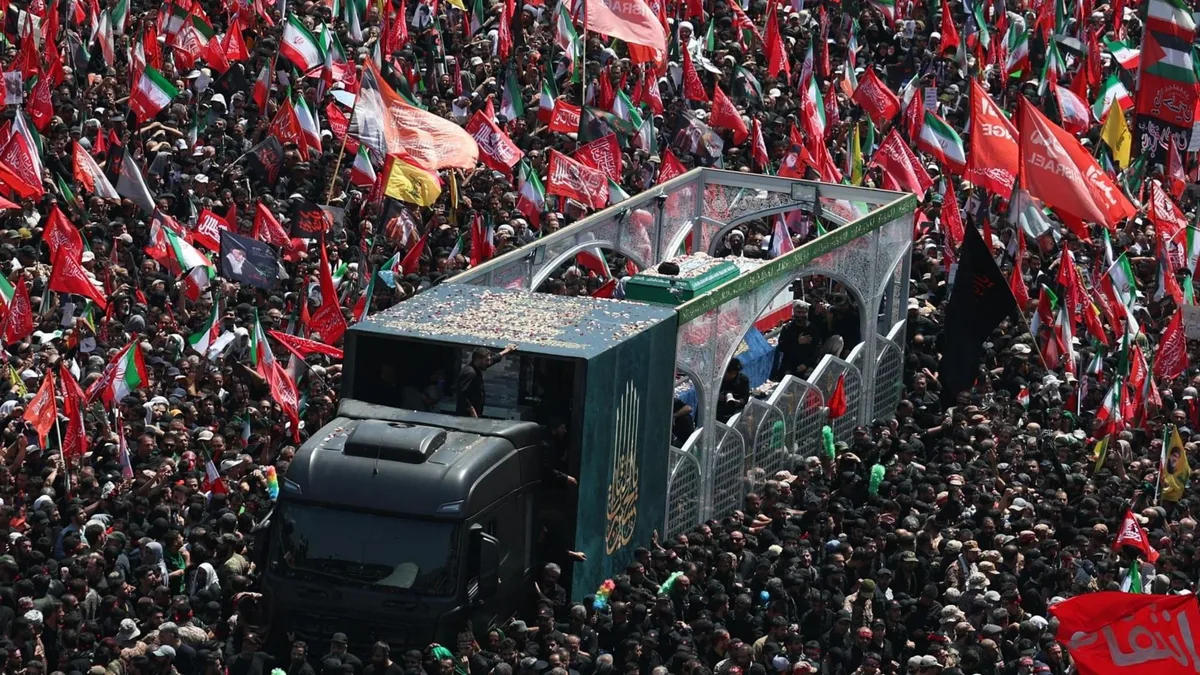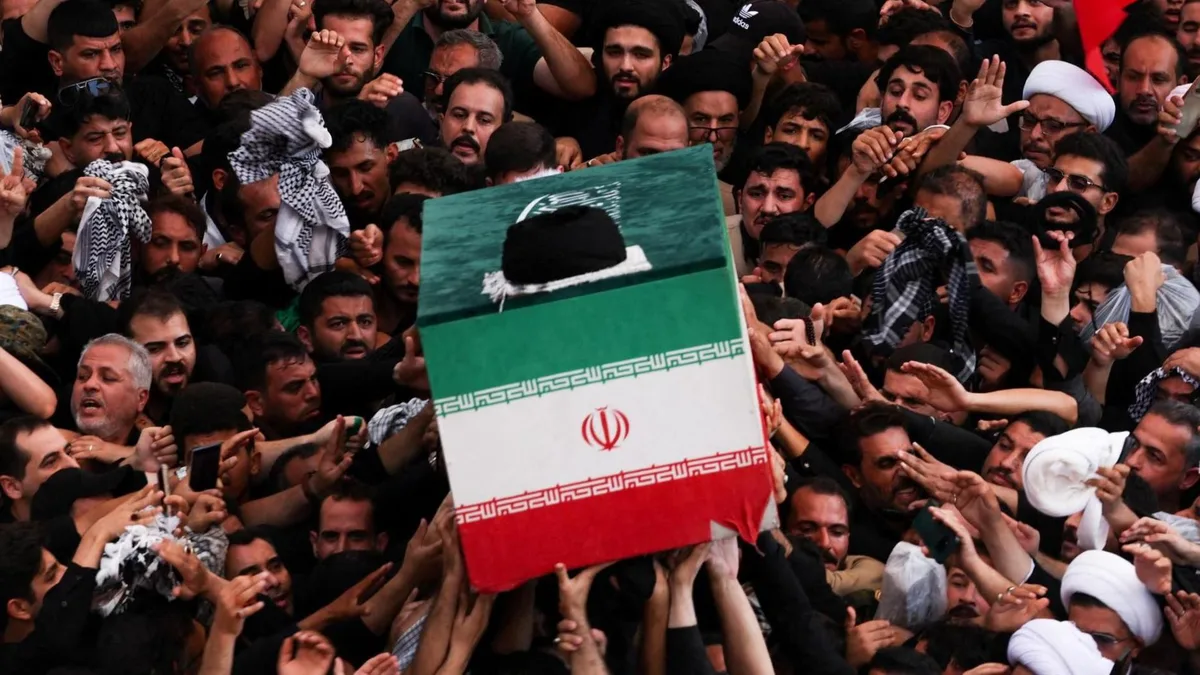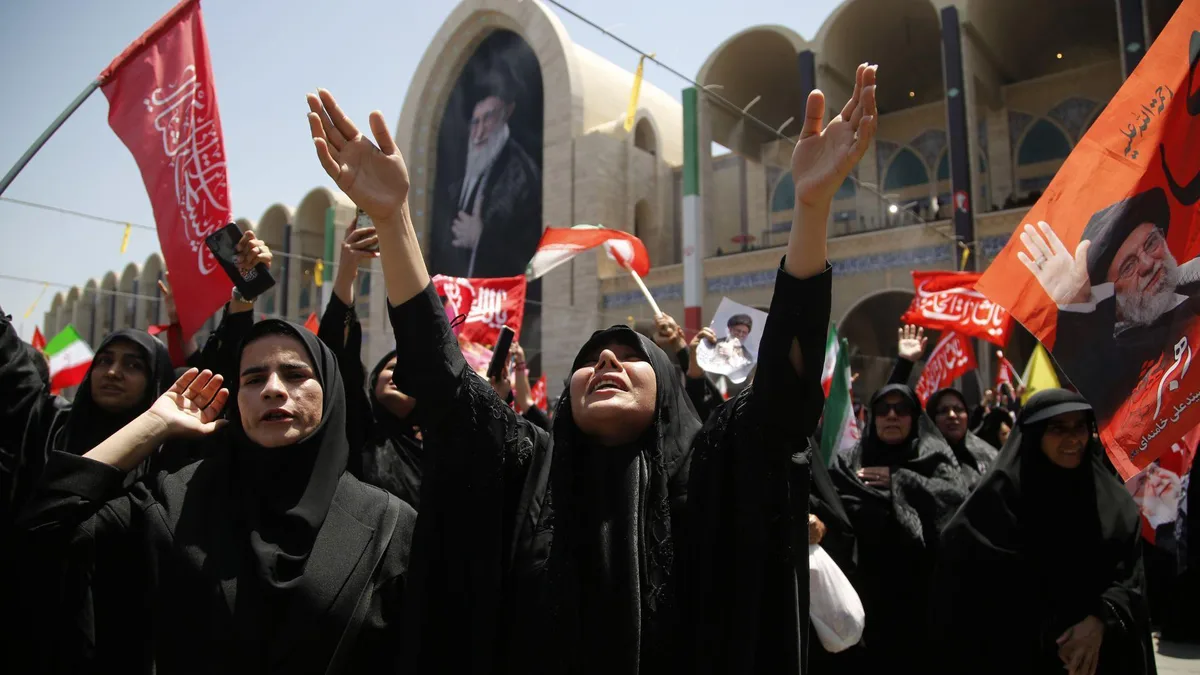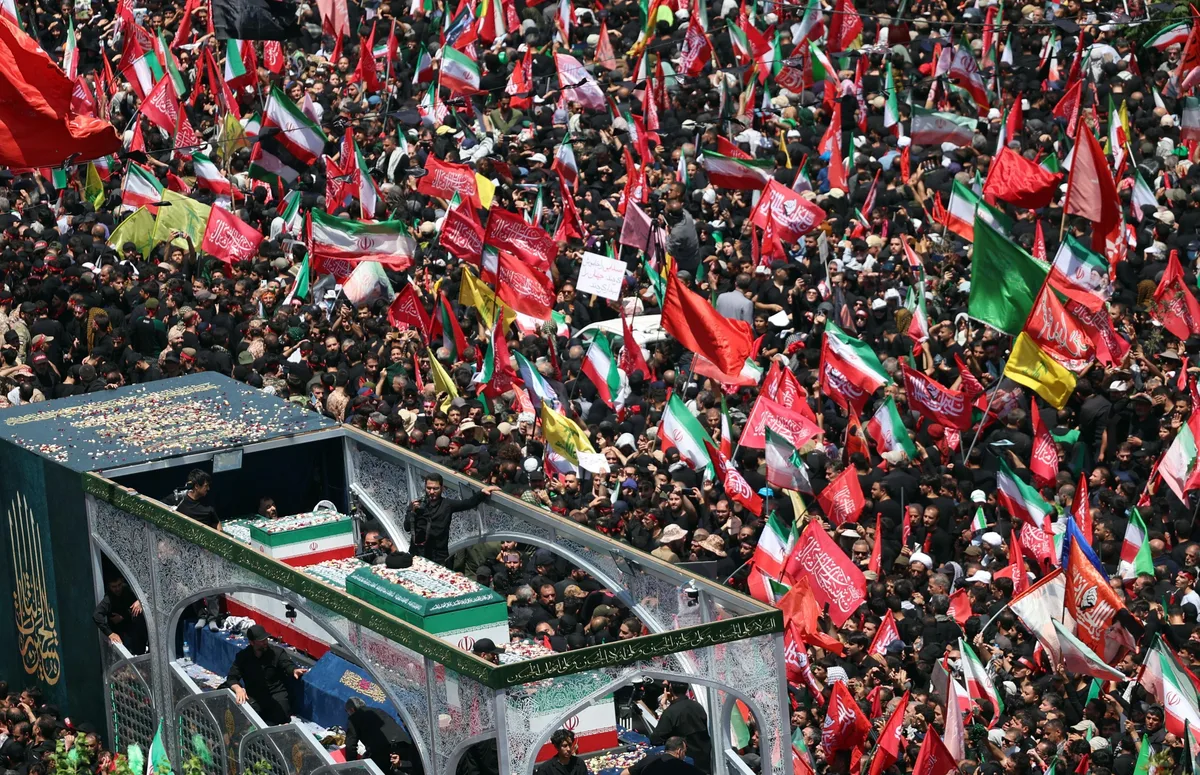
Iran's late Supreme Leader Ayatollah Ali Khamenei has been mourned in a series of ceremonies since his death in a joint US-Israeli air strike on February 28, 2026, the first day of the war. His body lay in state at Tehran's Grand Mosalla mosque from July 31 before a funeral procession took place through Tehran's streets on August 2 and 3. The procession covered about 10 kilometers from Imam Hossein Square to Azadi Square, drawing millions of mourners over three days of public mourning in Tehran alone [1, 2, 3].
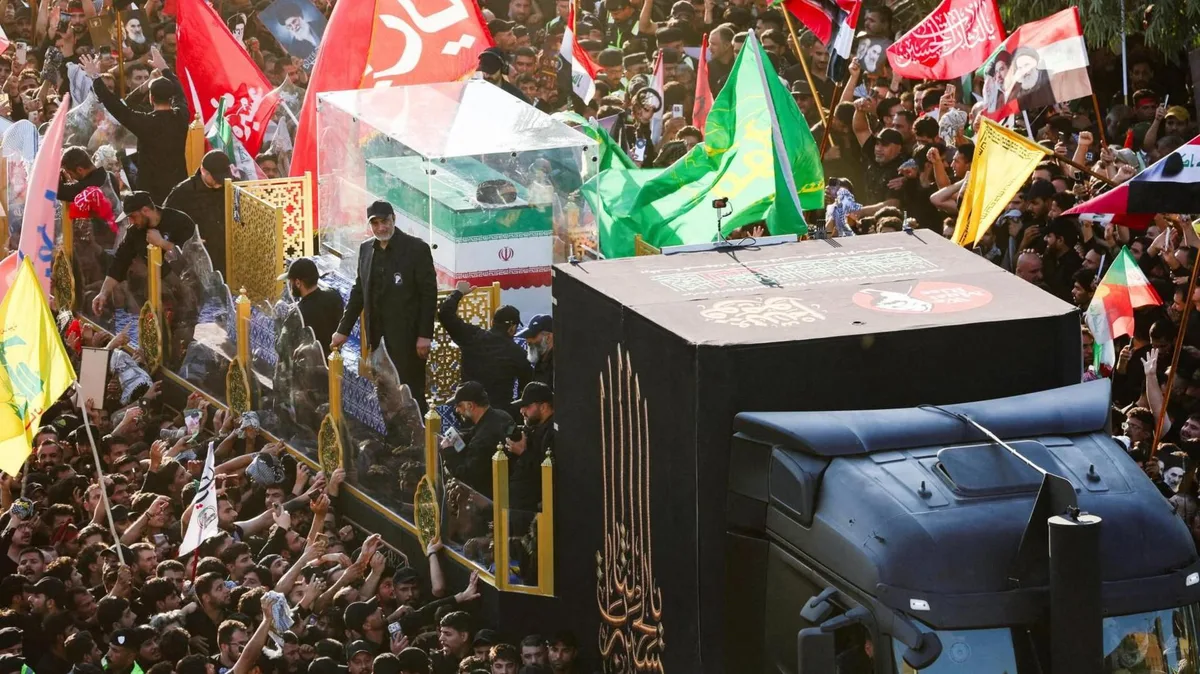
Funeral events have also been held in the Iraqi cities of Najaf and Karbala, where Khamenei's coffin was carried through the mausoleums of Imam Ali and Imam Hussein, two of Shia Islam's holiest sites. Senior Iranian officials including President Masoud Pezeshkian traveled to Iraq to attend these ceremonies. Alongside officials, millions of mourners gathered in both countries, with total attendance estimated between 12 and 20 million across Iran and Iraq over the six-day funeral period [4, 3, 5].
Khamenei's son Mojtaba, who succeeded him as Supreme Leader, has not appeared at any of the funeral events and remains out of the public eye after reportedly sustaining serious injuries in the February air strike that killed his father and his wife. Other sons Masoud, Mostafa, and Meysam Khamenei have attended the services [1, 2, 5].
The funerals carried strong political tones. Protesters chanted slogans such as "Death to America" and "Death to Israel." Iranian President Masoud Pezeshkian led prayers and addressed claims by US President Donald Trump, saying, "Tears arise from the pain and sorrow that surges within a person, and the world sees this truth," countering Trump's claim that the mourning was staged. Mourners in Tehran insisted, "We did not make a revolution 47 years ago to shed fake tears." At Najaf, mourner Mohammed al-Bayati called the funeral "an opportunity not to be missed—to take part in the funeral of the person who challenged the power of America and Israel" [1, 2, 3, 5].
Public mourning in Tehran culminated Monday, August 3, after three days. On Wednesday, August 5, ceremonies in Iraq continued before the coffin returned to Iran for the final burial planned today, August 6, at the Imam Reza Shrine in Mashhad [4, 3, 5].