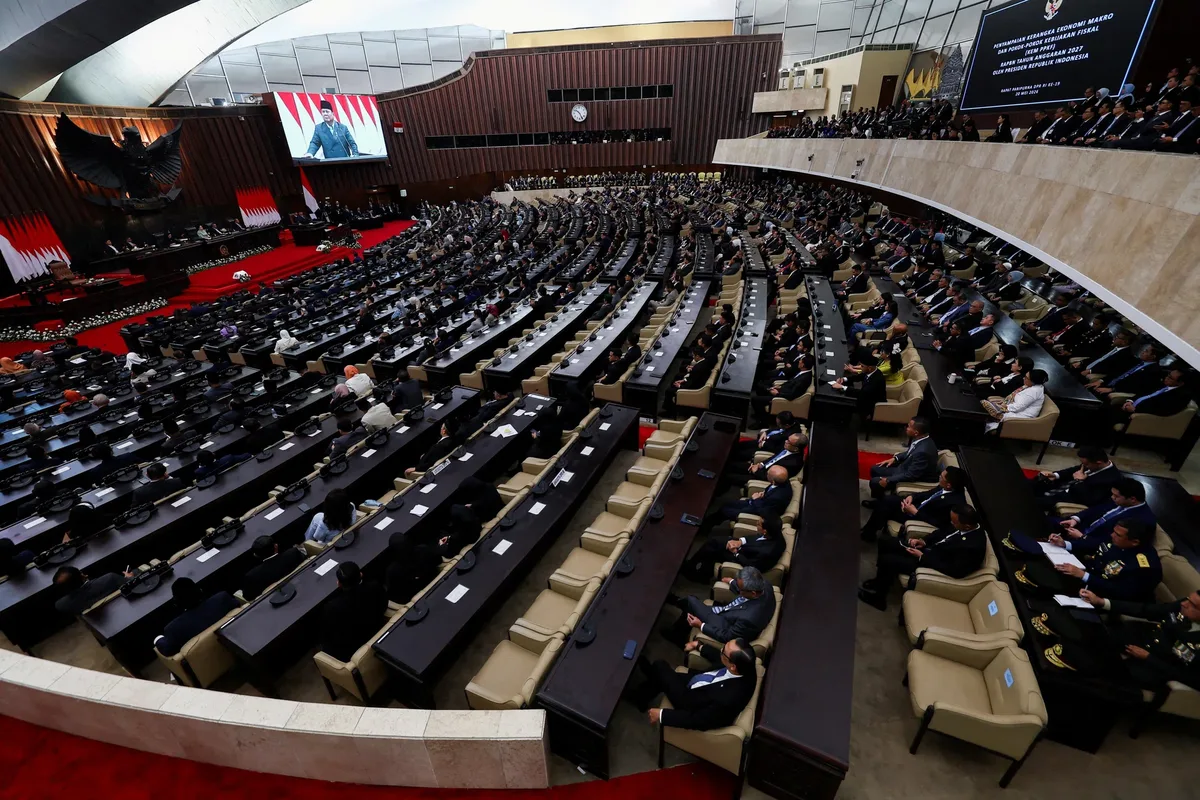
Indonesia’s parliament approved a sweeping financial-sector law on June 4, expanding Bank Indonesia’s mandate beyond maintaining price and exchange rate stability to also support real sector growth and job creation [1, 2, 3, 4]. The legislation was passed by acclamation with broad parliamentary support, reflecting the ruling coalition’s strong majority [1, 3, 4].
Finance Minister Purbaya Yudhi Sadewa told parliament the amendment aims to strengthen Bank Indonesia’s role in fostering an economic environment conducive to growth and employment. “It’s not just about exchange rate stability, or just about inflation. It’s also about paying attention to economic growth and creating jobs,” he said [1, 3, 4]. The new law requires the central bank to implement policies to promote these objectives [1, 3, 4].
The law also gives parliament powers to evaluate the performance of Bank Indonesia, the Indonesia Deposit Insurance Corporation (LPS), and the Financial Services Authority (OJK). These institutions must follow parliament’s recommendations going forward [2, 4]. This provision has raised concerns among investors about potential political interference in the central bank’s operations given the closer alignment with President Prabowo Subianto’s high growth agenda. The president’s target of 8% GDP growth by 2029 has increased scrutiny of the central bank’s expanded role [2, 3, 4].
Bank Indonesia’s spokesperson Ramdan Denny Prakoso said today that the central bank will prepare technical implementing regulations to fulfill its new mandate after the law is officially enacted [2]. The country’s rupiah currency hit a historic low against the US dollar at 18,045 on June 4, falling over 7% so far this year, signaling pressure on monetary and financial markets [3, 4].
With Indonesia’s economy valued around US$1.4 trillion, the legal changes mark a significant shift in monetary policy priorities to include direct support for the real economy and labor market [3]. The next step is for Bank Indonesia to finalize its implementing rules to put the new law into practice [2].