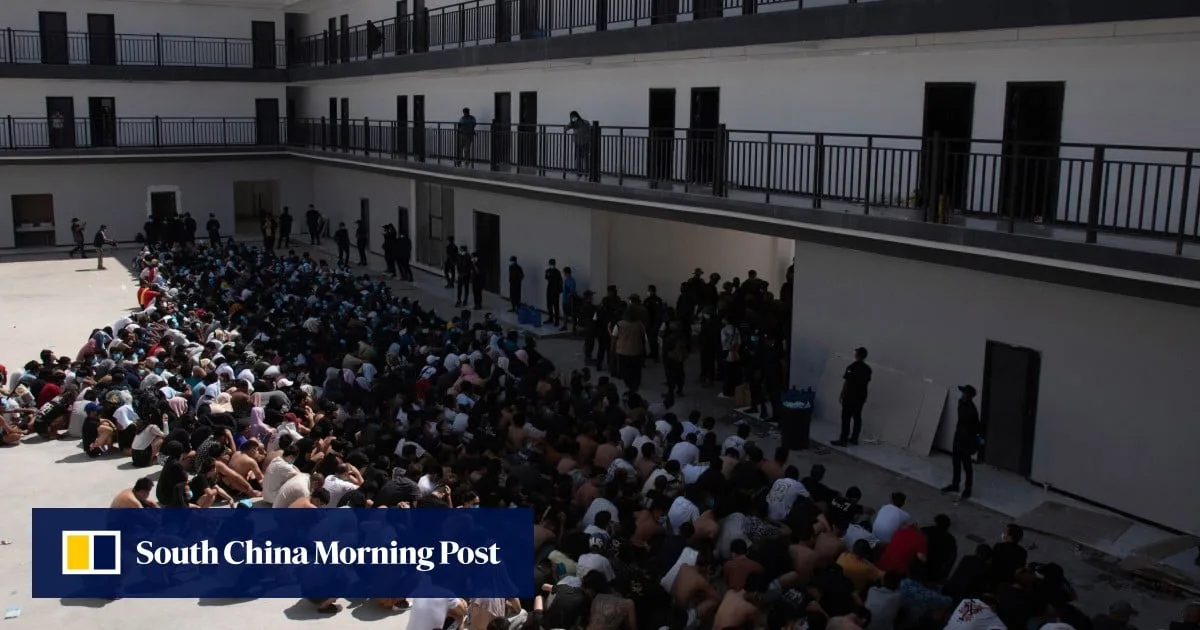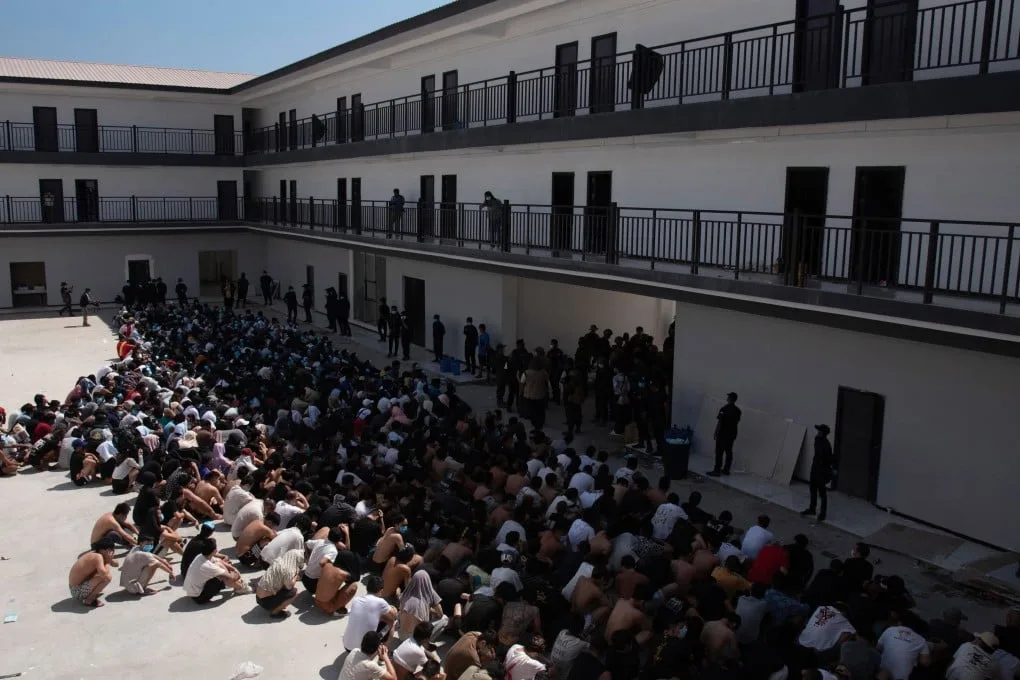
Myanmar’s military-backed parliament approved the Anti-Online Scam Bill on July 28, 2026, authorizing the death penalty for offenders who detain or violently coerce victims into working at online scam centres [1, 2, 3, 4, 5]. The legislation is the first passed by Myanmar’s new government under civilian president Min Aung Hlaing, who assumed office in April after a restricted election that excluded ousted leader Aung San Suu Kyi and her party [1, 2, 5].
The law introduces prison terms ranging from 10 years to life, with capital punishment applied if the offence results in death [1, 2, 3, 5]. It also targets operators running scam centres and individuals involved in cryptocurrency scams with sentences up to life imprisonment [1, 2, 3, 5]. Lower house MP Aye Chan said, "There were not many significant changes to the proposed draft bill after discussions between the lower house and upper house. The important parts of the bill remained the same" [1].
Since the military coup in 2021 led by Min Aung Hlaing, Myanmar has been engulfed in a civil war that has destabilized the country and allowed the growth of online scam factories [1, 2, 5]. These centres target international victims with schemes including romance fraud and cryptocurrency investment scams, generating a multibillion-dollar black market [1, 2, 5]. Some repatriated foreigners have reported being trafficked into Myanmar’s scam centres and subjected to torture by operators [1, 2, 5].
The Anti-Online Scam Bill was drafted in May 2026 and included provisions for the death penalty and life imprisonment for specific offences related to scams and victim coercion [1, 2, 3, 5]. The military-backed parliament that passed the bill is widely seen by analysts as a rubber-stamp body dominated by pro-military MPs [1, 2, 5].