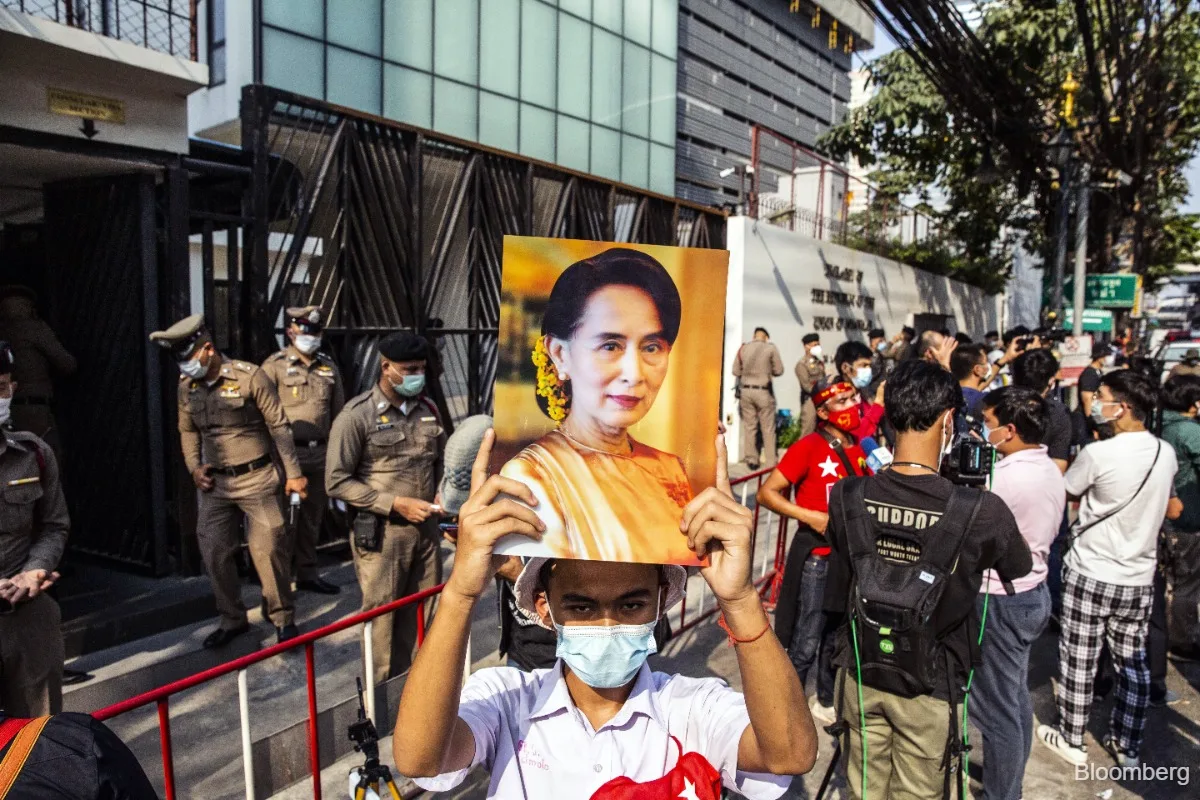
Myanmar’s military-backed government officially rejected ASEAN’s demand for the unconditional release of ousted leader Aung San Suu Kyi on August 9, stating that such calls interfere with the country’s judicial process [1, 2]. The Myanmar Ministry of Foreign Affairs said any release of Suu Kyi, 81, would be carried out in accordance with the law. A statement from the ministry noted that ASEAN’s calls “carry implications for the relevant judicial process and the fundamental principles of the rule of law in a sovereign state” [1].
Aung San Suu Kyi has been held under house arrest at an undisclosed location in Naypyidaw since the military coup in February 2021, when the armed forces seized power and detained her [1]. Supporters and rights groups describe the charges against her as politically motivated. The coup has triggered a civil war that has reportedly killed more than 100,000 people [1].
In early August 2026, Myanmar allowed a representative of the International Committee of the Red Cross to visit Suu Kyi, marking the first known contact with an independent international humanitarian organization since her detention [1, 3]. This move came after ASEAN’s peace plan from April 2021, which called for ending violence, allowing access to detainees including Suu Kyi, and facilitating dialogue with the military government through a special envoy [1, 3].
The ASEAN chair, currently the Philippines, urged Myanmar to allow its special envoy to visit and meet Suu Kyi as well. However, Myanmar questioned the need to continue having a special envoy after Singapore assumes the ASEAN chair on January 1, 2027, raising doubts about ongoing external mediation efforts [1, 3].
Myanmar’s current ruling government claims it emerged from multi-party elections that reflected the will of the people and has taken on state responsibility [1]. Meanwhile, Myanmar remains suspended from ASEAN summits until progress is made on the five-point consensus roadmap agreed in 2021 [1].
Singapore is set to assume the ASEAN chair in January 2027, when Myanmar has indicated it may no longer support the special envoy role, potentially affecting the group’s diplomatic engagement with the country moving forward [3].