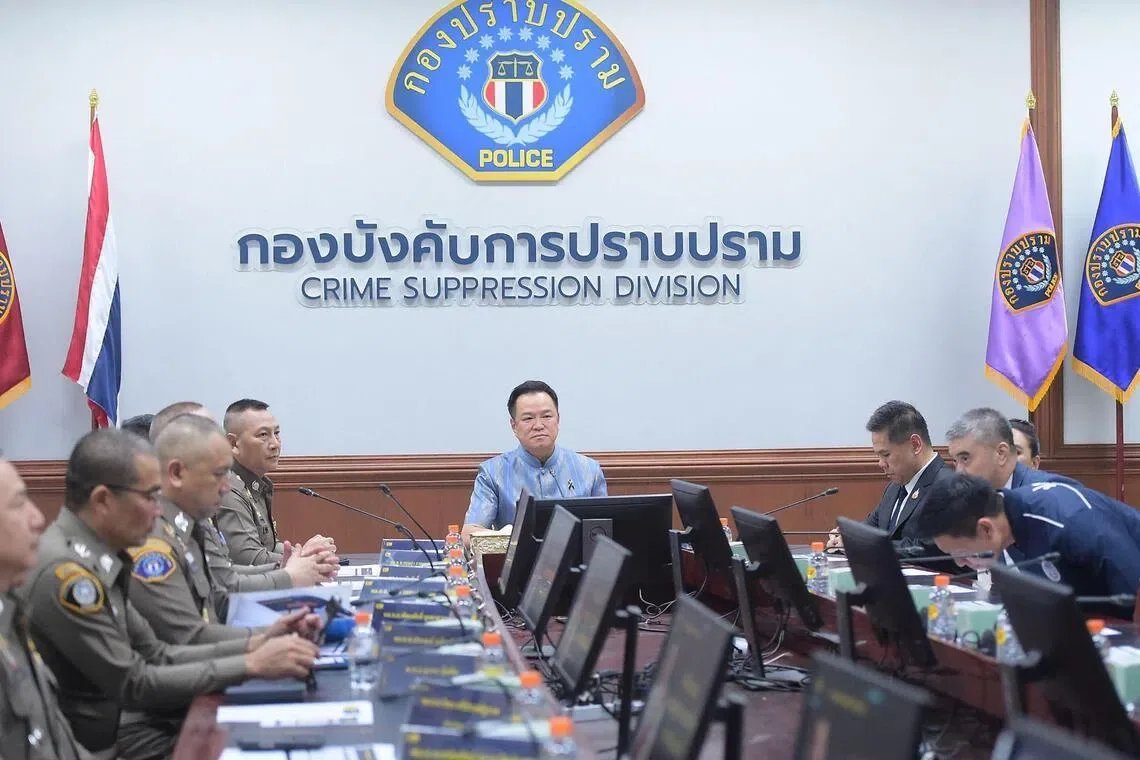
Thai authorities have identified 5,814 civil servants implicated in cheating on mandatory government appointment or promotion exams, officials announced in July 2026 [1, 2, 3, 4]. Police and anti-corruption agencies conducted a 17-day joint investigation that revealed officials accepting bribes of up to 800,000 baht (about US$24,000) to electronically alter exam results [1, 2, 3, 4].
Three suspects, including two men and one woman, were arrested on charges including destroying and concealing official documents. One suspect fled to Laos but was later caught and returned to face prosecution, police said [1, 2, 3, 4]. The masterminds behind the scam face prison sentences of up to five years if convicted [1, 2, 3, 4].
Authorities plan to review about 800,000 exam papers to establish the full extent of fraud committed during the testing process [1, 2, 3, 4]. Suspensions of implicated civil servants could start as early as July 15 or 17, 2026, depending on committee decisions [1, 2, 3, 4]. Civil servants in Thailand earn between US$530 and US$2,300 monthly based on rank, making the large bribes noteworthy given official salary levels [1, 3].
Interior Ministry official Unsit Sampuntharat called the cheating a "enormous" damage and stressed it was "unfair to those who obtained their positions honestly" [1]. Prime Minister Anutin Charnvirakul condemned the fraud as "disgusting" and warned of "a vicious circle in which officials used corrupt means to obtain positions of power and responsibility, which gave them further opportunities for corruption" [1, 3].
The probe exposed corruption that challenges the integrity of Thailand’s civil service. Police seized computers and exam documents as part of the 17-day investigation [1, 2, 3, 4]. The government now faces the task of sorting through tens of thousands of suspect exam results.
The next steps include decisions on suspensions expected no later than July 17, with further legal action anticipated against those involved [2, 3, 4]. Authorities face pressure to restore faith in the civil service and ensure future exams are secure and fair.