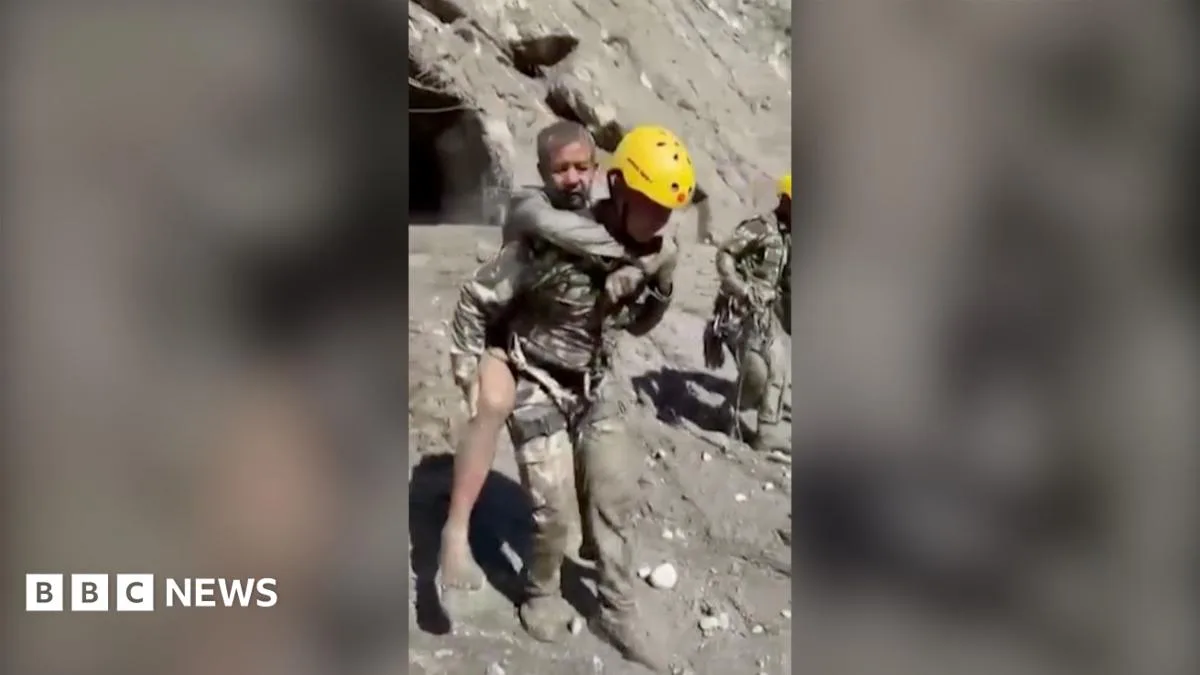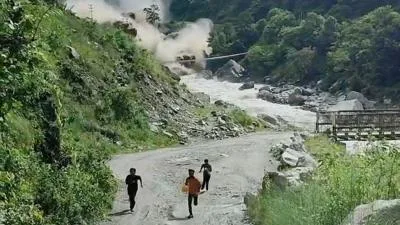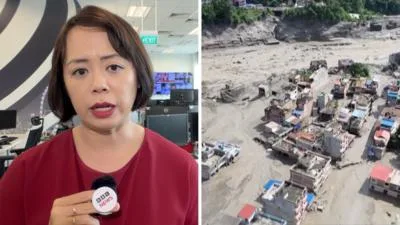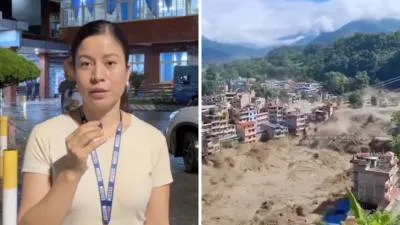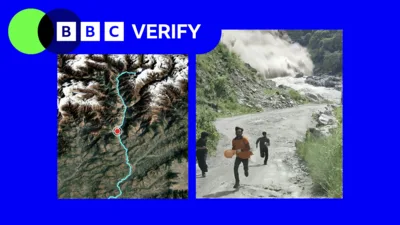
The Nepal army has rescued 350 people trapped in hydropower tunnels at the Trishuli hydropower projects and is working to rescue more than 100 others still trapped, officials said August 30 [1, 2, 3, 4].
The trapped workers are spread across multiple tunnel sites, including Trishuli 1, 3A, and 3B projects located in Nepal's Rasuwa district near the Tibet-China border [2, 5, 6, 7]. The tunnels were inundated following a massive flood and mudslide triggered by a glacial collapse on August 26, which sent enormous debris flows along the Trishuli and Bhote Koshi rivers [8, 7, 4].
The disaster has caused at least 682 deaths and left nearly 3,000 people missing across the affected areas in Nepal and Tibet, according to official counts [5, 8, 9, 7]. Among those unaccounted for are approximately 933 hydropower workers from the flood-hit projects [5, 8, 7]. Discrepancies remain in reported death tolls in Nepal alone, with some sources citing 475 to 538 fatalities [1, 4].
The Trishuli 1 hydropower project is a $647 million, 216 megawatt facility led by Korean firms and backed by international lenders including the IFC, Asian Development Bank, and AIIB [2]. The flood damage at these sites significantly disrupts this major infrastructure investment.
Nepal army rescuers broke into mud-filled hydropower tunnels on August 29, beginning to pump air, deploy cameras inside, and excavate debris to reach trapped workers [5, 6, 9, 7]. Home Minister Sudan Gurung said, "We have already started sending air through the small opening, and we will now begin excavation work and send the rescue team inside" [6]. Nepal Army spokesman Raja Ram Basnet added, "Our focus is in search and rescue of people … some people are trapped in the tunnel of Trishuli 3A hydropower project" [3].
Rescue operations continue amid difficult weather and terrain, with specialized teams from India and China assisting Nepalese forces [5, 8, 7]. The Nepal government has also requested advanced rescue equipment such as heavy-lift drones and technologies to locate survivors inside the tunnels [5].
Flood waters surged up to nine meters in 30 minutes, affecting Rasuwa, Nuwakot, and Dhading districts [7]. The US Geological Survey confirmed the flooding resulted from a landslide and glacial collapse, ruling out an earthquake trigger [7, 4].
Videos from Nepal's Prime Minister’s Office show rescuers pulling workers through mud-filled tunnels as efforts press on [1, 4]. Relief teams remain focused on freeing the remaining trapped workers and accounting for missing personnel as recovery continues.