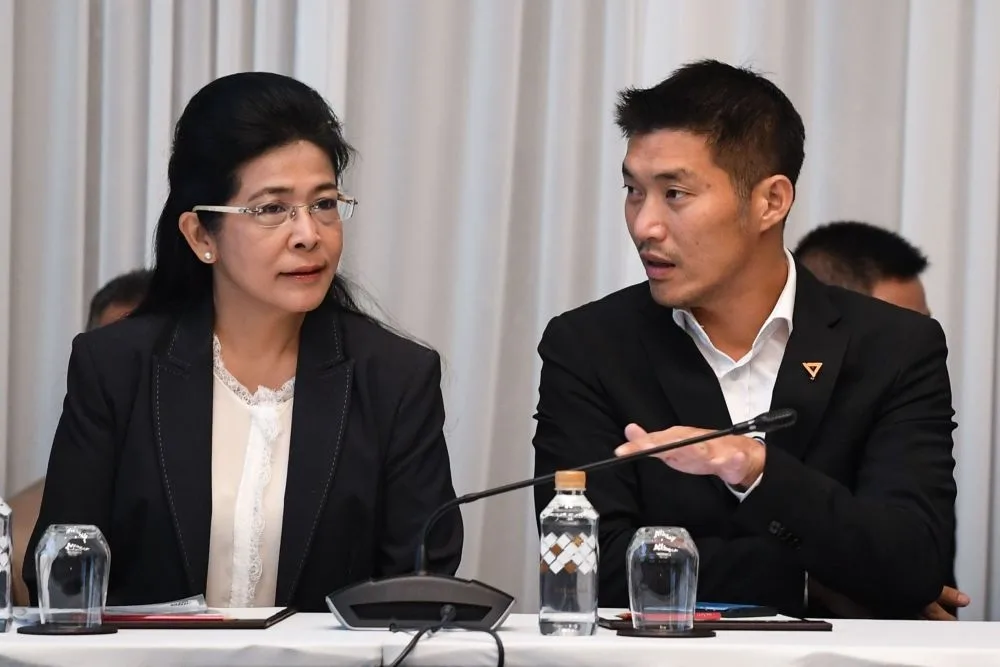
A Bangkok Criminal Court dismissed a royal defamation case against Thanathorn Juangroongruangkit, former leader of the now-defunct Future Forward Party, on May 28, 2026 [1, 2]. The case stemmed from comments Thanathorn made during a 2021 Facebook live broadcast, in which he criticized the government's Covid-19 vaccine procurement involving a company owned by the Thai king [1, 2].
The court ruled that Thanathorn's statements targeted then-Prime Minister Prayut Chan-O-Cha's handling of vaccine administration rather than the monarchy, and therefore did not constitute lese majeste or royal defamation under Thai law [1, 2]. Thailand's lese majeste law protects the royal family from criticism and carries penalties of up to 15 years in prison per offense [1, 2].
Thai Lawyers for Human Rights said the plaintiff's evidence was insufficient to prove royal insult in the case [1].
Thanathorn was banned from holding political office in a separate case in 2020 but has remained politically active. He campaigned for the People’s Party in February 2026’s national election [1, 2].
At least three former MPs from Move Forward Party, which succeeded Future Forward, have been convicted under the lese majeste law. Another 10 MPs including current opposition leader Natthaphong Ruengpanyawut face investigations for supporting reforms of the law [1, 2]. Those found guilty could be barred from political office for life and lose voting rights for 10 years [1, 2].
The dismissal of Thanathorn’s case marks a notable legal decision amid ongoing political tensions involving lese majeste prosecutions in Thailand. The court’s ruling clarifies the boundaries between criticism of government policy and protected royal defamation. There are no immediate appeals announced.
The latest court ruling follows Thanathorn’s 2021 comments and his 2020 political ban. The case ended on May 28, 2026, with no conviction [1, 2].