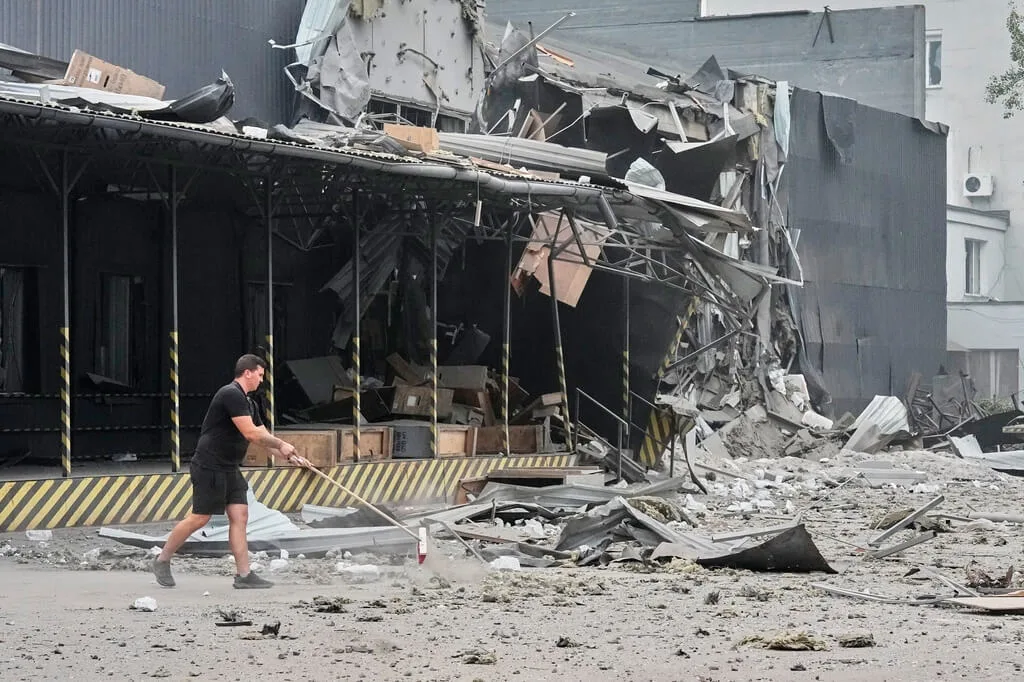
The United Nations reported at least 437 civilians were killed and 2,610 injured in Ukraine during July 2026, a 30% increase from June and 70% higher than July 2025. This marks the highest number of civilian deaths recorded since May 2022, in the early months of Russia's full-scale invasion [1, 2, 3, 4, 5, 6].
Russia intensified long-range missile attacks in July, firing a record number of missiles at Ukraine, particularly ballistic missiles targeting the capital, Kyiv [1, 4, 5]. Kyiv was among the hardest hit cities, with at least 54 civilian deaths documented there in July [1, 2, 4, 5].
Since the invasion began in February 2022, the UN verified 16,874 civilian deaths across Ukraine. However, the UN cautioned this figure likely underestimates the true toll due to limited access in Russian-controlled areas [1, 2, 3, 4, 5, 6]. Mariupol, the besieged southeastern port city, is believed to account for thousands of deaths within that verified total [1, 2, 3, 4, 5, 6].
Russian authorities reported 79 civilian deaths in Ukraine for July 2026. The UN has not independently verified this figure, citing lack of access and information as barriers [1, 2, 4, 5].
Volodymyr Zelenskyy condemned recent drone strikes, stating, “Whoever was operating that drone certainly could not have been unaware that the target was entirely civilian” [2].
The UN Human Rights Monitoring Mission highlighted the sharp rise in casualties, confirming the 30% increase compared with the previous month and 70% compared with the same month last year [1]. The surge in missile attacks and civilian casualties in July underscores the ongoing intensity of the conflict.
The UN and other monitoring bodies continue to document civilian casualties as hostilities persist, with updates expected as access conditions evolve.