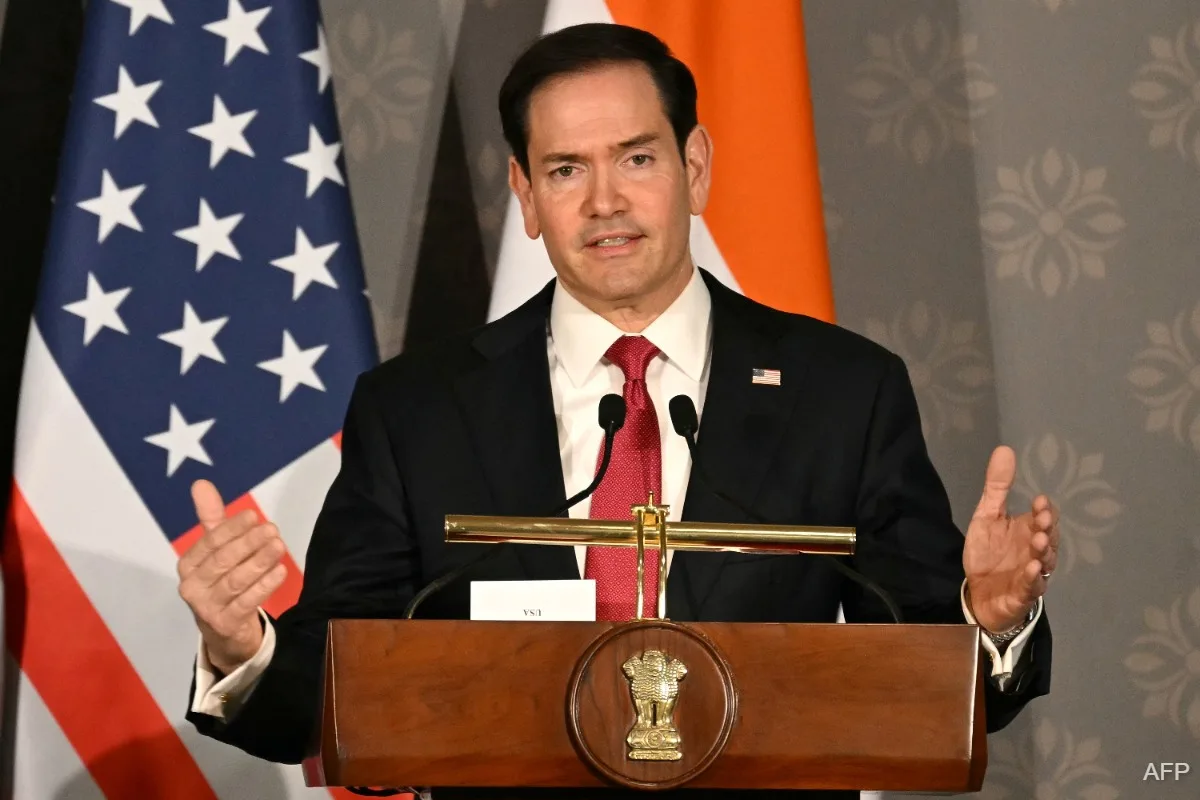
The United States, India, Australia, and Japan announced new initiatives on maritime security and critical minerals cooperation under the Quad forum during a meeting in New Delhi on May 26-27, 2026 [1, 2, 3]. US Secretary of State Marco Rubio attended the talks, emphasizing the Quad as a group of "strong, vibrant democracies" with aligned interests [2].
The Quad agreed on two maritime security projects: one to combine surveillance capabilities across the four nations, and another to provide enhanced real-time information to commercial maritime traffic in the Indo-Pacific region [1, 2, 3]. Australia will cooperate with Fiji on port infrastructure development, marking the first port project under the Quad [1, 2, 3].
They also announced a "Critical Minerals Framework" to coordinate investments and strengthen supply chains for minerals essential to high-end technology [1, 2, 3]. The partners aim to mobilize $20 billion in government and private funding, though it is unclear how much is new money [2]. Another plan calls for linking South Pacific islands with undersea cables by the end of 2026 to better connect them economically with the Quad countries [2].
The Quad will launch an Indo-Pacific energy security initiative focusing on technology, policy coordination, market analysis, and emergency response exercises, with a fuel security forum hosted later this year by the US Department of Energy [3].
Australian Foreign Minister Penny Wong said, "We recognise our obligation — our responsibility — to provide real choices, particularly as strategic circumstances in our region are deteriorating" [2]. Rubio added, "We have real concrete achievables that we can announce to our respective countries and to the world" [3].
Chinese officials criticized the Quad's actions, stating cooperation "should not be directed against any third party" and opposing "exclusive cliques or bloc confrontations," according to Chinese foreign ministry spokeswoman Mao Ning [2]. Meanwhile, US President Donald Trump has promoted a friendly stance toward China and a "G2" US-China partnership concept, which has caused concern among Quad allies [1, 2]. Despite Trump's skepticism toward traditional allies and reluctance to commit to Quad summits, Secretary Rubio and partners pressed on with deepened cooperation [1, 2].
The next concrete step is a Quad partners' fuel security forum to be hosted by the US Department of Energy later in 2026 as part of the Indo-Pacific energy security initiative [3].