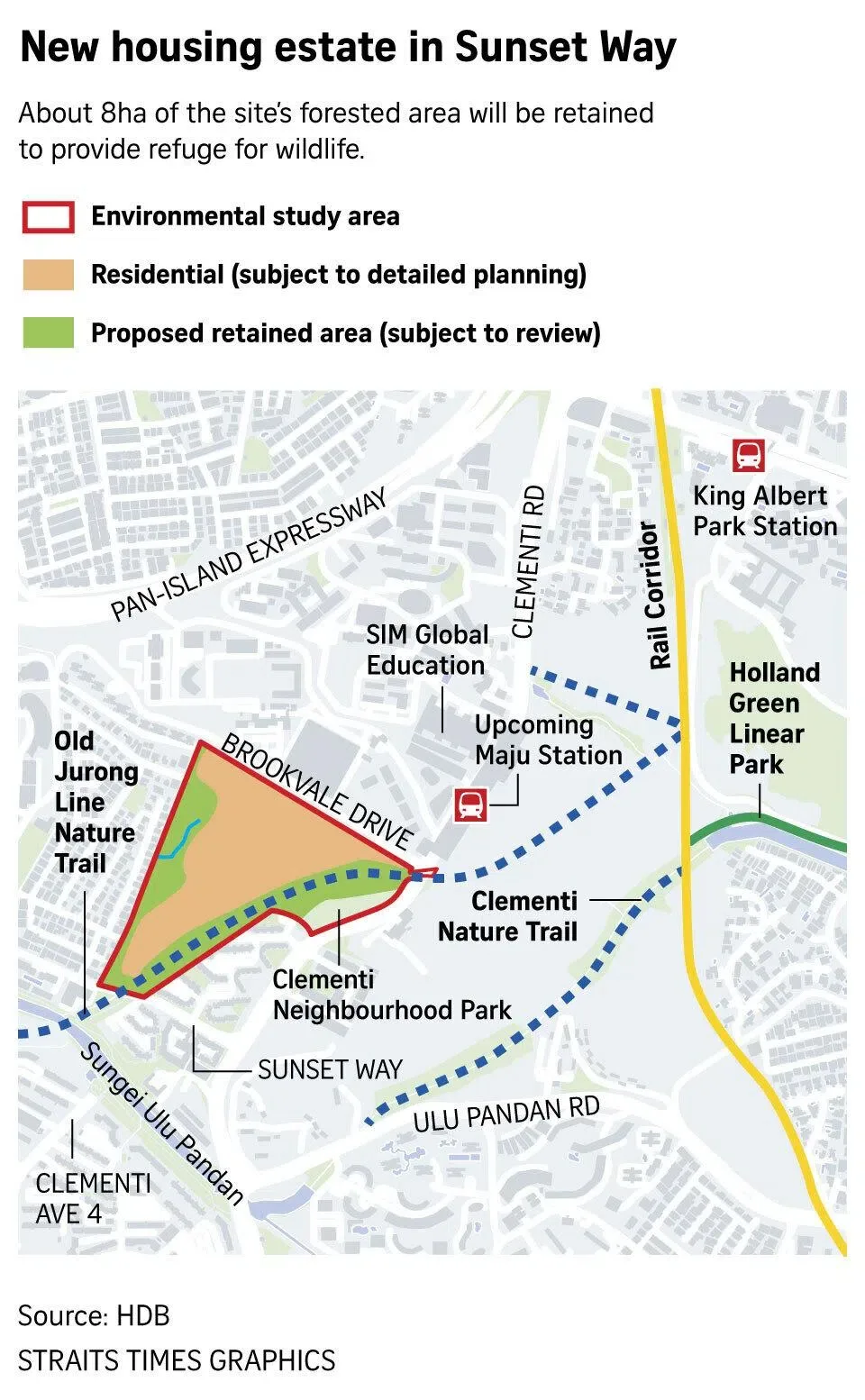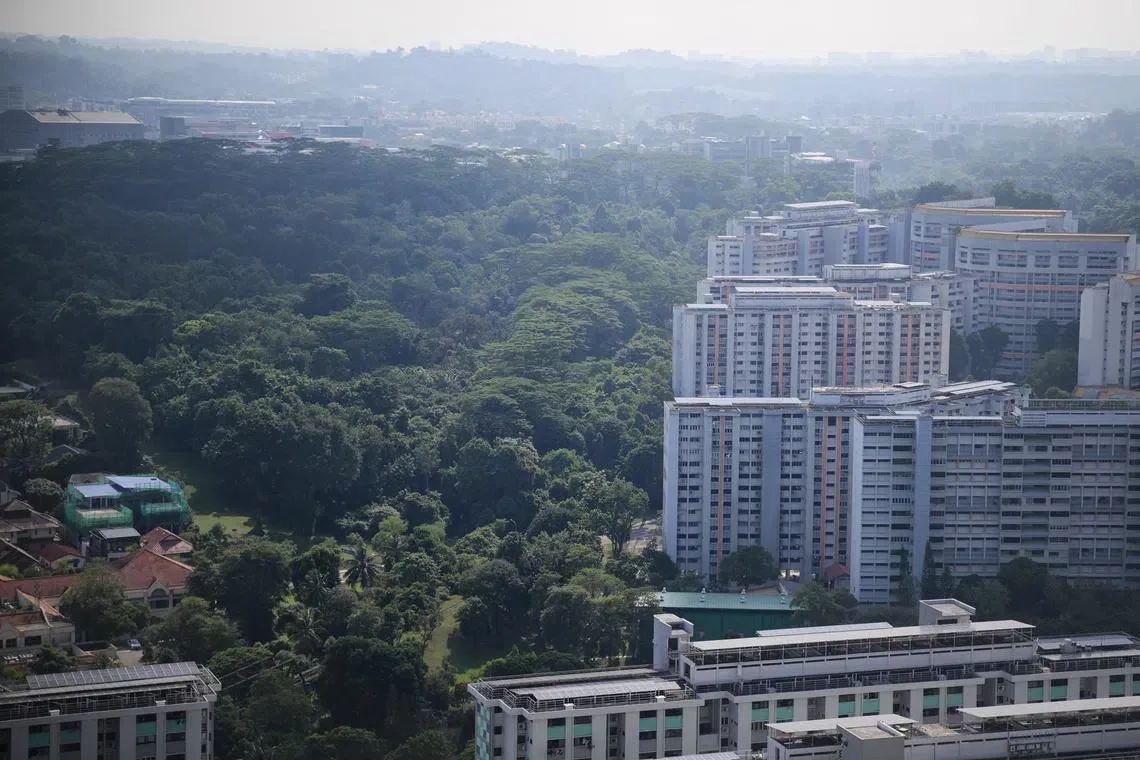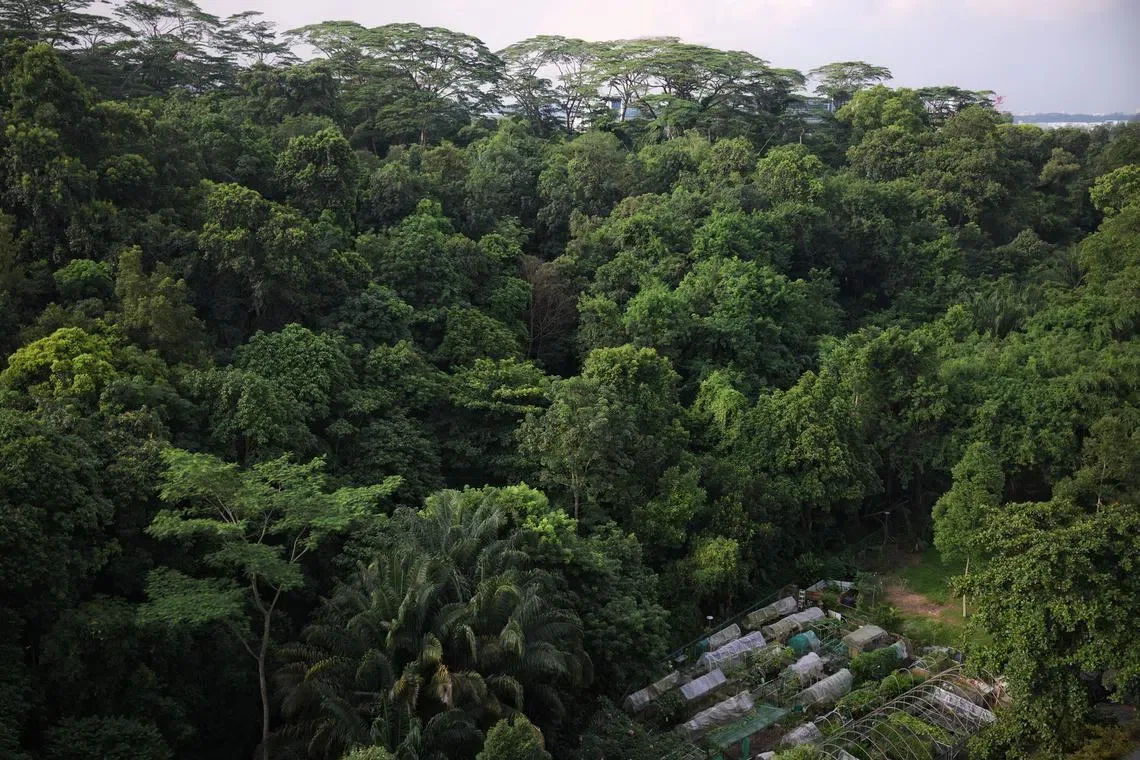
HDB announced on July 10 plans to clear about 15 hectares of Maju Forest in Clementi’s Sunset Way area to make way for new public housing developments over the coming years [1, 2, 3, 4, 5]. The total Maju Forest site covers roughly 23 hectares and has been zoned largely for residential use since 1980 [1, 2, 3, 4, 5].
About 8 hectares of the site will be preserved to serve as a refuge for wildlife and to allow fauna movement. This area includes a natural freshwater stream and vegetation noted for its high biodiversity value [1, 2, 3, 4, 5]. The forest area is bounded by Brookvale Drive, Clementi Road, and Sunset Way [1, 2, 3, 4, 5].
The Housing Board plans to incorporate native greenery into the future housing estate. Before construction begins, HDB intends to salvage plants of conservation value where feasible and conduct land clearance in phases. This approach aims to enable animals to safely relocate to adjacent green spaces during the development process [1, 2, 3, 4, 5].
An environmental study by Singapore Environmental Consultancy Solutions identified 113 fauna species at the site, including six species of conservation significance. These species are mostly birds, such as the straw-headed bulbul and buffy fish-owl [3, 4]. The report also noted that some retained forest sections might be impacted by slope stabilisation works along the nearby Old Jurong Railway Line, which may involve clearing and earthworks. Native plants will be replanted after those works [3, 4].
To maintain ecological connectivity, a 4-kilometre nature trail along the Old Jurong Railway Line is being studied. This would complement the nearby 2-kilometre Clementi Nature Trail [1, 2, 3, 4, 5]. Nature groups have been consulted during planning [1, 2, 3, 4, 5].
Lester Tan of Nature Society Singapore said retaining about a third of the forest is a minimum compromise but warned the proximity to humans could affect some wildlife. He noted, "If a good canopy of trees is retained, birds flying through the area may not be greatly affected. But pangolins – which have been found in Maju Forest – are shy creatures and could be affected by the close proximity to people" [1]. He added, "If the green corridor is not conducive, the animals will be displaced" [5].
More details on the number of public housing units to be developed have not been announced and will be shared later [1, 2, 5].