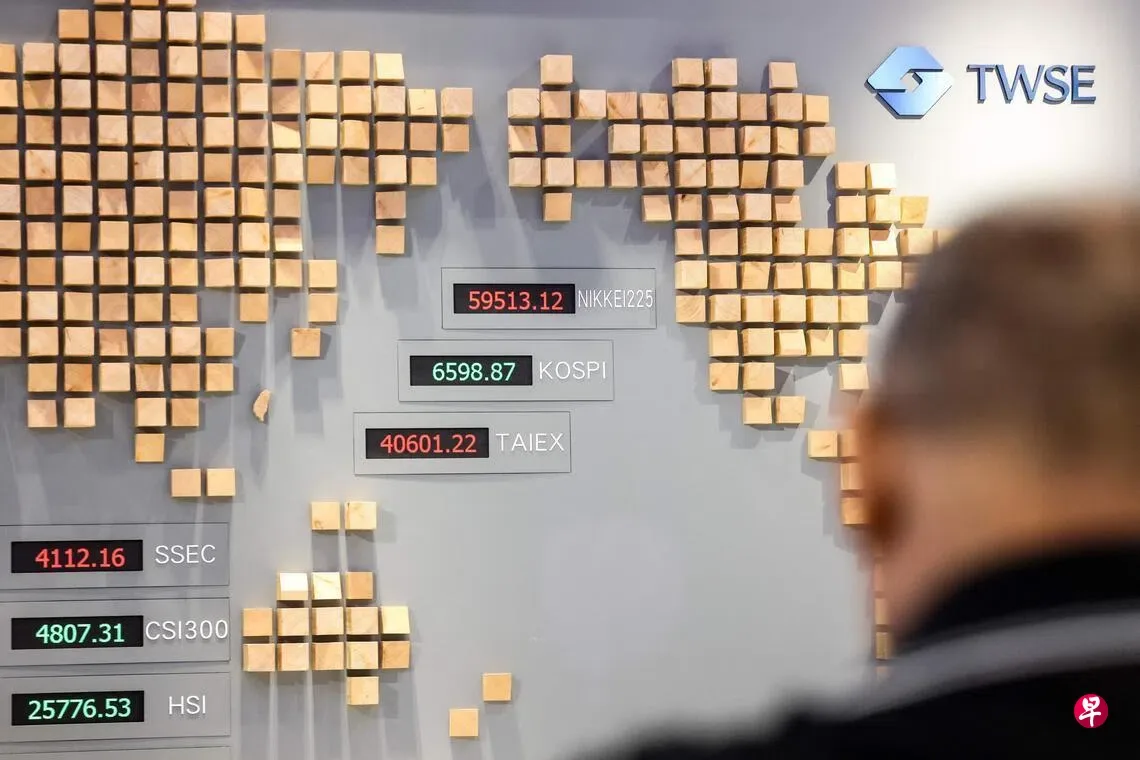
Taiwan and South Korea saw their stock markets climb to record highs in May, fueled by strong investor enthusiasm around AI technology and the semiconductor sector [1, 2]. Taiwan's total market capitalization reached about $4.95 trillion on May 26, surpassing India to become the world's fifth largest after the US, China, Japan, and Hong Kong [1]. South Korea's market overtook the UK in April to rank eighth globally [1].
Shares of South Korean chipmaker SK Hynix jumped 15% on May 27, joining Samsung Electronics and Micron Technology as trillion-dollar market cap companies, driven by AI-related gains [2]. Taiwan Semiconductor Manufacturing Company (TSMC) stock has risen 53% so far this year [2]. These gains underscore AI and semiconductor leadership as main drivers of the strong equity performance across South Korea, Taiwan, and Japan [1, 2].
Foreign investors have poured billions into AI-related markets like South Korea and Taiwan amid optimism over AI's commercial potential [1, 2]. However, concerns exist over rising valuations and concentrated exposure to a handful of large tech stocks in these markets [1]. Analyst Fu Fangwen of DBS Group said, "AI is the core driver driving Asian stock markets higher, especially in Korea and Taiwan, which hold advantages in chips, memory, and AI supply chains, attracting global capital inflows." He also noted that macro factors, including expectations for a US-Iran deal and steady corporate earnings, support market performance [1].
Meanwhile, the Singapore stock market also gained steadily, reaching a historic high in May and surpassing Indonesia as the largest ASEAN equity market by capitalization [1]. The market's 8.23% gain this year has been supported by perceived safe-haven status and defense-oriented sectors such as banks and infrastructure. Chen Dade, chief Asia strategist at Amundi Private Banking, said Singapore's valuations remain reasonable and the defensive market profile continues to attract stable investor interest [1]. Core inflation in Singapore recently slowed to 1.4%, lowering the chances of further monetary tightening by the Monetary Authority of Singapore in the near term [1].
However, geopolitical risks pose challenges. US military strikes on Iran in early May dampened hopes for a peace deal, which had been bolstering market confidence. Kyle Rodda of Capital.com said the markets are "looking for the next breakthrough: the announcement of an actual peace deal between the US and Iran," adding that a deal plus lower energy prices could help emerging market assets continue to climb [1, 2].
Investors are also cautioned to consider how the market might adjust if AI-related capital expenditures fall short of expectations. Xiao Genyu, Singapore sales director at CMC Markets, emphasized the need to plan for potential market corrections [1].
The MSCI Emerging Asia equities index rose 1.3% to a record high on May 27, with South Korean and Taiwanese stocks closing up 2.2% at all-time highs [2]. Market watchers will closely watch economic data and geopolitical developments in the coming months as these AI-driven markets navigate elevated valuations and external risks.