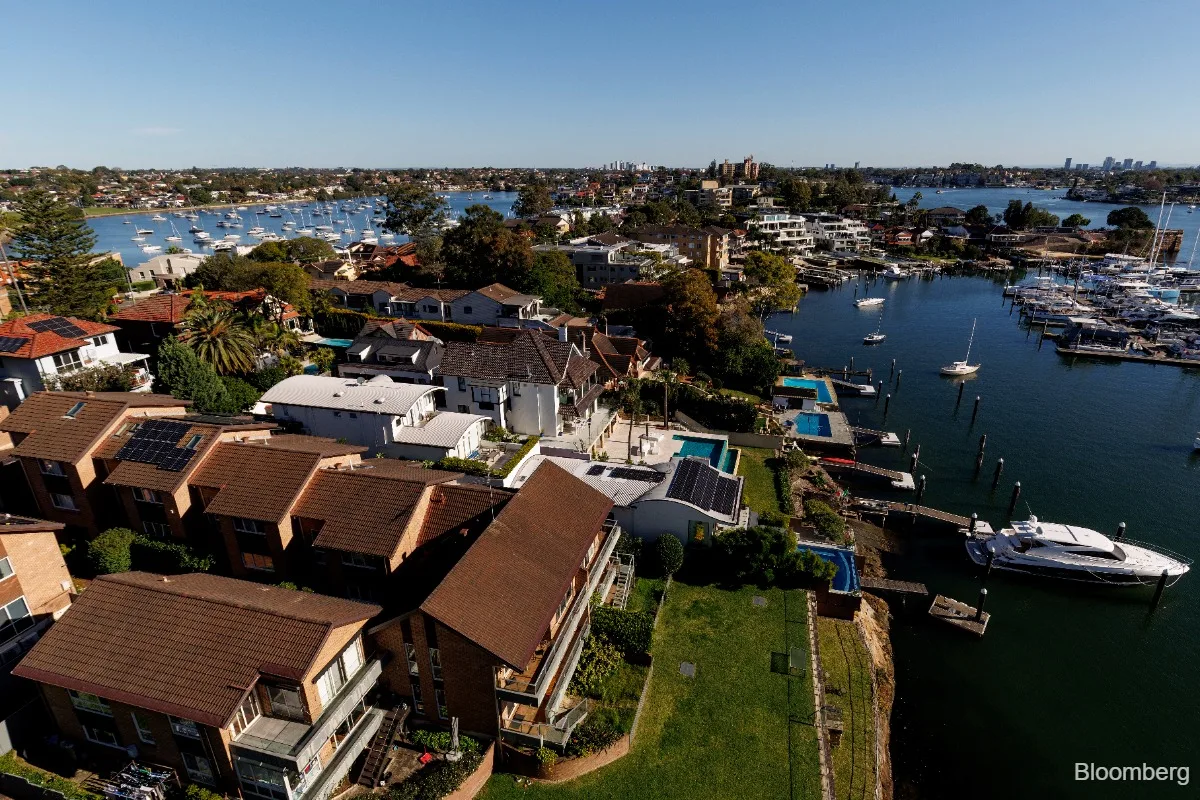
Australian home prices fell for the fifth straight month in August 2026, declining 0.9% nationally compared to July after a 1.2% drop the previous month [1, 2, 3]. Sydney and Melbourne were the biggest contributors to the downturn, with prices retreating 1.4% and 1.1%, respectively [1, 2, 3].
Prices across almost all Australian capital cities fell in August, including Brisbane and Perth, which saw declines of 1.0% and 0.8% following prior gains [3]. Overall, home prices are now about 7% below their peak levels nationally, with Sydney's 7.1% drop surpassing the 6.6% correction seen in 2022-23 [1, 2, 3].
Housing market activity weakened significantly, with sales falling 15.5% year-on-year over the last three months. Tim Lawless, research director at CoreLogic, said, "Longer selling times, larger vendor discounting and persistently low auction clearance rates all point to a buyer’s market, yet buyers are lacking the confidence to transact at the moment" [3].
The housing downturn has also slowed credit growth, reflecting tighter borrowing conditions amid rising interest rates. The Reserve Bank of Australia (RBA) raised the cash rate three times in 2026 to 4.35%, cooling investor demand alongside recent government tax changes [1, 3]. UBS analysts noted the RBA is expected to raise rates by another 25 basis points by November 2026 [1].
Australia’s economic growth slowed to an estimated 1.8% annual rate in Q2 2026, down from 2.5% in Q1 [1, 2]. Shane Oliver, chief economist at AMP, said the housing slump is only about 35% through in both magnitude and duration and will weigh on economic growth. However, Oliver added it is not yet enough to reverse the RBA's interest rate hikes because of inflation concerns [2].
UBS analysts called the current downturn one of the worst in Australia, forecasting a peak-to-trough home price fall near 10% this cycle [1]. Oliver also expects prices to reach their low point before a turnaround in the latter half of 2027 [1, 2].
The RBA’s likely further rate hike scheduled for November remains a key event shaping the market’s near-term outlook [1].