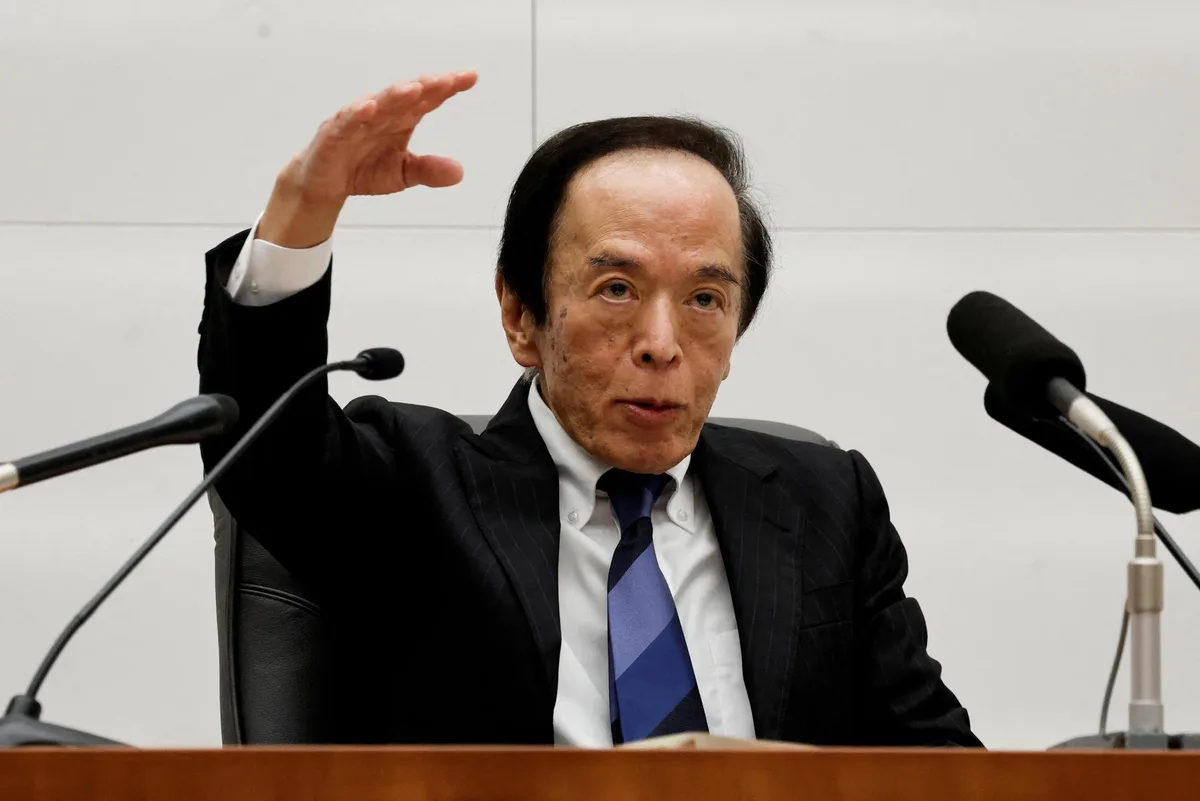
Bank of Japan Governor Kazuo Ueda met with Prime Minister Sanae Takaichi on Friday in Tokyo and explained the central bank’s basic thinking on monetary policy without discussing a specific interest rate hike in June [1, 2].
The meeting was part of a regular exchange of views on the economy, reflecting ongoing communication between the government and the BOJ [2]. Both sides agreed to continue maintaining close contact on monetary policy going forward [1, 2].
Market expectations had grown ahead of the scheduled June 15-16 BOJ policy meeting that the central bank would raise its policy rate from the current 0.75% to 1.0%, driven by inflation pressures linked to rising fuel costs amid Middle East conflicts [2]. The market-implied chance of a June rate hike stood near 80% [2].
Prime Minister Takaichi expressed hope that the BOJ would conduct appropriate policy mindful of government efforts to cushion the impact of rising living costs and support crisis management and growth investment [1, 2]. She is known to favor loose fiscal and monetary policy and has voiced reservations about a near-term BOJ rate increase [2].
Japan’s government plans a supplementary budget to subsidize households and ease pressure from soaring fuel prices caused by the Iran conflict, timed carefully around the BOJ’s mid-June meeting [2].
The BOJ legally sets monetary policy independently but has historically faced political pressure to maintain ultra-loose stimulus aimed at supporting growth [2]. Ueda and Takaichi last met in February amid speculation over a potential BOJ rate hike in April, but no announcement followed then [2].
The central bank will hold its policy meeting on June 15-16, where it will decide whether to raise the rate amid ongoing inflation and geopolitical pressures [2].