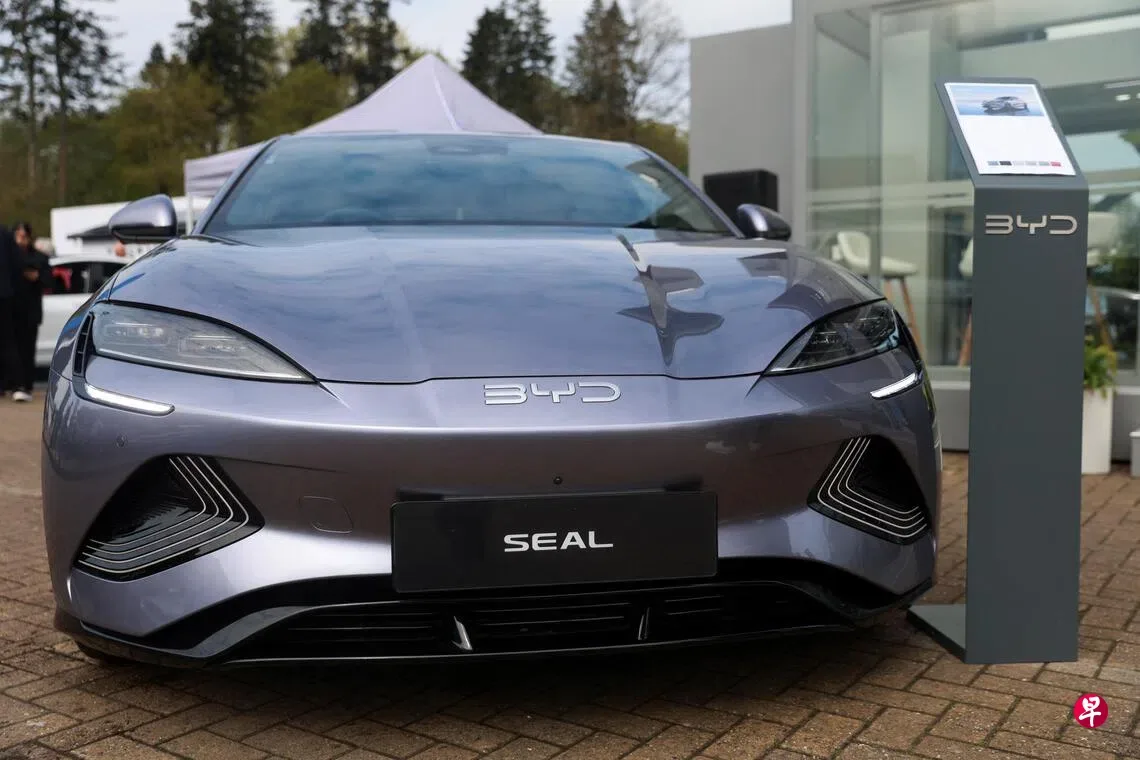
BYD's total vehicle sales increased by 0.3% year-on-year in May 2026 to 383,453 units, marking its first sales rise in nine months [1, 2]. Overseas markets accounted for 160,644 of those vehicles, becoming the main sales driver amid cooling domestic demand in China [1, 2].
The company is accelerating its overseas expansion, particularly in Europe where sales have grown rapidly [1, 2]. BYD is also in talks with Stellantis and other European automakers to acquire underutilized factories in the region [1, 2]. In addition, early signs suggest BYD may gain market traction in Canada due to a low-tariff electric vehicle quota introduced in January 2026 under a trade deal [2].
For 2026, BYD aims to sell 1.3 million vehicles outside China, a 25% increase over 2025 exports [1, 2]. To boost sales further, the automaker is relying on new vehicle models and fast-charging battery technology [1, 2].
However, BYD reported a steep profit decline in the previous quarter, hit by the phase-out of government subsidies and rising competition in China [1, 2]. The strong overseas demand is helping offset these domestic challenges.
On June 1, BYD released sales data and outlined its plans to grow via overseas expansion and new technology launches [1, 2]. The company’s next milestones will include monitoring overseas sales progress and finalizing factory acquisition deals in Europe.
BYD’s May sales increase caps a period of domestic market softness and signals the growing importance of international markets for the Chinese auto giant [1, 2].