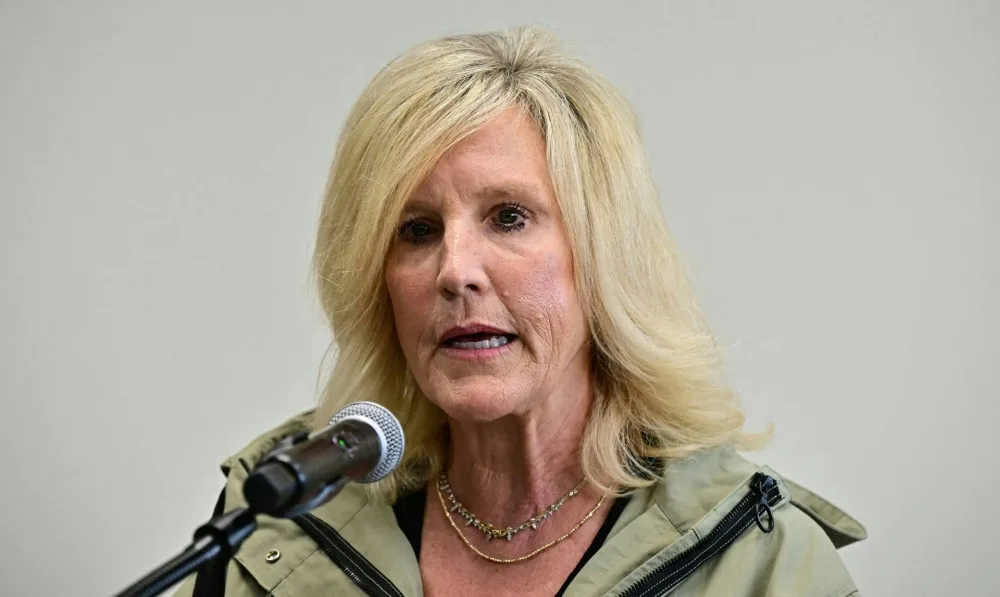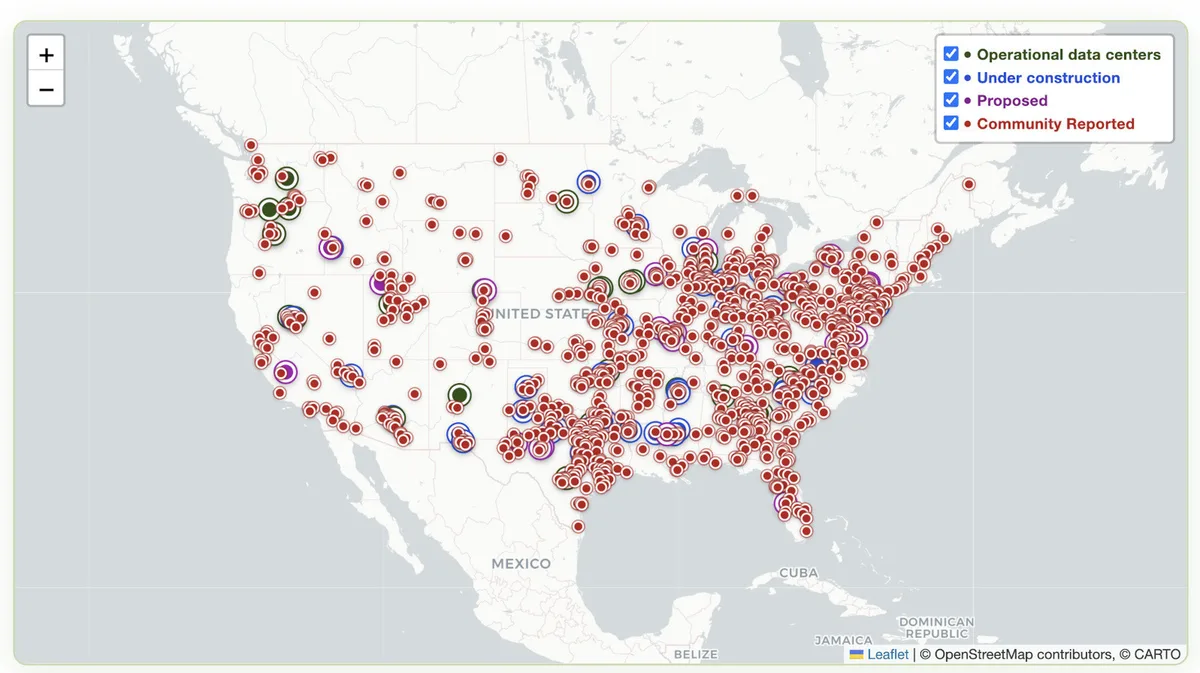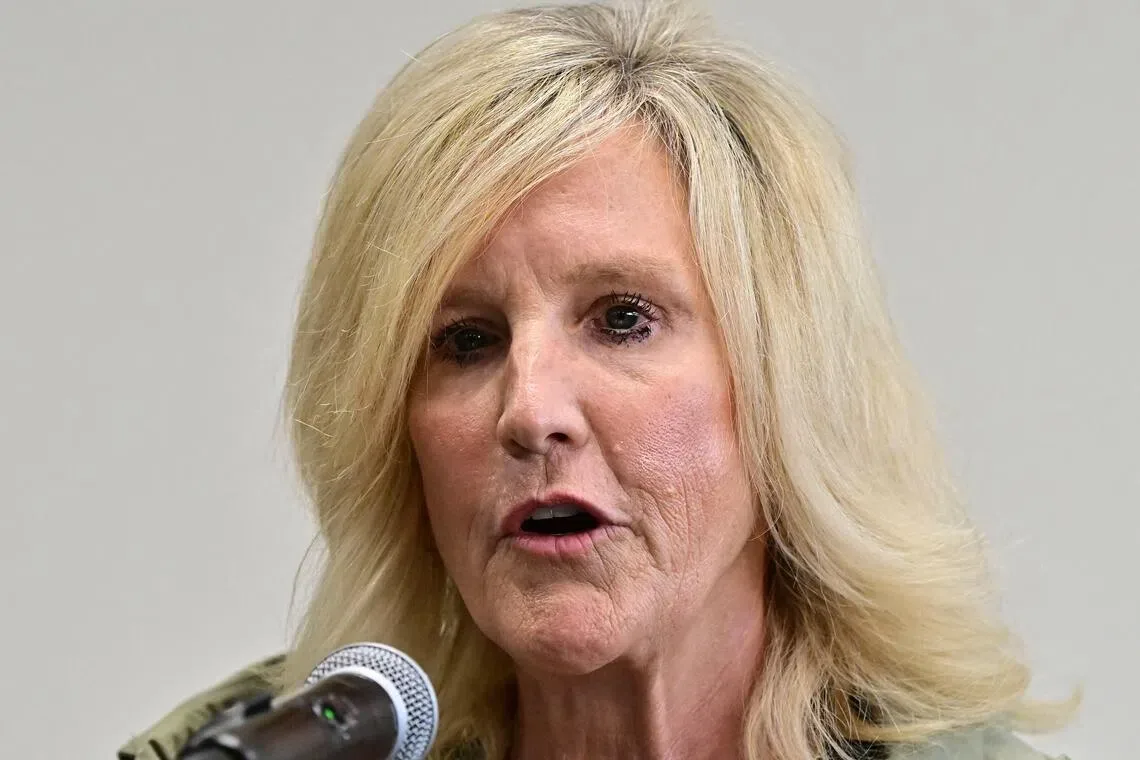
Erin Brockovich launched a citizen platform in May 2026 to track AI data center projects across the United States [1, 2, 3]. The platform features a real-time map displaying 33 operational, 44 under-construction, and 27 proposed data centers, alongside 2,716 community reports from users [4, 3].
The map allows the public to provide input on new and ongoing data center developments and their impacts. Brockovich said, "The RACE to build AI infrastructures is unfolding town by town across America. In some places, data centers are welcomed. In others, they are delayed, contested or abandoned altogether. This MAP captures the real-world footprint of that race — revealing patterns of growth, conflict and uncertainty" [4].
Texas accounts for the largest share of user reports, with 612 notifications including 297 from Sulfur Springs, where MSB Global is building one of the largest AI data center projects in the country. The project plans 3 gigawatts of capacity across 30 buildings on roughly 1,600 acres [3].
Across the US, communities and officials are increasingly regulating, limiting, or blocking new data center construction due to concerns over electricity prices, fossil fuel consumption, water use, noise, and waste [1, 2, 3]. Water consumption, electricity demand, and health concerns including air and noise pollution remain the most pressing issues for communities near data centers [1, 3].
Brockovich emphasized the need for sustainable, secure, and efficient AI data center practices but did not call for bans or moratoriums on construction. She said, "I am watching you, communities showing up and speaking out" [1].
Brockovich first gained prominence in the early 1990s for exposing Pacific Gas and Electric Company’s water contamination in Hinkley, California, which resulted in a $333 million settlement [1, 2, 3].
The platform continues to accept public reports, aiming to provide ongoing transparency on a rapidly growing AI infrastructure sector [1, 4, 2].